In the competitive B2B SaaS landscape, driving traffic is only half the battle. The real challenge, and the greatest opportunity, lies in converting those hard-won visitors into qualified leads and paying customers. It's easy to invest heavily in attracting eyeballs but then overlook the critical last mile of the user journey, leading to leaky funnels and missed revenue. This isn't just about tweaking button colors; it's a strategic discipline that blends psychology, data analysis, and user experience design.
Effective conversion rate optimization (CRO) is the engine that transforms interest into action. It’s the difference between a website that simply exists and one that actively generates growth. A well-optimized funnel ensures that every click has the potential to become a customer. Want to learn more about structuring and refining the entire customer journey? Check out how to optimize your sales funnels for better results.
This guide moves beyond generic advice to provide a comprehensive roundup of ten actionable, data-backed conversion rate optimization tips specifically tailored for B2B SaaS companies. Whether you're in cybersecurity, energy, event planning, or another complex vertical, these strategies will help you build a high-performing conversion engine. You will learn how to implement everything from targeted ABM landing pages and strategic form field design to leveraging social proof and deploying effective retargeting campaigns. Let's start turning more of your clicks into customers.
1. Implement Account-Based Marketing (ABM) Landing Pages
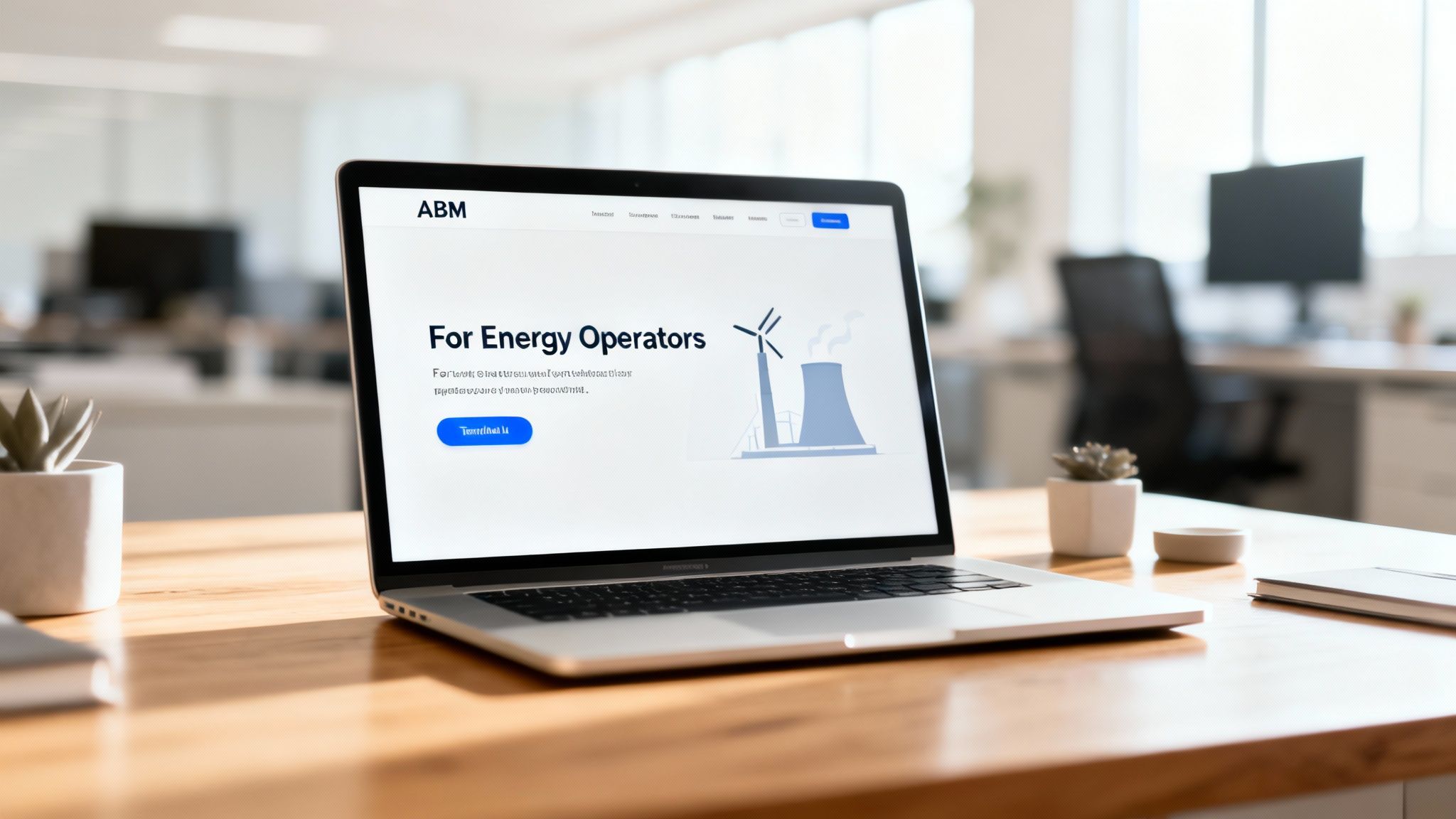
Generic, one-size-fits-all landing pages rarely resonate with high-value B2B buyers. Account-Based Marketing (ABM) landing pages solve this by creating hyper-personalized experiences tailored to specific target accounts or industries. Instead of broad messaging, these pages speak directly to the unique pain points, goals, and language of key decision-makers, which is a powerful conversion rate optimization tip for closing larger deals.
This strategy shifts the focus from a wide net to a targeted spear. By aligning marketing and sales efforts on a curated list of high-value accounts, you can create a frictionless buyer's journey. The content, from headlines to case studies, is designed to make visitors from a target company feel understood, dramatically increasing the likelihood of them booking a demo or starting a trial.
Why It Works for B2B SaaS
ABM is particularly effective in B2B SaaS where buying cycles are long and involve multiple stakeholders. A personalized landing page can feature a target company’s logo, use industry-specific terminology (e.g., "for cybersecurity firms"), and showcase case studies from their direct competitors. This level of personalization builds immediate trust and relevance.
Platforms like Demandbase and 6sense have popularized this data-driven approach, allowing marketers to identify and target accounts showing buying intent. Research from 2023 shows that 87% of marketers leveraging ABM say it provides a higher return on investment than other marketing types, underscoring its impact on pipeline and revenue.
How to Implement ABM Landing Pages
Getting started doesn't require overhauling your entire website. Follow these actionable steps:
- Start Small: Identify your top 20-30 target accounts. Focus your initial efforts here to prove the concept before scaling.
- Use Dynamic Content: Leverage tools that can dynamically swap out headlines, images, and logos based on the visitor's IP address or company name. This minimizes the manual effort of creating hundreds of pages.
- Align with Sales: Ensure your sales team is briefed on the messaging and offers presented on each ABM page. This creates a cohesive experience when they follow up with leads.
- Track Account-Level Metrics: Shift your focus from individual lead conversions to account-level engagement. Measure how many stakeholders from a target account visit the page and what actions they take collectively.
2. Optimize Form Fields for Conversion Intent
Long, intimidating forms are notorious conversion killers. Optimizing form fields for conversion intent involves strategically adjusting the length and complexity of your forms based on where a user is in the buyer's journey. Instead of a one-size-fits-all approach, this tactic uses multi-step forms, progressive profiling, and conditional logic to reduce friction while still capturing the essential data needed for B2B lead qualification.
This strategy is all about matching the "ask" to the value of the "offer." For a top-of-funnel ebook, you ask for minimal information. For a bottom-of-funnel demo request, where intent is high, you can ask for more qualification details. This nuanced approach respects the user's time and builds trust, making it a critical conversion rate optimization tip for nurturing leads effectively.

Why It Works for B2B SaaS
In B2B SaaS, lead quality is just as important as lead quantity. This method strikes the perfect balance. By asking for less upfront (e.g., just an email for a newsletter), you lower the barrier to entry and capture more top-of-funnel interest. As leads engage further, progressive profiling tools, famously used by platforms like HubSpot and Marketo, can ask for more information over time without asking for the same data twice.
This data-driven approach allows you to qualify leads without sacrificing initial conversion rates. Many B2B tech companies report conversion lifts of 40% or more after replacing a long, single-step form with a more manageable multi-step alternative, as it reduces the initial cognitive load on the user.
How to Implement Optimized Forms
You can start refining your forms immediately without a major technical overhaul. Follow these actionable steps:
- Segment by Funnel Stage: For top-of-funnel offers (webinars, whitepapers), limit forms to 3-5 essential fields like name, email, and company. For bottom-of-funnel requests (demos, quotes), you can confidently ask for more details like job title and company size.
- Use Multi-Step Forms: Break longer forms into 2-3 shorter steps. The psychological principle of commitment and consistency encourages users to complete the process once they've started. Tools like Unbounce make this easy to test.
- Leverage Progressive Profiling: Use your marketing automation platform to show new fields to returning visitors. If you already have their email, ask for their job title on their next visit.
- Implement Inline Validation: Provide immediate feedback as users fill out the form, confirming correct entries with a green checkmark or highlighting errors in real-time. This prevents frustration and form abandonment.
3. Leverage Social Proof and Case Studies Strategically
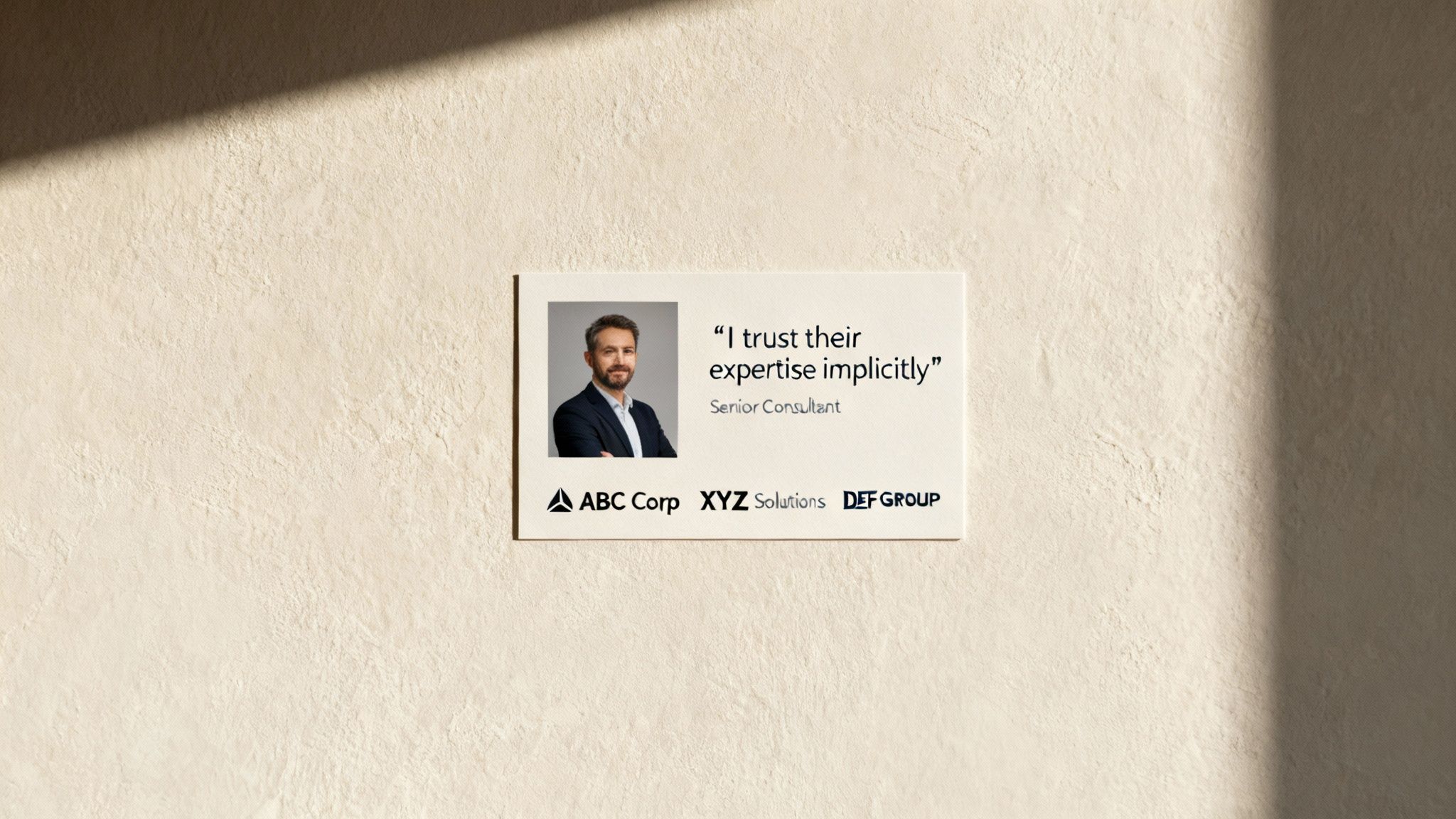
For B2B buyers, particularly in high-stakes industries like cybersecurity or energy, trust is a non-negotiable prerequisite. Strategically placing social proof such as case studies, testimonials, and industry awards throughout the buyer's journey is a critical conversion rate optimization tip. It shifts the conversation from "what you say you can do" to "what you've proven you can do" for companies just like them.
This approach works by reducing purchase anxiety and providing third-party validation. When a prospect sees that a direct competitor or a well-respected brand in their vertical has achieved tangible results with your solution, it builds instant credibility and accelerates their decision-making process. The goal is to make the choice to convert feel like a safe, logical next step.
Why It Works for B2B SaaS
Social proof is exceptionally powerful in B2B SaaS because it directly addresses the buyer's primary concern: risk. Decision-makers need to justify their investment, and a detailed case study with hard metrics (e.g., increased ROI, reduced operational costs) provides the evidence they need. For example, Okta effectively uses industry-specific case studies to appeal to large enterprise buyers, while Palo Alto Networks highlights cybersecurity victories to build authority.
This strategy humanizes your brand and provides a relatable context that product feature lists alone cannot. According to a 2023 G2 report, 92.4% of B2B buyers are more likely to purchase a product or service after reading a trusted review, making social proof one of the most influential elements in the funnel.
How to Implement Strategic Social Proof
Integrating social proof effectively is about placement and relevance. Follow these actionable steps to maximize its impact:
- Segment by Vertical: Create dedicated case studies for key industries you serve, like cybersecurity, energy, or senior living. This shows prospects you understand their unique challenges. You can explore a variety of examples in our collection of Mick-Mar case studies.
- Quantify Everything: Don't just say you helped a client; show it. Use specific, quantifiable metrics like "reduced security incidents by 45%" or "achieved 250% ROI in 12 months."
- Use Video Testimonials: Video is highly engaging and adds a layer of authenticity that text cannot. A short, powerful clip from a happy client can be more persuasive than an entire page of text.
- Place Proof at Key Decision Points: Position your strongest testimonials or logos on high-intent pages like pricing, demo request, and checkout forms to overcome last-minute friction.
4. Create Value-Driven Content Offers with Lead Magnets
Instead of asking for a demo upfront, a powerful conversion rate optimization tip is to offer immediate value in exchange for a visitor's contact information. Value-driven lead magnets, such as gated whitepapers, benchmarking reports, or checklists, directly address a prospect's most pressing challenges. They serve as a low-friction entry point into your funnel, capturing high-intent leads for future nurture campaigns.
This strategy builds trust by positioning your company as a helpful expert, not just a vendor. A well-crafted lead magnet provides a tangible solution or critical insight, making prospects more receptive to future communications. It's a strategic exchange where you provide valuable knowledge, and in return, you earn a qualified contact who has self-identified a relevant pain point.
Why It Works for B2B SaaS
In B2B SaaS, buyers are research-obsessed and risk-averse. They seek educational content to inform their decisions long before they are ready to speak with sales. High-value content offers like Okta's security assessment tools or HubSpot's marketing templates meet buyers where they are in their journey. These assets effectively qualify leads by attracting individuals actively seeking solutions in your domain.
A 2023 Content Marketing Institute report found that educating the audience was the top goal for B2B content marketers, achieved by 87% of top performers. This highlights the importance of providing value before asking for a sale. Lead magnets are the perfect vehicle for this educational approach, warming up cold traffic and nurturing them toward a product demonstration.
How to Implement Value-Driven Lead Magnets
Creating compelling lead magnets doesn't require massive resources. Focus on quality and relevance with these steps:
- Solve a Specific Pain Point: Don't be generic. Create vertical-specific offers, such as a HIPAA compliance checklist for senior living clients or a regulatory guide for the energy sector.
- Keep It Concise and Actionable: Aim for 8-12 pages for reports or guides. Your goal is for the user to consume the content and get immediate value, not to overwhelm them.
- Design for Impact: Use professional design, charts, and data visualization to make complex information easy to digest. A polished look enhances perceived value.
- Promote and Measure: Distribute your lead magnet across owned channels and test different offer types (e.g., reports vs. calculators). Track how many leads convert to sales opportunities to measure ROI. Scaling these efforts requires a mature process; explore our guide to developing your content marketing operations on mick-mar.com.
5. Implement Conversion Rate Testing with Statistical Significance
Guesswork is the enemy of growth. One of the most fundamental conversion rate optimization tips is to move away from making changes based on intuition and instead adopt a data-driven approach through A/B testing. This involves running controlled experiments to compare a new version of a webpage element (the "variation") against the current version (the "control") to see which one performs better.
This hypothesis-driven methodology allows you to systematically test changes to headlines, calls-to-action (CTAs), images, and layouts. The goal is to identify which modifications lead to a statistically significant improvement in a key metric, like demo requests or trial sign-ups. By applying proper statistical rigor, you ensure your decisions are backed by data, not just opinions.
Why It Works for B2B SaaS
In B2B SaaS, even small lifts in conversion rates can translate to substantial revenue gains due to high customer lifetime values. Systematic testing de-risks website changes and creates a culture of continuous improvement. For instance, Netflix famously tests everything from thumbnail images to its sign-up flow, while Amazon attributes a significant portion of its revenue to its relentless testing culture.
Platforms like Optimizely and VWO have made this scientific approach accessible, allowing teams to validate their ideas before committing to a full rollout. For B2B companies with longer sales cycles, tests can focus on leading indicators like lead quality, content downloads, or engagement with key features, providing valuable insights long before a sale is closed.
How to Implement Statistically Significant Testing
Building a successful testing program requires discipline and a clear process. Follow these actionable steps to get started:
- Form a Clear Hypothesis: Before launching a test, state your hypothesis clearly. For example, "Changing the CTA button text from 'Learn More' to 'Get a Free Demo' will increase demo requests because it is more specific and value-oriented."
- Prioritize High-Impact Pages: Start testing on pages that have high traffic and a direct impact on revenue, such as your homepage, pricing page, or demo request page.
- Ensure Statistical Significance: Use a sample size calculator to determine how many visitors and conversions you need per variation. Aim for a statistical significance level of 95% or higher to be confident in your results.
- Run Tests Long Enough: Let your test run for at least 1-2 full business cycles (typically 2 weeks) to account for daily and weekly fluctuations in visitor behavior.
- Document Everything: Maintain a testing repository that documents every hypothesis, result, and learning. This prevents re-running failed tests and helps build institutional knowledge.
6. Optimize Page Load Speed and Technical Performance
Technical performance is no longer just an IT concern; it's a critical conversion rate optimization tip. A slow, clunky website creates a frustrating user experience that drives potential customers away before they even see your value proposition. Optimizing for speed and Core Web Vitals (LCP, FID, CLS) ensures your site is responsive, stable, and ready to convert visitors the moment they arrive.
For B2B SaaS, where prospects evaluate complex solutions, every second of load time counts. A one-second delay can increase bounce rates and decrease trust, effectively sabotaging your carefully crafted marketing funnel. By prioritizing a fast and seamless experience, you demonstrate professionalism and respect for your visitor's time, making them more receptive to your messaging and calls to action.
Why It Works for B2B SaaS
Slow page speeds are a direct barrier to lead generation. If a prospect clicks an ad for your demo and the landing page takes more than three seconds to load, they are likely to abandon the session. This directly impacts your paid acquisition ROI and inflates your customer acquisition cost. A fast site, on the other hand, reduces friction and keeps users engaged long enough to understand your product’s benefits.
Google's emphasis on Core Web Vitals as a ranking factor means site speed also impacts organic visibility. Research consistently shows the financial impact of speed; a 2023 Deloitte study found that a 0.1-second improvement in mobile site speed can boost conversion rates by over 8%. For a high-value B2B SaaS deal, that seemingly small improvement can translate into significant revenue.
How to Optimize Technical Performance
Improving site speed is an ongoing process of measurement and refinement. Start with these targeted actions:
- Audit with PageSpeed Insights: Use Google's free tool to get a baseline score for your key pages. It will provide a detailed report on Core Web Vitals and specific recommendations for improvement.
- Compress and Defer Media: Use modern image formats like WebP to reduce file sizes without sacrificing quality. Implement lazy loading so images and videos below the fold only load as the user scrolls down.
- Minimize Render-Blocking Resources: Audit your JavaScript and CSS files. Defer non-critical scripts and minimize code to ensure the most important content on the page loads first.
- Leverage a Content Delivery Network (CDN): A CDN stores cached versions of your site on servers around the world, reducing latency for international visitors by serving content from a geographically closer location.
7. Deploy Retargeting and Remarketing Campaigns Strategically
Most website visitors won't convert on their first visit, especially in B2B SaaS where buying cycles are long and involve multiple decision-makers. Strategic retargeting reconnects with these high-intent prospects by showing them relevant ads after they leave your site. This keeps your brand top-of-mind as they conduct research and evaluate solutions.
This approach is far more than just showing the same ad to everyone. It's about segmenting audiences based on their on-site behavior and delivering tailored messaging that guides them to the next step. For instance, someone who abandoned a pricing page might see an ad highlighting a special offer, while a blog reader could be shown a related case study, making it a crucial tactic among conversion rate optimization tips.
Why It Works for B2B SaaS
In B2B, the path to purchase is a marathon, not a sprint. Retargeting ensures your solution remains a contender throughout this extended consideration phase. By targeting specific accounts or job titles on platforms like LinkedIn, you can re-engage key stakeholders who showed initial interest, nurturing them until they are ready to book a demo.
Companies like Calendly effectively use email retargeting to bring back users who abandoned the signup process, recovering otherwise lost leads. To effectively re-engage potential customers who have shown initial interest, consider the power of retargeting on Facebook Ads that converts. This targeted follow-up can significantly boost user activation and paid conversions by addressing friction points directly.
How to Implement Strategic Retargeting
Effective retargeting requires a thoughtful, segmented approach rather than a broad, one-size-fits-all campaign. Here's how to get started:
- Segment Audiences by Intent: Create distinct audiences based on engagement. Group visitors who viewed your pricing page (high-intent) separately from those who only read one blog post (low-intent).
- Tailor Ad Creatives: Develop messaging that aligns with the visitor's journey. Show a case study to someone who downloaded an ebook, or a demo CTA to a pricing page visitor.
- Use LinkedIn for Decision-Makers: For B2B, leverage LinkedIn's powerful targeting to serve ads specifically to decision-makers from companies that have visited your website.
- Set Frequency Caps: Prevent ad fatigue by limiting ad impressions to 3-5 times per user per week. Oversaturation can harm brand perception and waste your budget. You can learn more about how to set up effective digital marketing and advertising campaigns.
8. Clear Value Proposition, Benefit-Focused Headlines, and CTAs
Your visitors give you mere seconds to convince them they're in the right place. A clear value proposition, paired with benefit-focused headlines and calls-to-action (CTAs), is the most critical element for capturing attention and reducing bounce rates. This isn't just about describing what your product does; it's about immediately communicating the specific outcome or problem it solves for the customer.
This approach cuts through the noise of generic feature lists and corporate jargon. It answers the visitor’s core question: "What's in it for me?" For example, a headline like "Get 30% Cost Reduction in 90 Days" is vastly more compelling than "Enterprise Security Solution" because it promises a tangible, desirable result. This is a foundational conversion rate optimization tip that underpins all other efforts.
Why It Works for B2B SaaS
In B2B SaaS, buyers are under pressure to deliver measurable ROI. A benefit-driven message speaks directly to their business objectives. Slack’s classic "Be less busy" or Calendly’s "Say goodbye to scheduling hell" are perfect examples; they sell a solution to a painful problem, not just a software tool. This strategy, popularized by frameworks like Donald Miller's StoryBrand, positions the customer as the hero and your product as their guide to success.
By focusing on the "what" and "why" before the "how," you align your marketing with the buyer's motivations. Transparently addressing their pain points and desired outcomes builds instant credibility and makes the decision to take the next step, like booking a demo, feel logical and low-risk.
How to Implement Benefit-Focused Messaging
Refining your messaging is a high-impact, low-cost activity. Follow these actionable steps:
- Identify Core Value: For each buyer persona, define the single most important outcome they achieve with your product. Is it cost savings, revenue growth, or risk mitigation?
- Use Specific Metrics: Replace vague promises with quantifiable results. Instead of "much faster," use "30% faster deployment." Concrete numbers are more believable and compelling.
- Test Headline Variations: A/B test at least 3-5 different headlines. Frame one around solving a pain point, another on achieving a goal, and a third on social proof (e.g., "The #1 CRM for Revenue Growth").
- Make CTAs Action-Oriented: Your CTAs should clearly state what happens next. Use "Schedule Your Free Demo" or "Start Your 14-Day Trial" instead of the ambiguous "Learn More" or "Submit."
9. Implement Real-Time Chat and Conversational Marketing
Waiting for an email response is a major source of friction in the buyer's journey. Real-time chat and conversational marketing eliminate this delay by engaging visitors instantly, answering their questions, and guiding them toward conversion. Instead of forcing users through static forms, this strategy opens a direct, two-way dialogue, addressing objections the moment they arise.
This approach transforms your website from a passive brochure into an active sales assistant. By using a mix of chatbots for initial qualification and live agents for complex queries, you can provide immediate value and capture high-intent leads that might otherwise abandon your site. It's a powerful conversion rate optimization tip for shortening the sales cycle and creating a more human-centric experience.
Why It Works for B2B SaaS
In B2B SaaS, buyers have specific, often technical questions that can make or break a deal. Conversational marketing provides the instant gratification and detailed answers they need. A well-programmed chatbot can handle common queries 24/7, qualify leads, and even book demos directly in the chat window, significantly reducing sales qualification time.
Platforms like Intercom and Drift have pioneered this approach, proving its effectiveness in high-consideration purchases. According to a 2023 survey, 67% of B2B buyers prefer to use self-service channels like chatbots to research products and services, highlighting a clear shift in user expectations. When a human is needed, the transition is seamless, ensuring complex questions are handled with expertise.
How to Implement Real-Time Chat
Integrating conversational marketing doesn't mean you need a fully staffed, 24/7 support team from day one. Start strategically with these steps:
- Target Key Pages: Deploy your chat widget on high-intent pages first, such as pricing, features, and demo request pages. This focuses your resources where they have the most impact.
- Use Behavior-Based Triggers: Don't be intrusive. Trigger the chat window based on user behavior, like spending more than 30 seconds on a page, visiting multiple product pages, or showing exit intent.
- Automate First-Level Support: Train your chatbot on the top 20-30 most common questions your sales and support teams receive. This filters initial queries and frees up human agents for high-value conversations.
- Provide a Human Escalation Path: Always give users a clear and easy way to connect with a person. A "Talk to a Human" button can prevent frustration when a chatbot can't resolve a complex issue.
- Integrate with Your CRM: Ensure that every lead captured and every conversation had through chat is automatically synced with your CRM. This provides valuable context for sales follow-ups and nurturing campaigns.
10. Optimize Email Marketing for Conversion with Segmentation and Personalization
Blasting your entire email list with the same generic message is a surefire way to kill engagement and conversions. Strategic email marketing for B2B SaaS requires a more refined approach: segmenting your audience and personalizing communication based on their behavior, industry, and position in the buyer's journey. This is a critical conversion rate optimization tip for nurturing leads effectively.
This method transforms your email from a broadcast channel into a one-to-one conversation at scale. By delivering hyper-relevant content at the perfect moment, you build trust and guide prospects toward a purchase decision. Instead of a single, one-size-fits-all newsletter, you develop targeted nurture sequences that speak directly to the unique needs of different user personas, moving them through the funnel more efficiently.
Why It Works for B2B SaaS
In B2B, the sales cycle is complex and involves multiple decision-makers with varying priorities. A C-suite executive cares about ROI and strategic alignment, while an IT admin focuses on implementation and security. Personalization allows you to address each persona's specific concerns. For example, Okta sends security-focused sequences to CISOs while highlighting ease of use for IT managers.
Platforms like HubSpot and Marketo have built their success on this principle. Data consistently shows that segmented campaigns drive better results. A 2023 report from Mailchimp revealed that segmented campaigns can result in up to 760% more revenue compared to non-segmented ones, highlighting its direct impact on the bottom line. This makes it an indispensable tactic for any SaaS company looking to improve its conversion metrics.
How to Implement Email Segmentation and Personalization
Getting started involves organizing your data and creating targeted workflows. Follow these actionable steps:
- Segment Your Lists: Group contacts by industry, company size, job title, or website behavior (e.g., downloaded an ebook vs. visited the pricing page). Create separate nurture sequences for each key segment.
- Tailor Your Messaging: For a cybersecurity prospect, your subject lines and content should focus on risk and compliance. For an energy company, emphasize efficiency and cost savings. This relevance is key to engagement.
- Use Lead Scoring: Implement a lead scoring system to track engagement. When a lead reaches a certain score, trigger an automated hand-off to the sales team, ensuring they follow up with the most qualified prospects.
- Maintain List Hygiene: Regularly remove inactive subscribers (e.g., quarterly) to improve your sender reputation and ensure your metrics accurately reflect an engaged audience. Monitor unsubscribe reasons to refine your content strategy.
10-Point Conversion Optimization Comparison
| Tactic | Implementation Complexity 🔄 | Resource Requirements ⚡ | Expected Outcomes 📊 | Ideal Use Cases 💡 | Key Advantages ⭐ |
|---|---|---|---|---|---|
| Implement Account-Based Marketing (ABM) Landing Pages | High — multi-version builds, account research, CRM integration | High — design, copy, personalization engine, sales coordination | Very High — account-level conversions ↑15–50%; strong ROI | Enterprise B2B, targeted accounts (cybersecurity, energy, senior living) | Highly relevant messaging; stronger sales-marketing alignment; more qualified leads |
| Optimize Form Fields for Conversion Intent | Medium — front-end logic, progressive profiling, QA | Low–Medium — form tools, dev time, testing | High — form completion ↑25–50%; better lead quality 📊 | Top-of-funnel offers and demo/signup flows | Reduced friction; improved data quality; mobile-optimized UX |
| Leverage Social Proof and Case Studies Strategically | Medium — content production, approvals, regular updates | Medium — interviews, video/photo production, design | Very High — trust-driven conversions ↑20–40% ⭐ | Regulated or enterprise buyers; proof-heavy verticals | Builds credibility; reduces perceived risk; supports SEO |
| Create Value-Driven Content Offers with Lead Magnets | Medium — research + content design + gating workflows | Medium — content creation, design, gating, follow-up nurture | High — generates qualified leads for nurture and sales | Demand generation, lead qualification, vertical-based lists | Thought leadership; repurposable assets; fuels nurture programs |
| Implement Conversion Rate Testing with Statistical Significance | Medium–High — experiment design, analytics, tooling | Medium — A/B tools, analyst time, traffic for significance | Very High — compounding improvements; data-driven wins ⭐⭐ | High-traffic pages, major funnels, iterative optimization | Replaces guesswork; validates changes; sustainable ROI |
| Optimize Page Load Speed and Technical Performance | Medium–High — infra changes, code optimization, monitoring | Medium–High — dev resources, CDN, tooling, audits | Very High — lower bounce, better SEO, conversions ↑ (foundational) 📊 | All sites (critical for mobile/large audiences) | Faster UX; improved search visibility; lower hosting costs |
| Deploy Retargeting and Remarketing Campaigns Strategically | Low–Medium — pixel setup, audience rules, creative rotation | Low–Medium — ad spend, creative assets, platform management | Very High — higher conversion vs cold audiences; cost-effective | Mid/late-funnel nurturing, long B2B sales cycles | Keeps brand top-of-mind; efficient CPL; dynamic messaging |
| Clear Value Proposition, Benefit-Focused Headlines, and CTAs | Medium — messaging workshops, copy tests, design updates | Low–Medium — copywriting, design, alignment with sales | Very High — immediate lift in CTR and qualification ⭐ | All landing pages, PPC, demo/trial entry points | Reduces friction; clarifies fit; accelerates decisions |
| Implement Real-Time Chat and Conversational Marketing | Medium — bot setup, routing, escalation processes | Medium — chat platform, staffing/training, bot training | High — conversions ↑10–20%; faster qualification | High-intent pages, demo scheduling, support triage | Real-time objection handling; captures intent; improves UX |
| Optimize Email Marketing for Conversion with Segmentation and Personalization | Medium — list hygiene, segmentation, dynamic content | Medium — ESP/platform automation, content, analytics | Very High — long-term nurture ROI; higher CTRs and opens ⭐ | Lead nurturing, persona-driven journeys, re-engagement | Highly targeted messaging; scalable automation; strong ROI |
Your Next Step: Building a Culture of Continuous Optimization
You have now explored a comprehensive roundup of powerful conversion rate optimization tips, from deploying Account-Based Marketing landing pages and strategically leveraging social proof to optimizing for page speed and personalizing email campaigns. We've navigated the technicalities of statistical significance, the art of compelling CTAs, and the immediate impact of conversational marketing. Each of these tactics represents a significant lever you can pull to transform website visitors into qualified leads and, ultimately, into loyal customers.
However, the true power of CRO doesn't come from implementing a single tip in isolation. It emerges when these strategies become part of a larger, systemic approach to growth. The goal is to move beyond one-off projects and build an ingrained, data-informed culture of continuous optimization. This is the pivot from merely doing CRO to being a conversion-focused organization.
From Tactics to a Sustainable Growth Engine
The journey from a 2% to a 4% conversion rate isn't a straight line; it's an iterative loop of hypothesizing, testing, learning, and repeating. The most successful B2B SaaS companies don't just run A/B tests; they build a framework where every team member is empowered to question assumptions and seek incremental improvements.
Your next steps shouldn't be to try and implement all ten of these tips at once. Instead, focus on building a sustainable process.
- Prioritize with Precision: Use a framework like PIE (Potential, Importance, Ease) or ICE (Impact, Confidence, Effort) to score these ideas against your specific business goals. Is optimizing form fields a quick win with high potential? Or would a strategic retargeting campaign yield a greater impact on your sales pipeline?
- Establish a Single Source of Truth: Your analytics platform is your command center. Ensure your team agrees on key performance indicators (KPIs). Track not just the primary conversion rate but also secondary metrics like lead quality scores, demo-to-close rates, and micro-conversions (e.g., newsletter sign-ups, content downloads).
- Document Everything: Create a centralized repository for your experiments. For each test, document the hypothesis, the variant details, the duration, the results, and the key learnings. This "experiment log" prevents you from repeating mistakes and helps build institutional knowledge over time.
- Share Learnings Widely: Break down silos between marketing, sales, and product teams. The insights gained from a landing page test can inform sales messaging. Customer feedback gathered via a live chat widget can inspire a new product feature. A culture of optimization is a culture of shared knowledge.
The Long-Term Value of Mastering CRO
Mastering these conversion rate optimization tips is about more than just boosting a single metric on a dashboard. It’s about deeply understanding your customer's journey, identifying their points of friction, and methodically removing them. It’s about making your value proposition so clear and compelling that the decision to engage with your brand feels inevitable.
This customer-centric approach creates a powerful ripple effect across your entire business. It leads to a more efficient marketing spend, a more predictable sales funnel, higher customer lifetime value, and a stronger, more resilient brand. Start small, pick one high-impact strategy from this list, and commit to the process. The path to sustained growth begins with that first deliberate step.
Ready to turn these insights into a strategic, revenue-driving roadmap? At Mick-Mar Inc., we specialize in building and executing data-driven CRO programs that transform B2B SaaS funnels. Let us help you build a sustainable engine for growth by implementing the right conversion rate optimization tips for your unique business.