Multi-channel marketing is all about meeting your customers where they are. Think of it as a friendly conversation that happens across different platforms. Instead of putting all your eggs in one basket, you use a blend of communication channels to connect with people, whether they're scrolling through social media, checking their email, or attending an industry event.
Decoding Multi-Channel Marketing

Here’s a simple way to picture it: you might start a conversation with a potential client over the phone, send a follow-up email with the important details, and then solidify the relationship in person. The channel changes, but the conversation—and the relationship—continues seamlessly.
This strategy is built on giving customers options. It lets them engage with your brand on their terms, whether that means discovering your blog through a Google search, watching a product demo on YouTube, or clicking a targeted ad on LinkedIn.
For a quick overview, check out the table below.
Quick Guide To Multi-Channel Marketing
| Core Principle | Primary Goal | Key Benefit |
|---|---|---|
| Be present on multiple, distinct customer channels. | Maximize brand reach and provide customer choice. | Increased visibility and engagement across a wider audience. |
This table sums up the essence of the approach—it's about broadening your presence to make a bigger impact.
Why This Matters for B2B and SaaS
In the world of B2B and SaaS, where sales cycles can be long and complex, building trust is non-negotiable. A single interaction rarely seals the deal. Multi-channel marketing creates a web of touchpoints, giving you more opportunities to educate prospects, nurture leads, and establish your credibility as a go-to expert.
To really get a handle on it, it helps to start with a solid definition of What is multichannel marketing and see how the pieces fit together.
The core idea is simple but incredibly effective: Be present where your customers are. By engaging across multiple platforms, you maximize your visibility and make it effortless for prospects to connect with you on their own terms.
This isn't just a trend; it's a fundamental part of modern growth. Recent data from 2023 shows that companies excelling at multi-channel customer engagement retain around 89% of their customers, a figure that dramatically outpaces the 33% retention for companies with weak multi-channel strategies. This shows that reaching your audience across their preferred channels directly impacts loyalty and the bottom line.
A well-executed multi-channel strategy lets you:
- Expand Your Reach: You’ll connect with new segments of your audience who might have missed you on a single channel.
- Reinforce Your Message: Seeing your brand consistently across different platforms builds recognition and hammers home your value proposition.
- Gather Richer Insights: Each channel is a unique data source, offering clues about customer behavior that can help you sharpen your messaging and targeting.
Ultimately, it’s about building a strong, versatile presence that supports your customers every step of the way, from their first Google search to the moment they sign on the dotted line.
Multi-Channel vs. Omnichannel: Unpacking The Key Differences

As you dig into multi-channel marketing, you’ll inevitably run into its close cousin, "omnichannel." People often use these terms interchangeably, but they're built on two different philosophies. Getting this distinction right is the first step to building a growth strategy that actually works.
Let's use a friendly analogy. Think of multi-channel marketing as a street with a bunch of great, independent shops. You have a bakery, a bookstore, and a coffee shop—all excellent on their own. You can visit each one, but they don't know anything about your visit to the others. The bakery has no idea you just bought a book next door.
Now, imagine omnichannel marketing as a highly attentive concierge service for that same street. The concierge knows you bought a specific book and recommends the perfect coffee to go with it, maybe even offering a discount because you shopped at both places. The entire experience is connected, intelligent, and revolves completely around you.
The Core Strategic Divide
The fundamental difference boils down to one thing: focus.
Multi-channel is brand-centric. The main goal is to get your message out on as many relevant platforms as possible. You’re on email, you’re on social media, you’re running paid ads. Each channel works hard, but they mostly operate in their own lane.
Omnichannel, on the other hand, is customer-centric. It’s not just about being on multiple channels; it’s about weaving them together into a single, fluid conversation. What a customer does on one channel—say, abandoning a cart on your website—directly impacts what they see on another, like a targeted reminder ad on their Instagram feed.
A simple way to picture it: multi-channel is a hub-and-spoke model with the brand at the center, pushing messages out. Omnichannel is a web with the customer at the center, where every channel connects to create a unified experience around them.
For a B2B or SaaS company, this distinction is huge. A multi-channel strategy might mean running a LinkedIn ad campaign and, separately, sending out a newsletter. An omnichannel strategy ensures the prospect who clicked your LinkedIn ad gets a specific follow-up email that references the exact content they engaged with. It's a much smarter, more personal approach.
Feature Comparison: Multi-Channel vs. Omnichannel Marketing
To really nail down the differences, let's look at a direct, side-by-side comparison. This table breaks down how each approach functions, helping you see which one aligns better with your current resources and long-term goals.
| Feature | Multi-Channel Marketing | Omnichannel Marketing |
|---|---|---|
| Primary Focus | The brand and its message. | The customer and their experience. |
| Channel Integration | Channels operate in parallel, often managed in separate silos. | Channels are deeply integrated, sharing data and context. |
| Customer Experience | Can feel disjointed; the experience on one channel is separate from the next. | Feels seamless and consistent, no matter how the customer switches channels. |
| Data Strategy | Data is often siloed by channel, measuring individual performance. | Data is centralized to build a complete 360-degree view of the customer. |
Ultimately, the choice isn't always about which one is "better" but which is right for you now. A well-executed multi-channel strategy is a fantastic foundation and a necessary first step. As you grow, you can begin connecting those channels to build a true omnichannel experience.
For a deeper dive into crafting the right strategy for your business, you can find more on our guide to digital marketing and advertising.
Why a Multi-Channel Approach Is No Longer Optional
Adopting a multi-channel marketing strategy does more than just amplify your brand’s voice; it fundamentally rewires how you connect with potential customers and builds a much stronger foundation for growth. For B2B and SaaS companies, where sales cycles are long and built on trust, the benefits are particularly potent and translate directly into real business results.
The most obvious win is a massive expansion of your reach. Instead of putting all your eggs in one basket, you’re casting a much wider net. This lets you meet prospects wherever they are in their buying journey—maybe you spark initial awareness with a targeted LinkedIn ad, nurture their interest with an insightful email series, and then help them make a decision with a compelling webinar.
Simply put, by being active on multiple platforms, you create more chances to be seen, heard, and remembered.
Building the Bedrock of Trust
In high-stakes B2B sales, trust isn’t just a nice-to-have; it’s a non-negotiable prerequisite. One of the most effective ways to build it is through consistent, valuable interactions across different platforms. When a prospect sees your message reinforced on their social feed, in their inbox, and in industry content they trust, it builds a powerful sense of reliability and authority.
This consistency transforms your brand from just another vendor into a familiar, trusted guide. Each touchpoint, no matter how small, adds another layer of credibility. It’s this repeated, positive exposure that’s critical for moving a prospect from, "Who is this company?" to, "I know them, and I trust them."
A multi-channel approach isn’t about shouting the same thing everywhere. It’s about telling a consistent story in multiple settings, adapting your core value proposition to fit the context of each channel. This creates a richer, more cohesive brand narrative.
This steady presence also pays off big time when it comes to customer loyalty. Today’s buyers are savvy, and they expect brands to meet them on the platforms they prefer. Delivering on that expectation isn’t just good customer service; it’s smart business.
Unlocking Growth with Smarter Customer Data
One of the most powerful—and often overlooked—benefits of a multi-channel strategy is the treasure trove of data it generates. Every channel acts as a unique listening post, giving you valuable clues about customer behavior, preferences, and pain points. By analyzing engagement on LinkedIn, click-through rates on emails, and attendance at webinars, you start to build a much more complete picture of your audience.
This flood of data is pure fuel for personalization. Instead of blasting out generic messages, you can tailor your communication based on how a prospect has already interacted with you. For instance, if someone downloaded your whitepaper on cybersecurity, you can follow up with case studies and content directly related to that topic. Your outreach immediately becomes more relevant and a lot more effective.
This data-driven approach naturally leads to higher engagement, better leads, and, ultimately, more closed deals. You stop guessing what your audience wants and start responding to what their actions tell you they need. The result? A far more efficient and impactful marketing engine.
The numbers back this up in a big way. In the B2B world, a strong multi-channel strategy blows single-channel tactics out of the water for customer retention. Companies using this approach retain an impressive 89% of their customers—that's nearly 2.7 times higher than the 33% retention rate for businesses with weak or single-channel strategies. This proves that integrated touchpoints build lasting relationships, which is essential for any SaaS provider looking to maximize customer lifetime value. You can dig into more stats in recent studies on omnichannel and multi-channel performance.
Building Your B2B Multi-Channel Marketing Strategy
A great multi-channel strategy isn't about shouting from every rooftop. It’s about being in the right places, at the right times, with the right message. If you try to be everywhere, you’ll just stretch your resources thin and end up making very little impact. A deliberate presence always beats a loud one.
The starting line isn't choosing channels—it's understanding your customer on a deep, practical level. You have to go way beyond basic demographics to figure out who you’re actually trying to reach. This is where your Ideal Customer Profile becomes your roadmap.
Step 1: Start with Your Ideal Customer Profile
Before you can figure out where to talk to your audience, you have to know exactly who they are. An Ideal Customer Profile (ICP) is a detailed snapshot of the company—not the individual person—that gets the most value from what you sell. This is your true north for every marketing decision you make.
To really nail your ICP, you need to ask some key questions:
- What industry are they in? Different verticals have their own language, challenges, and ways of communicating.
- What’s their company size? A 20-person startup has completely different buying triggers than a Fortune 500 company.
- What is their annual revenue? This gives you a realistic idea of their budget and buying power.
- What’s in their current tech stack? Knowing the tools they already use can expose major pain points and integration opportunities for you to solve.
Once you’ve got a crystal-clear picture of that ideal company, you can then focus on the buyer personas—the actual people inside those companies who champion, influence, or sign off on the deal. You need to map out their specific roles, what they're trying to achieve, and what keeps them up at night.
Step 2: Map the Customer's Decision Journey
With your ICP and personas locked in, the next move is to map out how they buy. B2B sales cycles are never a straight line. They’re a long, winding road with multiple people involved over weeks, or even months. Your job is to identify the major milestones in that journey and the questions buyers are asking at each stop.
A typical B2B journey breaks down into three core stages:
- Awareness Stage: The prospect realizes they have a problem or a need. Right now, they’re just looking for information and education, not a sales pitch.
- Consideration Stage: Now they’re actively digging for solutions. This is when they’re comparing vendors, reading reviews, and looking for proof in case studies.
- Decision Stage: They’ve shortlisted their options and are ready to talk. They want to see a demo, get pricing, and engage with your sales team.
For each stage, you have to figure out where they go for answers. Are they Googling their problems? Asking for recommendations in a private Slack community? Attending industry webinars? This map is what tells you exactly which channels you need to be on to meet them at these critical moments.
Step 3: Select the Right Mix of Channels
Okay, now you can finally pick your channels. But you're not guessing anymore. You're using your customer journey map as a cheat sheet. The goal is to choose a blend of platforms that perfectly aligns with where your ideal customers are already spending their time.
For most B2B SaaS companies, a killer combo often includes:
- LinkedIn: The non-negotiable hub for professional networking, laser-focused advertising, and sharing expert content that builds real authority.
- SEO & Content Marketing: This is how you catch high-intent prospects who are actively searching for solutions. Think blog posts, in-depth guides, and original research.
- Email Marketing: It’s the perfect engine for nurturing leads you've captured from other channels with personalized follow-ups, customer stories, and event invitations.
- Webinars & Virtual Events: Nothing beats a live event for showing off your expertise, answering questions in real-time, and generating a list of highly qualified leads.
The secret is to master the few channels that truly matter to your audience, not just have a weak presence on ten of them. A strong, focused effort on three or four core platforms will deliver far better results.
This process—from expanding your reach to building trust and gathering feedback—creates a powerful growth loop.
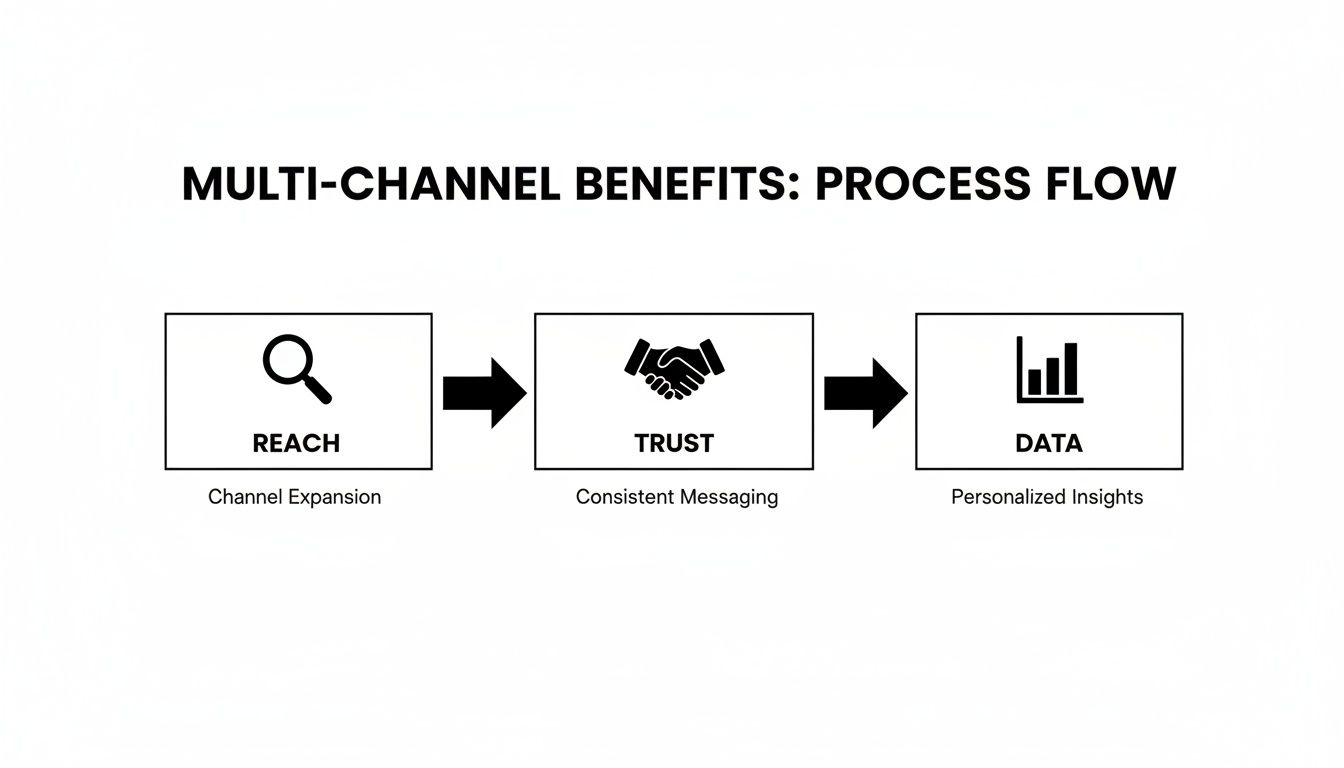
As you can see, a strategic channel mix doesn't just get you in front of more people; it fuels a cycle of continuous improvement. For more deep dives, check out our other guides on B2B marketing strategy.
Essential KPIs For Measuring Multi-Channel Success
Investing in a multi-channel strategy without measuring it is just crossing your fingers and hoping for the best. To know if all that effort is actually working, you have to look past easy vanity metrics like likes and shares. The real story is in the Key Performance Indicators (KPIs) that tie directly to business growth and prove your marketing spend is worth it.
This is what separates a good strategy from a great one. When you have the right data, you can defend your budget, show real results to the C-suite, and make confident decisions about where to invest more and what to pull back on. Without that clarity, you're just guessing.
Focusing on Data That Matters to the Business
To get a real sense of how you’re doing, you need to be looking at the metrics that show the health of your sales funnel and customer relationships. These KPIs give you the full picture, helping you see not just what you’re spending, but the long-term value you’re creating.
Here are the core KPIs you should have on your dashboard:
- Customer Acquisition Cost (CAC) by Channel: This tells you exactly how much you're spending to get a new customer from a specific channel, like LinkedIn ads or your email newsletter. It’s the single best way to find out which platforms are actually cost-effective for winning new business.
- Customer Lifetime Value (CLV): This is a forecast of the total revenue you can expect from a single customer over their entire relationship with you. When your CLV is climbing, it’s a great sign you’re not just acquiring customers—you’re keeping the valuable ones who drive long-term profit.
- Lead-to-Customer Conversion Rate: This one is simple but powerful. It’s the percentage of leads that actually become paying customers. When you track this by channel, you can quickly see which platforms are sending the most qualified, sales-ready prospects your way.
The Tricky Business of Attribution
One of the toughest puzzles in multi-channel marketing is attribution—knowing which touchpoints really led to the sale. Was it the webinar they watched last month? The blog post they found on Google? Or the final email that got them to click "buy"? More often than not, it was a little bit of everything.
This is where attribution modeling comes in handy. Instead of giving 100% of the credit to the first or last thing a person did, more sophisticated models spread the credit out across the entire journey. This gives you a far more honest look at how all your channels are working together to nudge someone from prospect to customer.
The global multi-channel marketing market is booming, projected to grow from $11.83 billion in 2023 to $13.23 billion in 2024. That explosive growth shows just how critical this approach has become. For instance, one of our B2B SaaS clients achieved a 52% jump in conversions and a 36% increase in returning customers just three months after we rolled out their multi-channel plan, demonstrating its incredible real-world impact. You can explore more on this trend with the multi-channel market growth report from The Business Research Company.
By setting up your analytics to see these connections, you can finally start optimizing your entire marketing engine. You can see how a solid content marketing and strategic communications plan fills the top of your funnel, which then gets nurtured by your email sequences and social media engagement. Seeing the whole picture is how you build a marketing machine that truly scales.
Where Multi-Channel Strategies Go Wrong (And How to Avoid It)
Executing a multi-channel marketing strategy is a powerful way to grow, but it’s definitely not a walk in the park. It's surprisingly easy to fall into a few common traps that can drain your budget, frustrate your team, and ultimately fall flat.
Knowing these pitfalls ahead of time is like having a map of the minefield. It helps you build a smarter, more resilient plan from day one.
One of the biggest mistakes we see is trying to be everywhere at once. It’s tempting to think you need a presence on every social platform and ads running on every network. But this "spray and pray" approach just spreads your resources too thin, leaving you with a weak, forgettable presence that doesn't make a real impact anywhere.
Your Brand Voice Sounds Inconsistent
A huge risk in a multi-channel setup is a fragmented brand voice. Imagine your LinkedIn posts are buttoned-up and corporate, but your email newsletters are full of slang and emojis. It can give your audience whiplash. This kind of inconsistency chips away at trust and makes your brand feel disjointed, or even unreliable.
This problem almost always happens when different people or teams manage channels without a shared playbook. Silos pop up, and suddenly you're running conflicting promotions. A customer might see a 10% discount advertised on Instagram but find a totally different offer on your website, which just leads to confusion.
The secret to multi-channel success isn’t just being on different platforms; it’s telling one cohesive story across all of them. Your brand’s personality and core values need to shine through, whether someone is reading a blog post or watching a YouTube short.
That’s what builds real brand recognition and makes your message stick.
Your Data Is Trapped in Silos
Another killer mistake is letting your data get stuck in separate, disconnected tools. When your email platform, social media analytics, and CRM don’t talk to each other, you’re flying blind. You end up with a fractured picture of the customer journey.
You might see a lead came from an email click, but you’ll completely miss that they first discovered your brand through a LinkedIn ad a month ago. Without that unified view, you can't personalize effectively or measure your true ROI. You're just guessing which channels are actually driving value.
- Fragmented Insights: You can't connect the dots between how a customer's interaction on one channel influences what they do on another.
- Wasted Budget: You might keep pouring money into a channel that looks good on its own but contributes very little to the big picture.
- Poor Customer Experience: You risk sending people irrelevant messages or asking for information they've already given you, which is a fast way to lose their interest.
Your Team Is Stretched Too Thin
Finally, don't underestimate the resources it takes to do this right. Every channel demands its own style of content, consistent engagement, and ongoing optimization. Piling LinkedIn, SEO, email, and paid ads onto a small team is a surefire recipe for burnout and mediocre results across the board.
It is always better to dominate a few channels that matter most to your audience than to have a weak presence on ten. Before you get excited and add another platform to your mix, stop and ask a few hard questions:
- Do we honestly have the bandwidth to manage this channel properly?
- Does our team have the specific skills to create content that works here?
- Does this channel actually align with our business goals and ideal customer?
By focusing your efforts, you ensure every part of your what is multi channel marketing strategy is a strong, effective tool for growth—not just another box you felt pressured to check.
Frequently Asked Questions
Even with a great plan on paper, questions always pop up when you start putting a multi-channel strategy into action. Here are some quick, straightforward answers to the questions we hear most often, designed to clear up common sticking points.
How do I choose the right channels for my SaaS business?
The absolute best place to start is by getting to know your ideal customer profile (ICP) inside and out. You need to ask one simple question: where do these people actually hang out online to learn, network, and solve their problems?
For most B2B SaaS businesses, a winning mix often looks something like this:
- LinkedIn: Non-negotiable for professional networking, running targeted ad campaigns, and sharing content that builds your authority.
- SEO-Driven Content: This is how you catch prospects right when they’re actively looking for a solution like yours.
- Email Marketing: Still the workhorse for nurturing the leads you get from other channels and building a direct line to your audience.
- Webinars or Trade Shows: Fantastic for deep-dive demonstrations and connecting with highly motivated leads.
But don't just guess. Dig into your analytics and see which channels are already bringing in your best traffic. Better yet, just ask! Survey your happiest customers and find out where they discovered you. It's always better to dominate three or four core channels than to spread yourself thin across ten.
Is multi-channel marketing expensive to implement?
The cost can be all over the map, but it's really a question of strategy, not just spending. The goal isn't to throw a huge budget across a dozen platforms. Instead, you want to focus your resources on the few channels where you know your audience lives.
Some channels, like SEO and content marketing, are a big time investment upfront but pay off with incredible long-term ROI. Others, like PPC or social media ads, give you faster results but require a direct ad spend.
The key is to relentlessly track the return on investment (ROI) for every single channel. That data tells you where to double down and where to pull back, ensuring every dollar you spend is working as hard as it can.
When you do it this way, it stops being an "expense" and becomes a calculated investment in your company's growth.
What's the first step to switch from single to multi-channel?
Your very first move is a data audit. Before you even think about adding a new channel, get a crystal-clear picture of how your current one is performing. Figure out what's working, what isn't, and who your most engaged users are.
From there, map out your customer's journey. Look for the gaps and rough patches where a new channel could make a big difference. For example, if you're all-in on email, could a targeted LinkedIn ad campaign help you reach a whole new audience and fill the top of your funnel?
Start small. Pick just one new channel that complements what you’re already doing, set a specific, measurable goal for it, and run a pilot campaign. See how it performs before you commit more resources. This step-by-step approach reduces risk and helps you build a much stronger, more sustainable multi-channel marketing strategy in the long run.
Ready to build a multi-channel strategy that drives real results? The team at Mick-Mar Inc. specializes in creating custom marketing roadmaps for B2B and SaaS companies that turn engagement into revenue. Let's build your growth plan together.