
Juggling multiple channels, tracking performance, and ensuring a cohesive message can feel like conducting an orchestra without a baton. That’s where marketing campaign management tools come in. Think of them as the essential conductor, bringing harmony and precision to your complex strategies. But with a market flooded with powerful platforms, each promising to be the ultimate solution, how do you choose the right one for your team? This decision is a big one, as the right tool can mean the difference between a disjointed effort and a high-performing, integrated campaign.
This guide is designed to cut through the noise and give you some clarity. We’ll explore 12 of the best marketing campaign management tools out there, breaking down their core strengths, notable limitations, and who they’re best for. From enterprise-level powerhouses like Salesforce and Adobe Marketo Engage to specialized platforms like Klaviyo and Sprout Social, we’ll provide a detailed analysis to help you make an informed choice. Each entry includes screenshots and direct links to give you a clear, practical view of what you’re getting.
Our goal is to arm you with the insights needed to select a platform that not only organizes tasks but actively accelerates your business growth. We’ll examine key features, pricing structures, and integration capabilities to help you find the perfect command center for your team. For another great perspective on the landscape, you can also explore other comprehensive lists of the top marketing campaign management tools for B2B. Let’s dive in and find the command center that fits your organization’s unique needs.
1. HubSpot Marketing Hub
HubSpot Marketing Hub stands out as a true all-in-one marketing campaign management tool, designed for businesses that want a single source of truth for their marketing and sales data. Its greatest strength is its deep, native integration with the HubSpot CRM. This connection allows teams to create, automate, and analyze campaigns with a complete view of the customer journey, from that first website visit to post-sale engagement. It effectively eliminates the data silos and integration headaches that often come with using multiple disconnected tools.
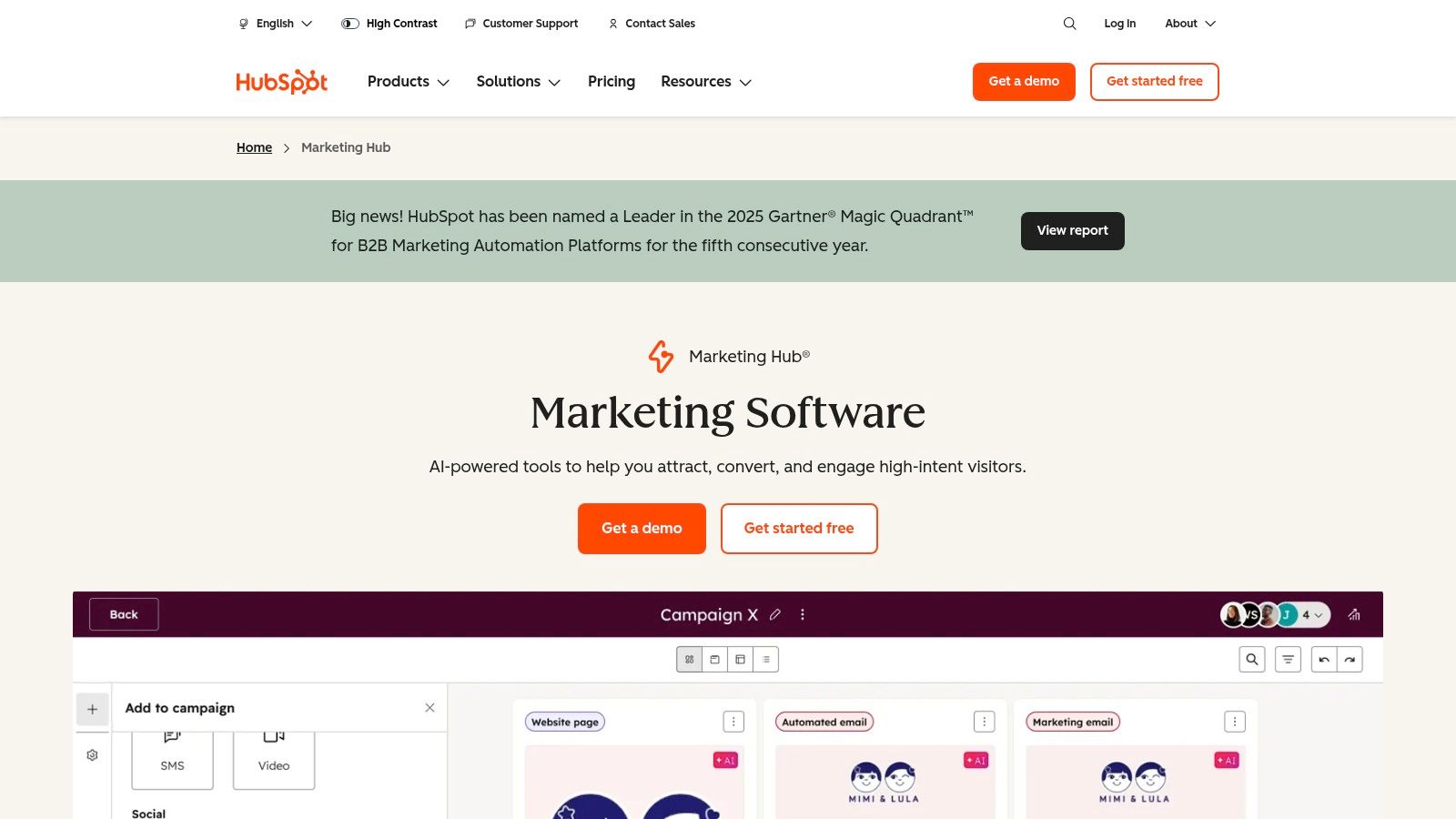
The platform is especially effective for running complex, multi-channel strategies. You can build sophisticated visual workflows to automate email sequences, social media posts, and ad campaigns, all triggered by customer behavior tracked right in the CRM. Its AI-powered features, like Content Assist and predictive lead scoring, help streamline content creation and prioritize follow-up activities, making it a powerful asset for teams looking to scale their efforts efficiently. For those looking to integrate this tool into their broader strategy, you can explore more resources on marketing operations and technology stacks.
Key Features & Pricing
| Feature | Description | Pricing Availability |
|---|---|---|
| Visual Workflow Automation | Build and manage omnichannel campaigns using a drag-and-drop editor. | Starter, Professional, Enterprise |
| Campaign Analytics | Track performance with attribution reporting and customizable dashboards. | Professional, Enterprise |
| Deep CRM Integration | Natively connects all marketing activities to customer records in the CRM. | All Tiers (Free included) |
| AI-Powered Tools | Generate content, build customer journeys, and predict lead quality. | Starter, Professional, Enterprise |
Pros:
- Robust Free Tier: A generous free plan provides a solid starting point for small businesses.
- Excellent Education: The HubSpot Academy offers extensive free training and certifications.
- Unified Platform: Reduces complexity by combining marketing, sales, and service tools.
Cons:
- Scaling Costs: Contact-based pricing can become expensive as your database grows.
- Mandatory Onboarding: Higher tiers require a paid, and often costly, onboarding process.
2. Salesforce Marketing Cloud Engagement (+ Growth/Advanced)
Salesforce Marketing Cloud Engagement is an enterprise-grade platform built for orchestrating sophisticated, large-scale customer journeys. It excels at unifying customer data from various sources to power highly personalized interactions across email, mobile, and social channels. Its primary strength lies in its seamless, native integration with the broader Salesforce ecosystem, including Sales Cloud and Service Cloud, which provides a comprehensive 360-degree view of the customer for marketing teams.
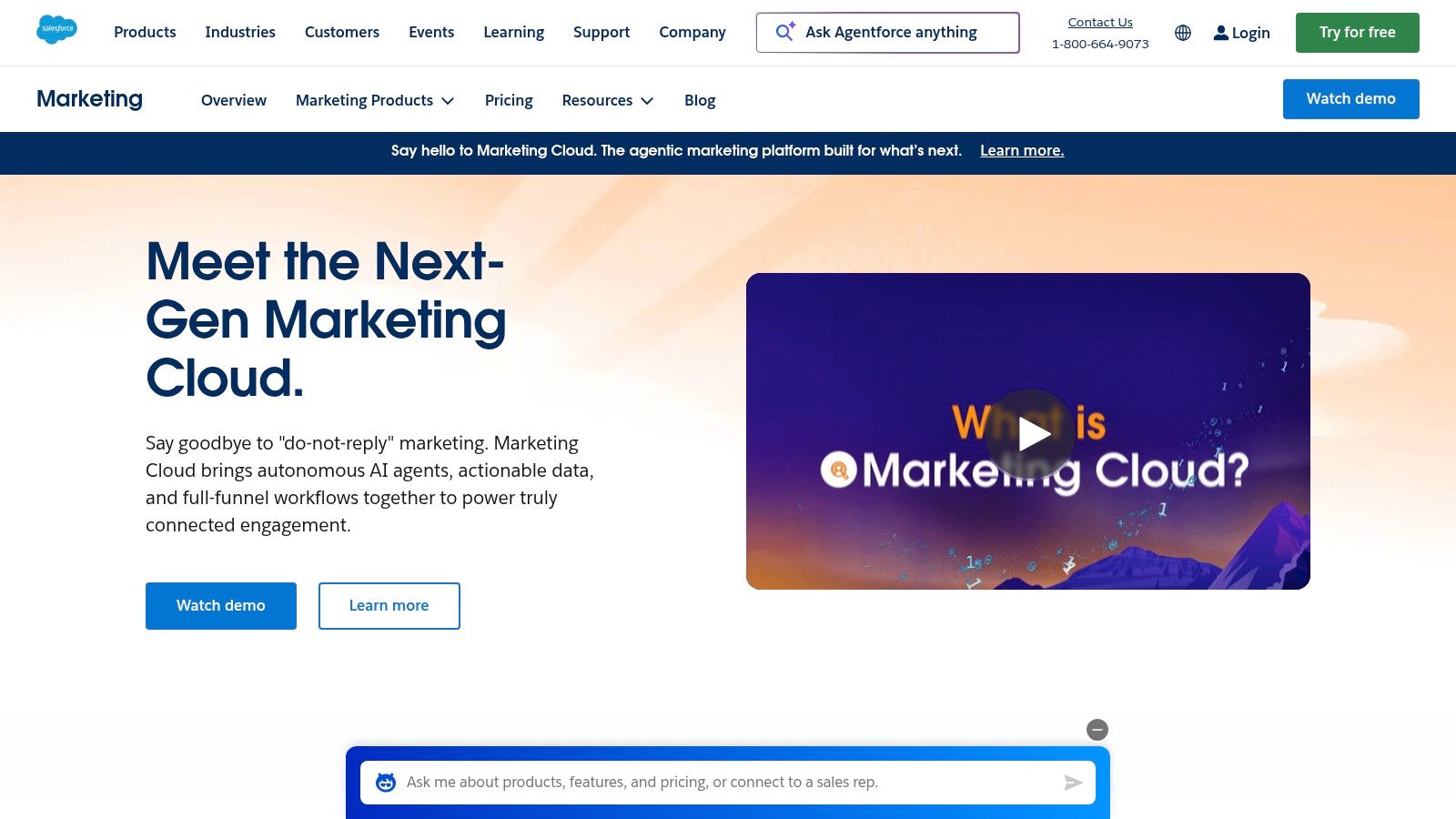
This platform is made for complex, high-volume scenarios, enabling global brands to manage intricate communication strategies with precision. Its AI engine, Einstein, helps optimize campaign timing, content, and channel selection to maximize engagement and conversion. For organizations looking to align their technology with overarching business goals, developing a clear framework is crucial; you can explore this further by understanding what defines an effective marketing strategy. The Growth and Advanced editions further extend these capabilities with tools like Data Cloud credits, allowing for even deeper data unification and segmentation.
Key Features & Pricing
| Feature | Description | Pricing Availability |
|---|---|---|
| Multi-Channel Journeys | Build and automate complex customer paths across email, SMS, push notifications, and social. | Growth, Advanced, Enterprise+ |
| AI Optimization (Einstein) | Leverage AI for predictive engagement scoring, send-time optimization, and content personalization. | Growth, Advanced, Enterprise+ |
| Native Salesforce Integration | Connects marketing activities directly with sales and service data within the core CRM. | All Editions |
| Data Cloud Credits | Unify and activate customer data from any source for advanced segmentation. | Advanced, Enterprise+ |
Pros:
- Enterprise Scalability: Built to handle the volume and complexity of large, global marketing programs.
- Rich Ecosystem: Access to a vast network of implementation partners, apps, and success plans.
- Deep Personalization: Unifies data to enable highly individualized customer interactions at scale.
Cons:
- Premium Pricing: Subscriptions are billed annually and represent a significant investment.
- Complex Implementation: Can be resource-intensive to set up and requires specialized expertise.
3. Adobe Marketo Engage
Adobe Marketo Engage is a powerhouse among marketing campaign management tools, specifically engineered for enterprise B2B and high-value B2C organizations with complex customer lifecycles. Its key differentiator is its incredible depth in lead management, account-based marketing (ABM), and sophisticated journey orchestration. The platform empowers marketers to manage everything from top-of-funnel lead generation to intricate, multi-stage nurturing and sales alignment, making it perfect for teams focused on long sales cycles.
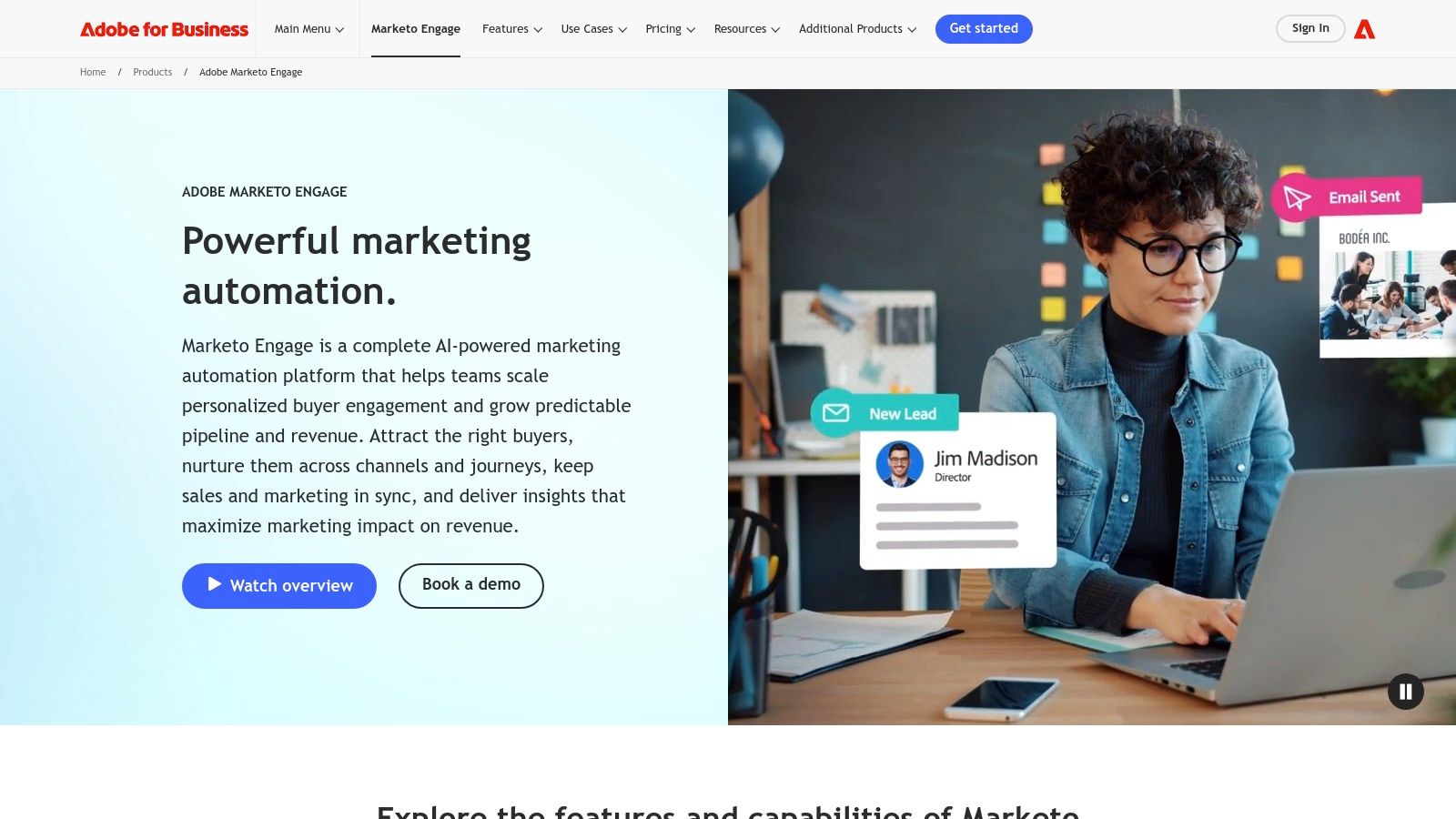
Unlike all-in-one platforms that cater to a broader market, Marketo provides unparalleled control over data segmentation, personalization, and multi-touch revenue attribution. This allows enterprise teams to build highly targeted campaigns and precisely measure their financial impact. Its native integrations with major CRMs like Salesforce and Microsoft Dynamics are deep and robust, facilitating seamless lead handoffs and a unified view of the customer across marketing and sales. This focus on enterprise-grade governance and scalability makes it a staple for large, data-driven marketing operations. For more information, visit the official Adobe Marketo Engage website.
Key Features & Pricing
| Feature | Description | Pricing Availability |
|---|---|---|
| Lead & Account-Based Automation | Design and execute sophisticated lead nurturing and ABM campaigns. | All Tiers |
| Advanced Segmentation | Create highly dynamic and granular audience segments for personalization. | All Tiers |
| Multi-Touch Attribution | Analyze campaign influence on revenue with advanced attribution models. | Available in higher tiers |
| Native CRM Integrations | Offers deep, bi-directional sync with Salesforce, Microsoft Dynamics, and others. | All Tiers |
Pros:
- Enterprise-Grade Scalability: Built to handle millions of contacts and complex campaign logic.
- Deep Customization: Offers extensive flexibility for tailoring the platform to specific business needs.
- Powerful Attribution: Provides clear insights into marketing’s direct impact on revenue.
Cons:
- High Total Cost of Ownership: Pricing is quote-based and represents a significant enterprise investment.
- Steep Learning Curve: Requires dedicated resources and expertise to fully leverage its capabilities.
4. Mailchimp (by Intuit)
Mailchimp has long been a household name for email marketing, but it has evolved into a broader marketing campaign management tool perfect for small to medium-sized businesses and creators. Its main draw is its super user-friendly interface and approachable feature set, making it an excellent starting point for anyone new to marketing automation. The platform makes it simple to build email campaigns, automate customer journeys, and even create basic websites and landing pages, all from one central hub.
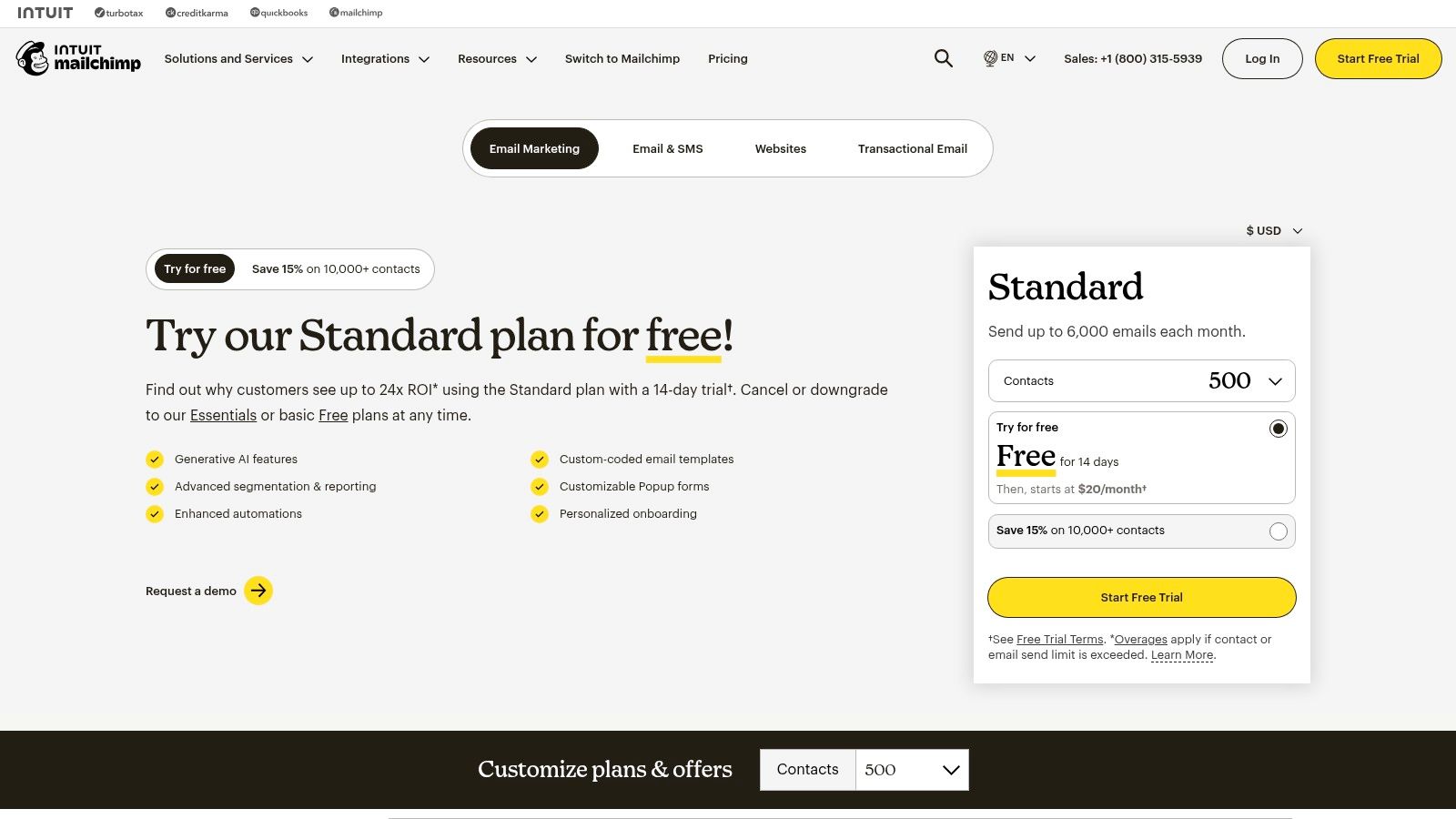
Unlike more complex, enterprise-focused systems, Mailchimp prioritizes ease of use with its huge library of templates and pre-built automation workflows. This lets teams launch campaigns quickly without a steep learning curve. Higher-tier plans unlock more sophisticated features, like predictive segmentation, which uses data science to identify customer segments likely to engage or purchase. While it excels as a starting point, integrating Mailchimp into a more comprehensive strategy often requires professional guidance; explore how specialized marketing services can help maximize its capabilities.
Key Features & Pricing
| Feature | Description | Pricing Availability |
|---|---|---|
| Pre-built Customer Journeys | Automate multi-step campaigns using visual, template-based workflows. | Essentials, Standard, Premium |
| Predictive Segmentation | Uses data to forecast customer lifetime value and purchase likelihood. | Standard, Premium |
| Website & Landing Pages | Build and publish simple websites and landing pages with a drag-and-drop editor. | All Tiers (Free included) |
| SMS Marketing | Engage contacts via text messages as an add-on channel. | Add-on for Essentials, Standard, Premium |
Pros:
- Intuitive Interface: Very easy to get started, especially for users new to marketing automation.
- Vast Integration Marketplace: Connects with hundreds of popular apps and services.
- Strong Template Library: Offers a wide variety of professionally designed email and page templates.
Cons:
- Restrictive Free Plan: The free tier has tight limits on contacts and monthly email sends.
- Tiered Feature Access: Many advanced automation and analytics features are locked behind expensive plans.
5. ActiveCampaign
ActiveCampaign positions itself as a customer experience automation platform, and it truly excels at combining sophisticated email marketing, automation, and CRM functionalities. It stands out by offering powerful automation capabilities—the kind usually found in pricey enterprise tools—at a price point accessible to SMBs and mid-market businesses. The platform’s core strength is its visual workflow builder, which allows marketers to orchestrate complex, multi-channel customer journeys based on a huge array of triggers, from website visits to purchase history.
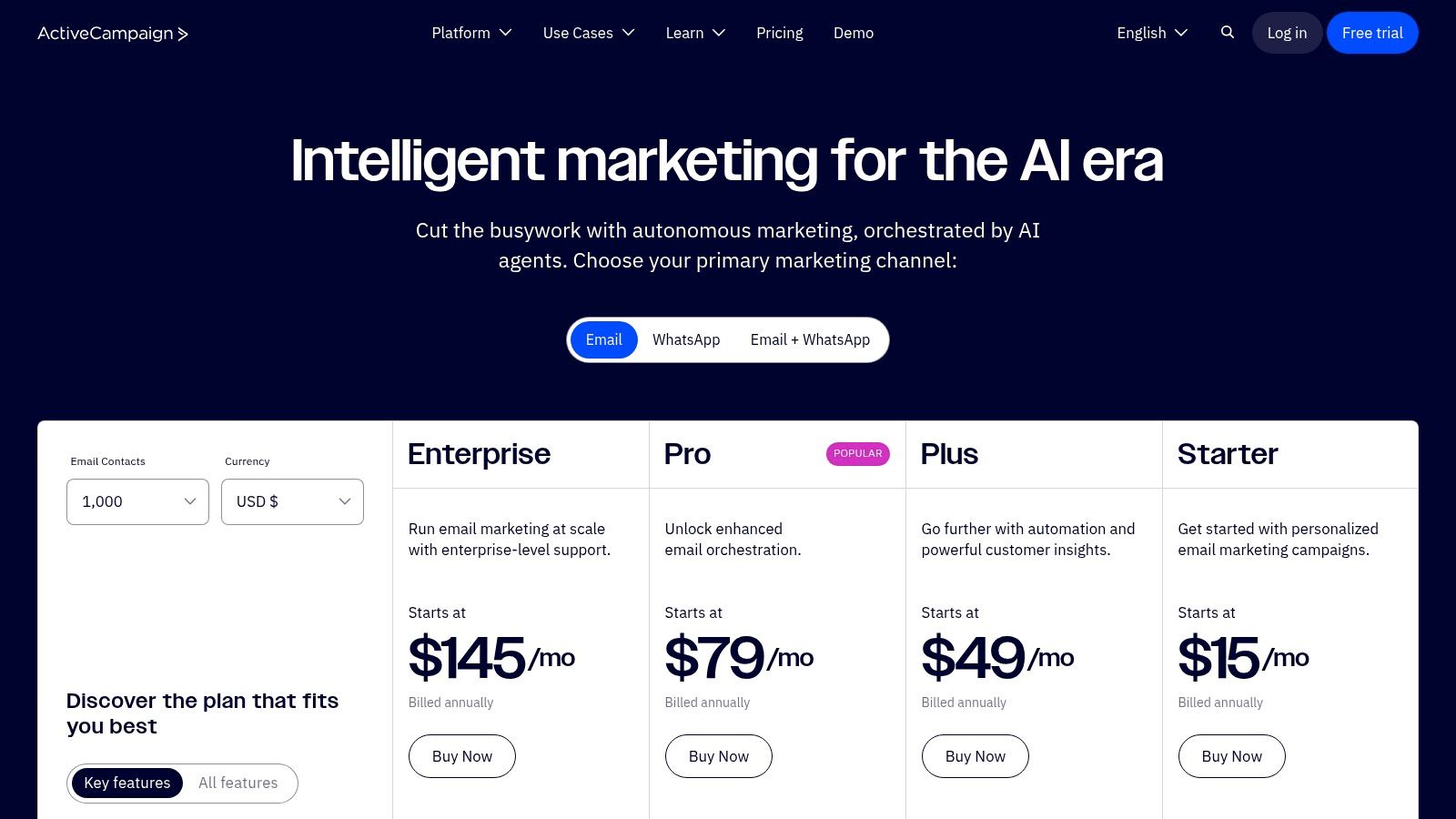
This tool is a fantastic choice for businesses that prioritize personalized, automated communication across various touchpoints. You can integrate email, SMS, and even WhatsApp into a single automated sequence, ensuring a cohesive experience for your audience. With over 900 integrations, ActiveCampaign easily connects to popular e-commerce platforms, lead generation tools, and analytics software, making it a flexible hub for managing your campaigns. The platform’s focus on automation allows teams to scale their engagement efforts without a proportional increase in manual work, making it a smart choice for growing businesses.
Key Features & Pricing
| Feature | Description | Pricing Availability |
|---|---|---|
| Visual Automation Builder | Create powerful, automated workflows with a drag-and-drop interface. | All Tiers (Marketing Lite+) |
| Multi-Channel Messaging | Engage contacts through email, SMS, site messages, and WhatsApp. | Varies by channel and plan tier |
| Integrated Sales CRM | Manage deals, pipelines, and contacts directly within the platform. | Marketing Plus, Professional, Enterprise |
| Extensive Integrations | Connect to over 900 apps, including Shopify, Salesforce, and WordPress. | All Tiers |
Pros:
- Affordable Automation: Provides advanced automation features at more accessible price points.
- Excellent Deliverability: Strong reputation for high email deliverability rates.
- Flexible Integration: A vast library of native integrations supports diverse tech stacks.
Cons:
- Tiered Feature Access: Key features, like the CRM and landing pages, are locked behind higher-priced plans.
- Learning Curve: The depth of automation options can be overwhelming for new users.
6. Klaviyo
Klaviyo has carved out a special place for itself as the go-to marketing campaign management tool for e-commerce brands. Its power comes from incredibly deep integrations with leading platforms like Shopify, BigCommerce, and Magento, which let it pull in rich customer data. We’re talking browsing history, cart contents, and purchase frequency—all of which fuel hyper-personalized email, SMS, and now WhatsApp campaigns that drive repeat business and boost customer lifetime value.
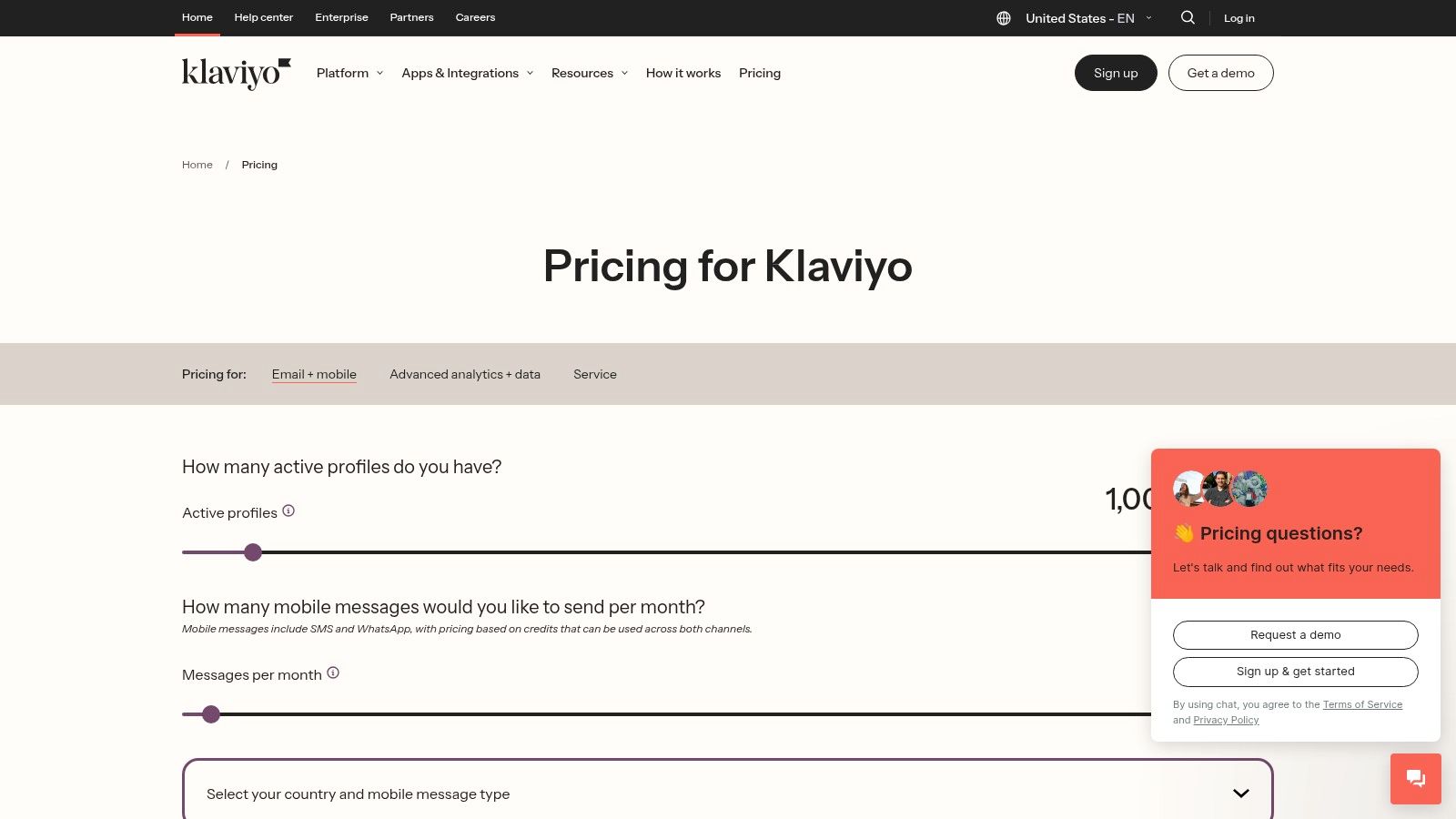
The platform shines when it comes to creating sophisticated, multi-channel automation flows for critical e-commerce moments like abandoned carts, browse abandonment, and post-purchase follow-ups. With over 350 pre-built integrations, businesses can connect their entire tech stack to create a unified customer profile. Klaviyo’s AI-powered features, such as predictive analytics for churn risk and AI-assisted content creation, further empower marketers to work smarter, not harder. This makes it an indispensable asset for any team focused on retail.
Key Features & Pricing
| Feature | Description | Pricing Availability |
|---|---|---|
| Profile-Based Targeting | Use rich behavioral and transactional data for advanced segmentation. | All Tiers (Free included) |
| Multi-Channel Automation | Build automated flows across email, SMS, and WhatsApp. | All Tiers |
| E-commerce Integrations | Offers over 350 native integrations with platforms like Shopify and WooCommerce. | All Tiers |
| AI-Powered Tools | Generate subject lines, optimize send times, and predict customer behavior. | All Tiers |
Pros:
- Deep E-commerce Data: Unparalleled ability to leverage store data for personalization.
- Transparent Pricing: A simple slider-based model makes it easy to predict costs.
- Unified Customer View: Consolidates data from multiple sources into a single profile.
Cons:
- Scaling Costs: Pricing is based on active profiles and message volume, which can grow quickly.
- Niche Focus: Less suitable for B2B or non-e-commerce businesses.
7. Braze
Braze positions itself as a top-tier cross-channel customer engagement platform, built for enterprise-level brands that need real-time, personalized communication. Its specialty is orchestrating seamless customer journeys across a huge range of channels, including email, push notifications, in-app messages, and the web. The platform excels at ingesting and acting on live data streams, allowing marketing teams to trigger relevant messages based on immediate user behavior rather than waiting for delayed batch processing.
This tool is a powerful choice for businesses that need to manage marketing campaigns at a massive scale, especially those with sophisticated mobile app strategies. Its Canvas Flow journey builder lets marketers create complex, multi-step, and multi-channel campaigns with branching logic. BrazeAI enhances this by providing predictive targeting, personalized content suggestions, and intelligent timing to optimize engagement. This makes it a standout among marketing campaign management tools for companies prioritizing real-time, data-driven interactions.
Key Features & Pricing
| Feature | Description | Pricing Availability |
|---|---|---|
| Cross-Channel Journey Orchestration | Build and visualize customer journeys across email, mobile, and web channels. | All Tiers (Quote-based) |
| BrazeAI Suite | Use AI for predictive audience segmentation, content personalization, and send-time optimization. | All Tiers (Quote-based) |
| Real-Time Data Activation | Ingest and act on user data streams instantly for timely, relevant messaging. | All Tiers (Quote-based) |
| Extensive Integrations | Connect with a wide ecosystem of data sources, analytics tools, and channels. | All Tiers (Quote-based) |
Pros:
- Enterprise-Grade Performance: Built to handle billions of messages and real-time data processing for large-scale operations.
- Excellent Mobile Focus: Strong capabilities for in-app messaging, push notifications, and mobile user segmentation.
- Startup-Friendly Program: Offers free access for eligible, venture-backed startups to support early growth.
Cons:
- Enterprise-Oriented Pricing: Pricing is quote-based and generally tailored for larger businesses with significant budgets.
- Complex Implementation: Can require substantial technical resources to fully integrate and leverage its advanced features.
8. Iterable
Iterable excels as a cross-channel marketing platform engineered for sophisticated, data-driven lifecycle campaigns. Its primary strength is empowering marketers to create highly individualized customer experiences across email, mobile push, SMS, in-app messages, and even direct mail. The platform is built around a flexible data model that ingests real-time user behavior. This allows for dynamic segmentation and personalization that adapts instantly to customer actions, making it a top-tier marketing campaign management tool for B2C brands.
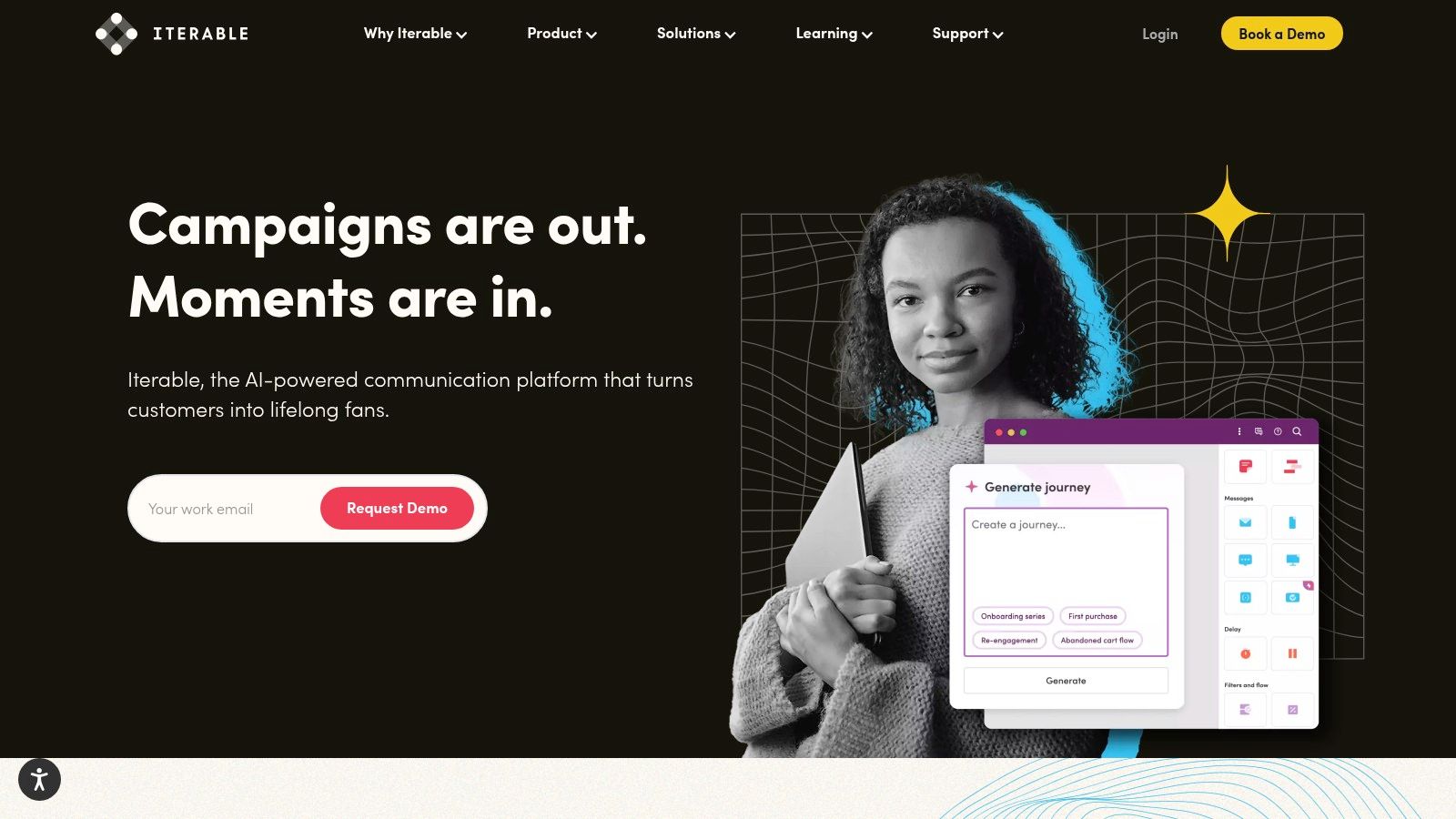
The platform’s Workflow Studio is a standout feature, offering a powerful yet intuitive visual builder for mapping out complex customer journeys. Marketers can design intricate, multi-step campaigns with branching logic, A/B testing, and delays, all without needing developer support. This focus on orchestrating seamless, multi-channel conversations based on a unified customer profile makes Iterable particularly effective for retention-focused teams looking to boost engagement and lifetime value. Its robust experimentation capabilities allow for continuous optimization across every touchpoint.
Key Features & Pricing
| Feature | Description | Pricing Availability |
|---|---|---|
| Workflow Studio | Build, visualize, and automate complex cross-channel user journeys. | Included in all plans |
| Real-Time Personalization | Utilize dynamic data from any source to personalize messages instantly. | Included in all plans |
| Multi-Channel Messaging | Engage users across email, SMS, push notifications, and in-app messages. | Included in all plans |
| Experimentation Tools | Conduct A/B/n tests on any part of a campaign, from subject lines to entire workflows. | Included in all plans |
Pros:
- Powerful Lifecycle Focus: Highly effective for creating and managing complex customer retention and re-engagement campaigns.
- Flexible Data Model: Integrates easily with various data sources, enabling deep, real-time personalization.
- Strong Enterprise Integrations: Features a wide partner ecosystem and robust API for connecting with other business-critical tools.
Cons:
- Quote-Based Pricing: Lacks transparent pricing tiers, requiring direct engagement with the sales team for a custom quote.
- Steeper Learning Curve: The depth of its features may require more initial setup and training compared to simpler tools.
9. Brevo (formerly Sendinblue)
Brevo, formerly known as Sendinblue, has made a name for itself as a highly accessible marketing campaign management tool, especially for small to medium-sized businesses and startups. Its main appeal is offering a robust suite of features—including email, SMS, and WhatsApp campaigns—at a price point that is significantly more approachable than many of its enterprise-level competitors. The platform provides a unified space to manage multichannel communications, build landing pages, and automate marketing workflows without a hefty upfront investment.
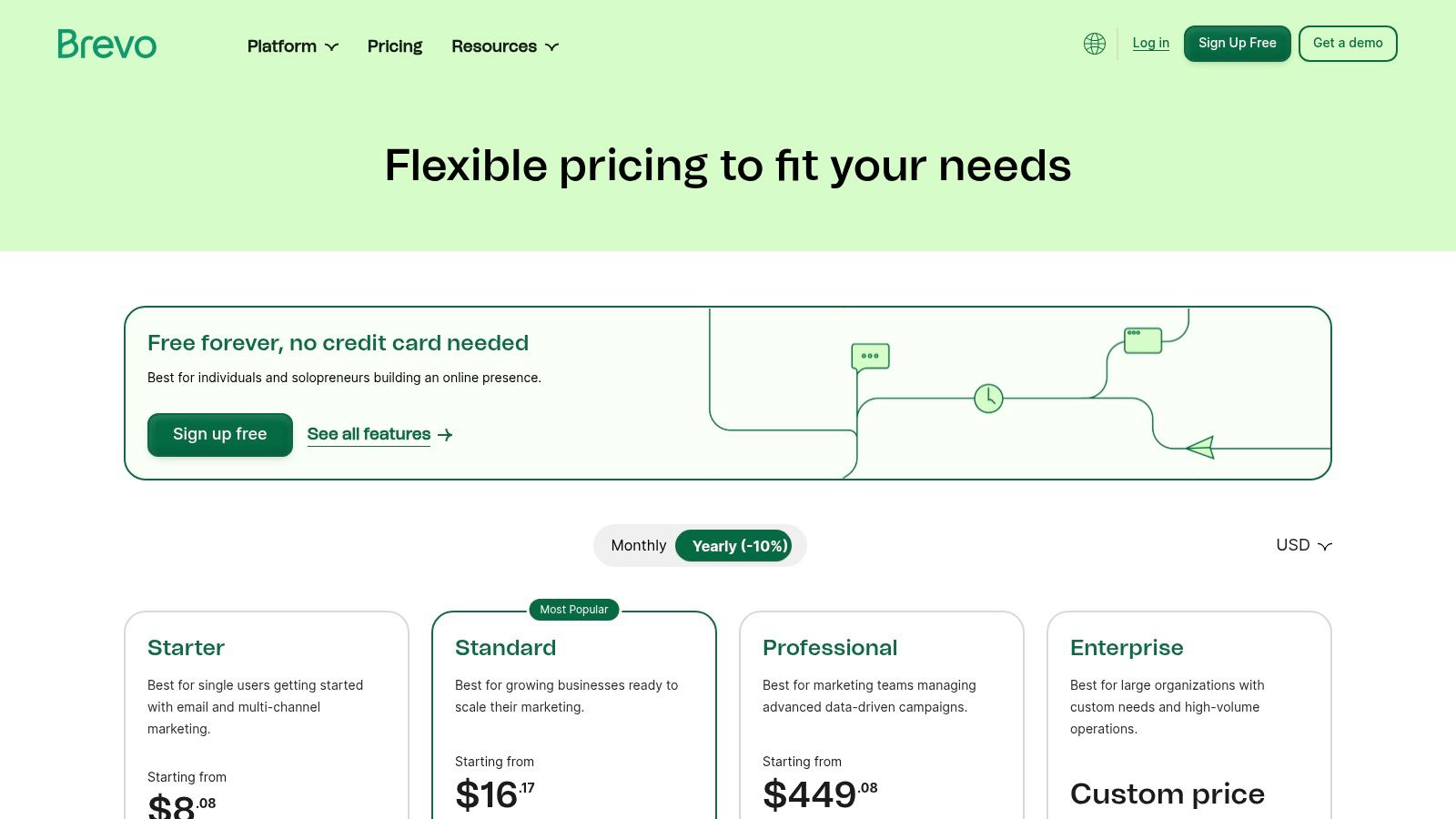
Brevo really stands out with its focus on affordability and flexibility. Unlike platforms with strict contact-based pricing, Brevo’s plans are primarily based on email send volume. This makes it cost-effective for businesses with large but less frequently engaged contact lists. This model allows companies to scale their sending capacity as their needs grow, rather than being penalized for simply growing their audience. For businesses needing an all-in-one solution that covers essential marketing channels without the complexity or cost of larger suites, Brevo is a compelling and practical choice.
Key Features & Pricing
| Feature | Description | Pricing Availability |
|---|---|---|
| Multichannel Messaging | Engage customers via email, SMS, WhatsApp, and web push notifications from one platform. | All Tiers (Free included) |
| Marketing Automation | Create automated workflows for welcome series, abandoned carts, and other triggers. | Free, Starter, Business |
| Sales & CRM Tools | Includes a lightweight CRM, chat functionality, and meeting scheduling tools. | All Tiers (Free included) |
| Landing Page Builder | Design and launch custom landing pages to support campaign conversion goals. | Starter, Business |
Pros:
- Highly Competitive Pricing: Offers a generous free plan and affordable paid tiers, ideal for SMBs.
- Flexible Pricing Model: Primarily based on email volume, not just contact count, offering better cost control.
- All-in-One Essentials: Combines key marketing and sales tools in a single, user-friendly interface.
Cons:
- Limited Advanced Features: A/B testing, advanced reporting, and multi-user access are reserved for higher-tier plans.
- Steeper Learning Curve for Automation: While powerful, the workflow builder can be less intuitive than some competitors.
10. Sprout Social
Sprout Social carves out its niche as a specialized marketing campaign management tool for businesses where social media is a core part of campaign success. It excels by unifying social media planning, publishing, engagement, and analytics into a single, cohesive platform. This consolidation is its key advantage, allowing marketing teams to manage complex, multi-channel social campaigns without juggling multiple native apps or disjointed tools. The result is better brand consistency and streamlined reporting.
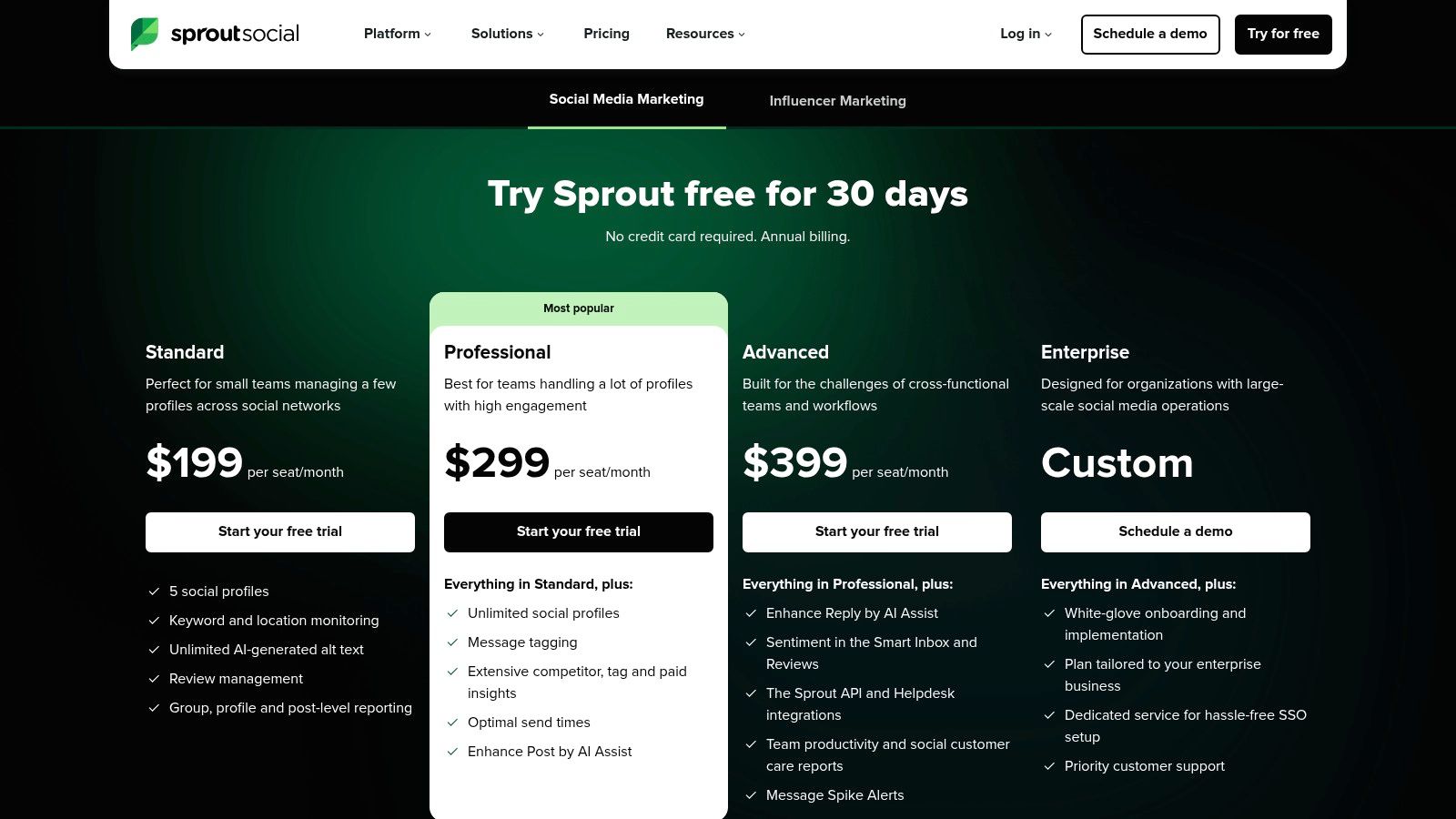
The platform is built for team collaboration, offering a unified inbox that aggregates messages from all connected profiles, enabling faster response times and seamless task assignment. Its real strength is turning social data into actionable campaign intelligence. Features like AI-powered scheduling optimize post timing for maximum engagement, while detailed competitive and paid performance analytics help marketers refine their strategy in real-time. This focus on data-driven social management makes it ideal for brands aiming to prove social media ROI within broader marketing campaigns.
Key Features & Pricing
| Feature | Description | Pricing Availability |
|---|---|---|
| Unified Social Inbox & Calendar | Manage engagement and schedule content across multiple networks from one hub. | Standard, Professional, Advanced |
| Competitive & Paid Analytics | Track competitor performance and analyze paid social campaign effectiveness. | Professional, Advanced |
| AI-Assisted Publishing | Utilize Optimal Send Times and AI Assist features to enhance content reach and replies. | Professional, Advanced |
| Team Collaboration Tools | Assign tasks, manage approval workflows, and view a complete conversation history. | Standard, Professional, Advanced |
Pros:
- Intuitive User Interface: A clean and well-organized UI makes it easy for teams to get up and running quickly.
- Powerful Analytics: Provides deep insights into post performance, audience demographics, and campaign tags.
- Scalable Architecture: Effectively supports single-brand use and scales to complex multi-profile agency needs.
Cons:
- Per-Seat Pricing Model: Costs can add up quickly for larger marketing teams, making it a significant investment.
- Limited Integrations Outside Social: While strong in its niche, it requires integration with other tools for full-funnel campaign management.
11. G2 – Campaign Software category
While it’s not a standalone marketing campaign management tool itself, G2’s Campaign Software category is an indispensable research hub for any team evaluating their options. It acts as a comprehensive software marketplace, bringing together verified user reviews, detailed vendor comparisons, and market intelligence to help buyers make smart decisions. Instead of offering a single solution, it gives you a bird’s-eye view of the entire landscape, letting you filter and sort platforms based on your specific business size, industry, and feature needs.
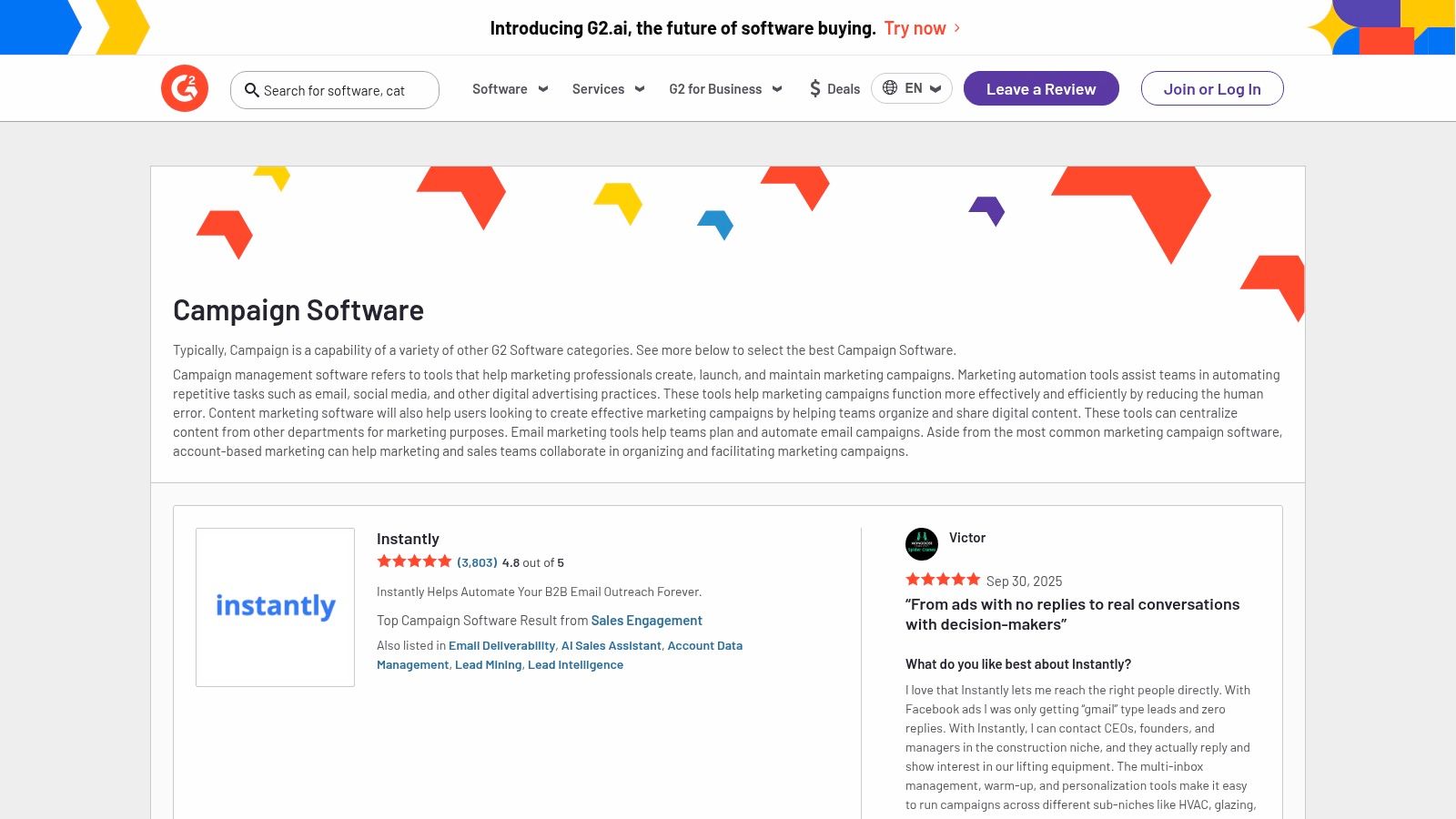
The platform’s real value lies in its crowdsourced insights. You can directly compare top contenders like HubSpot and Mailchimp side-by-side, analyzing real user feedback on usability, support quality, and implementation. The proprietary G2 Grid® visualizes market leaders, contenders, and niche players, giving you a quick understanding of a tool’s market presence and user satisfaction. For teams just starting their search, G2’s campaign software category page is the perfect first step to build a shortlist and see how vendor claims stack up against real-world user experiences.
Key Features & Pricing
| Feature | Description | Pricing Availability |
|---|---|---|
| Verified User Reviews | Access thousands of reviews from real users, validated by the G2 team. | Free |
| Side-by-Side Comparisons | Compare up to four different software tools on features, pricing, and ratings. | Free |
| G2 Grid® Reports | Visualize the market landscape based on user satisfaction and market presence. | Free (Premium reports available) |
| Buyer Intent Data | See which companies are researching your products or competitors (Paid feature for vendors). | G2 Marketing Solutions |
Pros:
- Authentic Feedback: Recent, verified user reviews help cut through marketing jargon and validate vendor claims.
- Broad Coverage: Includes a vast array of marketing automation, CRM, and specific campaign management tools.
- Free to Use: All core comparison and review features are available at no cost for software buyers.
Cons:
- Information Overload: The sheer number of listings can be overwhelming without clear search criteria.
- Review Recency: Users must pay attention to review dates and volume, as older feedback may not reflect the current product.
12. Capterra – Campaign Management Shortlist/Category
Like G2, Capterra isn’t a campaign management tool itself, but it’s an essential resource for any team in the selection process. This Gartner-owned software marketplace offers a comprehensive, filterable directory of marketing campaign management tools, allowing you to efficiently compare a vast landscape of solutions. Its value is in consolidating vendor information, user reviews, and pricing models into a single, scannable interface, saving you countless hours of research.
The platform is great for helping marketers create an initial shortlist based on their specific, non-negotiable requirements. You can filter the campaign management software category by features like A/B testing or lead management, deployment type (cloud vs. on-premise), and business size. This systematic approach ensures you only spend time evaluating tools that are a genuine fit for your operational needs and budget. For teams starting their search, Capterra’s buyer guides and comparison matrices provide a structured framework for making an informed decision.
Key Features & Pricing
| Feature | Description | Pricing Availability |
|---|---|---|
| Filtered Software Directory | Search and sort campaign management tools by feature, price, and user rating. | Free to Use |
| User Reviews | Access verified reviews from real users to gauge software performance and support. | Free to Use |
| Comparison Tool | Compare up to four different software options side-by-side on key attributes. | Free to Use |
| Buyer Guides & Shortlists | Read expert-curated guides and shortlists of top-rated tools in the category. | Free to Use |
Pros:
- Time-Saving Research: Consolidates hundreds of tools into one searchable database.
- Verified User Reviews: Provides social proof and real-world insights into a tool’s performance.
- Direct Vendor Links: Easily navigate to official vendor pages for trials or purchases.
Cons:
- Sponsored Placements: Top-listed products may be sponsored, requiring users to critically evaluate rankings.
- Information Can Lag: Relies on vendors to update information, which may not always be current.
Top 12 Marketing Campaign Management Tools Comparison
| Platform | Core Features ✨ | User Experience ★★★★☆ | Value Proposition 💰 | Target Audience 👥 | Unique Selling Points 🏆 | Price Points 💰 |
|---|---|---|---|---|---|---|
| HubSpot Marketing Hub | AI-assisted multi-channel campaigns, CRM integration | Mature educational ecosystem, visual workflows | Free tier + scalable upgrades | SMBs to Enterprise | Tight CRM-marketing alignment ✨ | Contact-based, onboarding fees at high tiers |
| Salesforce Marketing Cloud | AI-optimized multi-channel journeys, Data Cloud | Supports complex global campaigns | Enterprise-grade scalability | Large enterprises | Extensive ecosystem & success plans 🏆 | Premium, annual billing |
| Adobe Marketo Engage | Lead/account-based automation, journey analytics | Strong governance, advanced segmentation | Robust enterprise lifecycle management | Enterprises | Multi-touch attribution, native CRM integrations 🏆 | Quote-based, enterprise-level TCO |
| Mailchimp (by Intuit) | Email journeys, website builder, predictive segm. | Easy start, broad templates | Good for SMBs & growing brands | SMBs, startups | Large integrations marketplace | Free + tier upgrades |
| ActiveCampaign | Visual automation, multi-channel (email, SMS, WhatsApp) | Robust automation, no setup fees | Strong value at lower price tiers | SMBs, mid-market | 900+ integrations, free trial | Tiered pricing |
| Klaviyo | E-commerce targeting, 350+ integrations | Transparent pricing, AI content | Deep retail data utilization | E-commerce (Shopify, Magento) | Credits-based SMS/WhatsApp, AI-powered content ✨ | Profile/volume-based scaling |
| Braze | Real-time cross-channel orchestration, BrazeAI | Enterprise-grade scale, free startup trial | High scale & AI performance | Enterprise | Real-time orchestration, startup program 🏆 | Quote-based, enterprise focus |
| Iterable | Workflow Studio, real-time personalization | Usability tailored for lifecycle marketing teams | Wide enterprise integrations | Enterprises | Strong lifecycle marketing tools | Quote-based |
| Brevo (formerly Sendinblue) | Email, SMS, WhatsApp, chat, automation | Flexible pricing, easy entry | Affordable for SMBs & startups | SMBs, startups | Pay-as-you-go pricing, multichannel support | Competitive entry-level |
| Sprout Social | Social inbox, publishing calendar, AI scheduling | Intuitive UI, strong analytics | Scales from single to multi-team users | Teams focusing on social media | AI-assisted reply automation | Per seat, can be costly for large teams |
| G2 – Campaign Software category | User reviews, vendor comparisons, buyer insights | Verified feedback, broad coverage | Validates vendor claims | Buyers/researchers | Side-by-side vendor comparisons 🏆 | Free access |
| Capterra – Campaign Management | Shortlists, buyer guides, pricing & feature filters | Fast scanning, direct vendor links | Ease of comparison + purchase | Buyers/researchers | Comprehensive buyer guides | Free access |
From Tools to Triumphs: Activating Your Campaign Strategy
Navigating the wide world of marketing campaign management tools can definitely feel like a lot. We’ve journeyed through enterprise giants like HubSpot and Salesforce, explored e-commerce specialists like Klaviyo, and checked out social media powerhouses like Sprout Social. The main takeaway is clear: there’s no single “best” platform for everyone. The ideal tool is the one that fits perfectly with your unique business, team structure, and goals.
Making the right choice is a huge step, but it’s only the beginning. The true value of any software is unlocked through smart implementation and expert execution. A powerful tool in the wrong hands, or one without a clear strategy guiding it, will rarely deliver the ROI you’re hoping for.
Synthesizing Your Options: A Practical Framework
To move from thinking to doing, it helps to boil your decision down to a few key areas. Think about the platforms we’ve reviewed and filter them through these essential questions:
- Scalability vs. Specialization: Do you need an all-in-one solution like Adobe Marketo Engage that can grow with a large enterprise, or a specialized tool like Braze that excels in mobile-first customer engagement? Your five-year plan is just as important as your current needs.
- Team Skillset and Resources: Does your team have the technical know-how to manage a complex platform, or would a more intuitive interface like Mailchimp’s be more effective? Don’t forget to consider the time and cost of training.
- Integration and Ecosystem: How well does the tool play with your existing tech stack (like your CRM, analytics platform, or e-commerce store)? A tool that creates data silos is a liability, not an asset. ActiveCampaign and HubSpot, for example, are known for their strong integration capabilities.
- Total Cost of Ownership (TCO): Look beyond the monthly price. Factor in implementation costs, training, potential agency support, and add-on features. What seems like a budget-friendly option at first might become more expensive as you grow.
Remember, the goal isn’t just to automate tasks but to empower your team with the insights and capabilities needed to create resonant, data-driven campaigns. A 2023 industry report highlighted that organizations leveraging integrated campaign management tools see a significant uplift in lead conversion rates, underscoring the importance of a well-chosen and properly implemented system.
Beyond the Software: The Human Element of Success
Ultimately, even the most advanced marketing campaign management tools are just that: tools. They amplify your strategy, but they don’t replace it. The difference between a stalled campaign and a triumphant one often comes down to the expertise behind the keyboard. This involves understanding the nuances of your buyer’s journey, crafting compelling messaging, analyzing performance data, and constantly optimizing your approach.
Your chosen platform is the engine, but a sound strategy is the GPS guiding you toward your destination. Before you commit to a long-term contract, make sure you have a clear roadmap for how you’ll use its features to achieve specific, measurable business outcomes. This strategic foresight is what transforms a software purchase into a true competitive advantage.
Selecting the right marketing campaign management tool is a critical first step, but successful execution requires deep strategic expertise. At Mick-Mar Inc., we partner with B2B SaaS companies to build and execute high-impact marketing campaigns that drive measurable growth. If you need a strategic partner to help you navigate your buyer’s journey and maximize your tool’s ROI, let’s connect and build your roadmap to success.