
When you hear “event planning,” you might picture choosing a venue and picking out a menu. But for a B2B SaaS company, it’s a whole different ballgame. We’re not just throwing a party – we’re building a powerful engine for growth, and it’s one of the most effective tools in your marketing toolkit.
Strategic event planning is all about transforming a gathering into a calculated marketing play designed to generate high-quality leads, speed up sales conversations, and forge real, lasting relationships with customers.
Unpacking Strategic SaaS Event Planning
For a SaaS business, planning an event is less like party planning and more like executing a product launch. Every single element, from the speaker lineup to the subject line of the follow-up email, is meticulously crafted to hit a specific business objective.
This mindset shifts the entire focus from logistics to results. Instead of just counting how many people showed up, you’re tracking pipeline generated, customer lifetime value, and shifts in brand sentiment. It’s the difference between hosting a fun happy hour and hosting a happy hour that directly sources three new enterprise contracts.
At its core, this approach requires marketing, sales, and customer success teams to be in lockstep. This unity creates a seamless and valuable experience for everyone who attends, putting your product’s real-world value on full display. Before we dive deeper, it’s crucial to understand the foundational components that make SaaS event planning so distinct. These aren’t just best practices; they are the non-negotiable pillars that ensure your event drives tangible business growth.
The Core Pillars of SaaS Event Planning
| Pillar | Description | Key Objective |
|---|---|---|
| Goal-Oriented Design | Every decision is tied back to a specific, pre-defined business goal. The “why” behind the event is established before the “what” or “how.” | To ensure the event is a strategic investment, not just an operational cost. |
| Audience-Centric Content | The agenda, sessions, and demos are built to solve the real-world problems of your Ideal Customer Profile (ICP). | To deliver genuine value that positions your company as a trusted partner. |
| Data-Driven Execution | Analytics and data inform every stage, from identifying target accounts for promotion to measuring revenue influence post-event. | To personalize the experience, optimize efforts, and prove ROI. |
By building your strategy on these pillars, you create a powerful, repeatable motion that drives growth.
A Deeper Look at the Pillars
Let’s break down what these pillars look like in action.
Goal-Oriented Design
First, you have to define the event’s primary purpose. Are you trying to fill the top of your funnel with leads for a new feature? Or is the goal to nurture late-stage opportunities for your premium plan? The answer will dictate everything that follows.
Audience-Centric Content
Content is everything in the SaaS world. Your sessions, workshops, and product demos must be laser-focused on solving the specific pain points of your target audience, not just filling time on a schedule.
Data-Driven Execution
From the first promotional email to the final thank-you note, data is your guide. You’ll use it to pinpoint the right accounts to invite, personalize your messaging, and, most importantly, measure the event’s direct impact on revenue.
When you lean into these pillars, an event stops being a one-off campaign. It becomes a critical part of your marketing flywheel—a repeatable process that builds sales momentum and creates a loyal community around your product. This is how you turn attendees into advocates and your investment into a return you can actually measure.
The Four Phases of the SaaS Event Lifecycle
Planning a successful event for a SaaS company isn’t a one-shot deal; it’s a journey. If you treat it like a single, massive task, you’re bound to miss things. A much better approach is to break it down into a clear, manageable lifecycle. This ensures every move you make is intentional and tied directly to your business goals.
This lifecycle has four distinct phases, each one building on the last. When you work through them methodically, your event goes from being just another expense to a powerful, revenue-generating machine.
Phase 1: Strategy and Goal Setting
Before you even think about booking a speaker or designing a logo, you have to define what a “win” looks like. Honestly, this is the most critical phase because it sets the course for every single decision that follows. It’s how you shift your thinking from just “hosting an event” to “achieving a specific business outcome.”
Start with the big questions. Are you trying to fill the top of your funnel with Marketing Qualified Leads (MQLs) for a new product launch? Or maybe your goal is to speed up deals already in the pipeline with a few key enterprise accounts? The event could even be internally focused, like a user conference designed to build loyalty and reduce customer churn.
Defining your “North Star” metric right now is non-negotiable. Whether it’s pipeline generated, customer retention rate, or a lift in brand sentiment, this Key Performance Indicator (KPI) becomes your guidepost for the entire process.
Once that primary goal is locked in, you can map out secondary objectives to support it. These could look something like:
- Booking a specific number of product demos with decision-makers from your target accounts.
- Boosting social media engagement by a set percentage to get more eyes on your brand.
- Collecting quality customer feedback that can actually inform your product roadmap.
Phase 2: Planning and Logistics
With a solid strategy in your back pocket, it’s time to get tactical. The planning and logistics phase is where you turn those big-picture goals into a concrete action plan. Think of it as building the scaffolding that will support the entire event.
This is where you figure out the “how.” You’ll put together a realistic budget that actually serves your objectives, choose the right tech stack for everything from registration to post-event engagement, and start creating content that speaks directly to your Ideal Customer Profile (ICP). Every single session, workshop, and presentation needs to solve a real problem for your audience.
This flow chart shows how your goals should connect directly to your tech choices and measurement strategy.
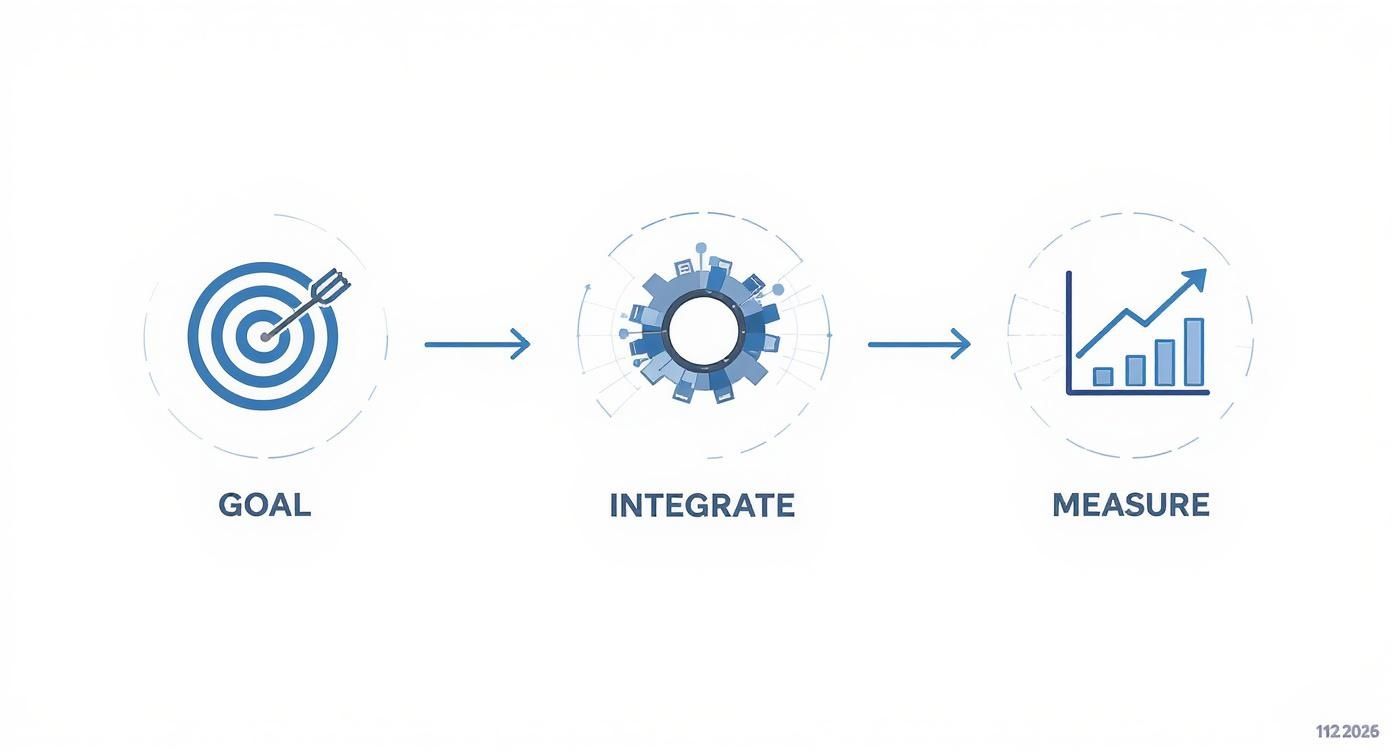
As you can see, it’s all connected. Your goals dictate your operational choices, and those choices have to be measured to prove the event’s value.
Phase 3: Promotion and Execution
Now it’s time to get people in the door—whether that door is physical or virtual. The promotion phase is all about building buzz and driving registrations from the right audience. Your marketing team should be firing on all cylinders, running a multi-channel campaign across email, social media, paid ads, and content marketing to show people why they can’t miss this.
As the big day gets closer, the focus shifts to execution. It’s showtime. Your team’s mission is to deliver a seamless, high-value experience that lives up to all the hype. From a smooth check-in process and captivating speakers to flawless technical production for virtual attendees, every little detail matters.
The event industry is huge and still growing. Recent 2023 research confirms this, with the global market projected to reach $2.19 trillion by 2032. This growth is spread across different formats: in-person events still lead the pack at over 60% of market share, but virtual events hold a solid 20%, with hybrid models making up the rest. No matter the format, sharp execution is what separates the memorable from the mediocre. You can dig into more data on these industry dynamics to see where things are headed.
Phase 4: Post-Event Analysis and Follow-Up
The event isn’t over when the last person logs off or walks out. In many ways, the most important work is just beginning. This is where you connect all your effort directly to revenue and prove the event was worth it.
First up: timely and personalized follow-up. Your sales team needs to be armed with context from the event to have meaningful conversations with new leads. At the same time, your marketing team should be launching nurture campaigns to keep leads who aren’t quite ready to buy engaged and warm.
Finally, it’s time to circle back to the goals you set in Phase 1 and see how you did. Dive into the data to calculate your event ROI, measure how much pipeline it influenced, and pore over attendee feedback. These insights aren’t just for showing your success to stakeholders; they’re pure gold for making your next event even better.
How to Align Stakeholders for Event Success
Pulling off a great event is a team sport, not a one-person show. When marketing, sales, product, and customer success teams are all doing their own thing, the event feels chaotic and you end up missing huge opportunities. Real success comes from a united front where everyone knows their role and is bought into the same goal.
Think of your event like a major company initiative. Before you kick things off, every department needs to agree on the end goal and who’s responsible for what. This is what turns a simple marketing event into a machine for driving real growth.
If you skip this step, you’re setting yourself up for a mess. Your sales team might be chasing different accounts than marketing is targeting, or the product demo might completely miss the pain points your customer success team hears about every single day. Getting everyone on the same page from the get-go isn’t just nice to have—it’s essential.
Earning Buy-In from Leadership and Sales
First things first: you need your executive leadership on board. To get their approval and the budget you need, you have to build a solid business case backed by data. Don’t frame the event as a cost; present it as an investment with a clear, predictable return.
Show them the numbers. Lay out the potential pipeline you can generate, how it will speed up existing deals, and the impact it can have on customer retention. This changes the conversation from “How much will this cost?” to “What business goals will this help us hit?”
Next up is the sales team. Your partnership with them is the engine that drives your event’s revenue. We know that companies with tight sales and marketing alignment see significantly more value from their marketing efforts. You need to work hand-in-glove with them.
- Define Target Accounts: Sit down together and build a priority list of the high-value companies you absolutely want to see there.
- Create a Lead Handoff Process: Agree on a crystal-clear system for how leads are captured, qualified, and passed over to sales for fast follow-up.
- Set Shared Goals: Decide on concrete success metrics, like the number of meetings booked or new opportunities created right from the event.
When you bring sales into the planning process early, they become active drivers of its success, not just bystanders.
Involving Product and Customer Success Teams
While marketing and sales are often in the spotlight, your product and customer success teams are your secret weapons for delivering real value. Getting them involved is what elevates your event from a sales pitch to a genuinely helpful, problem-solving experience.
Pull in your product team to deliver killer demos that speak directly to the audience’s biggest frustrations. Nobody knows the product better, and they can showcase its power in a way that truly connects. This isn’t just a feature walkthrough; it’s a chance for attendees to see exactly how your solution makes their job easier.
And don’t forget your customer success team—they’re on the front lines with your users every day. They can help you:
Recruit Customer Advocates: Find your happiest customers and invite them to speak. Hearing authentic stories from real users provides powerful social proof that’s far more convincing than any marketing slogan.
This kind of collaboration makes sure your event content is spot-on for both prospects and current customers. It also sends a strong message that your entire company is focused on one thing: delivering an incredible customer experience. To keep that experience positive, it’s also smart to plan for potential risks. Using a practical event risk assessment template can help you cover all your bases.
Building a Realistic B2B Event Budget
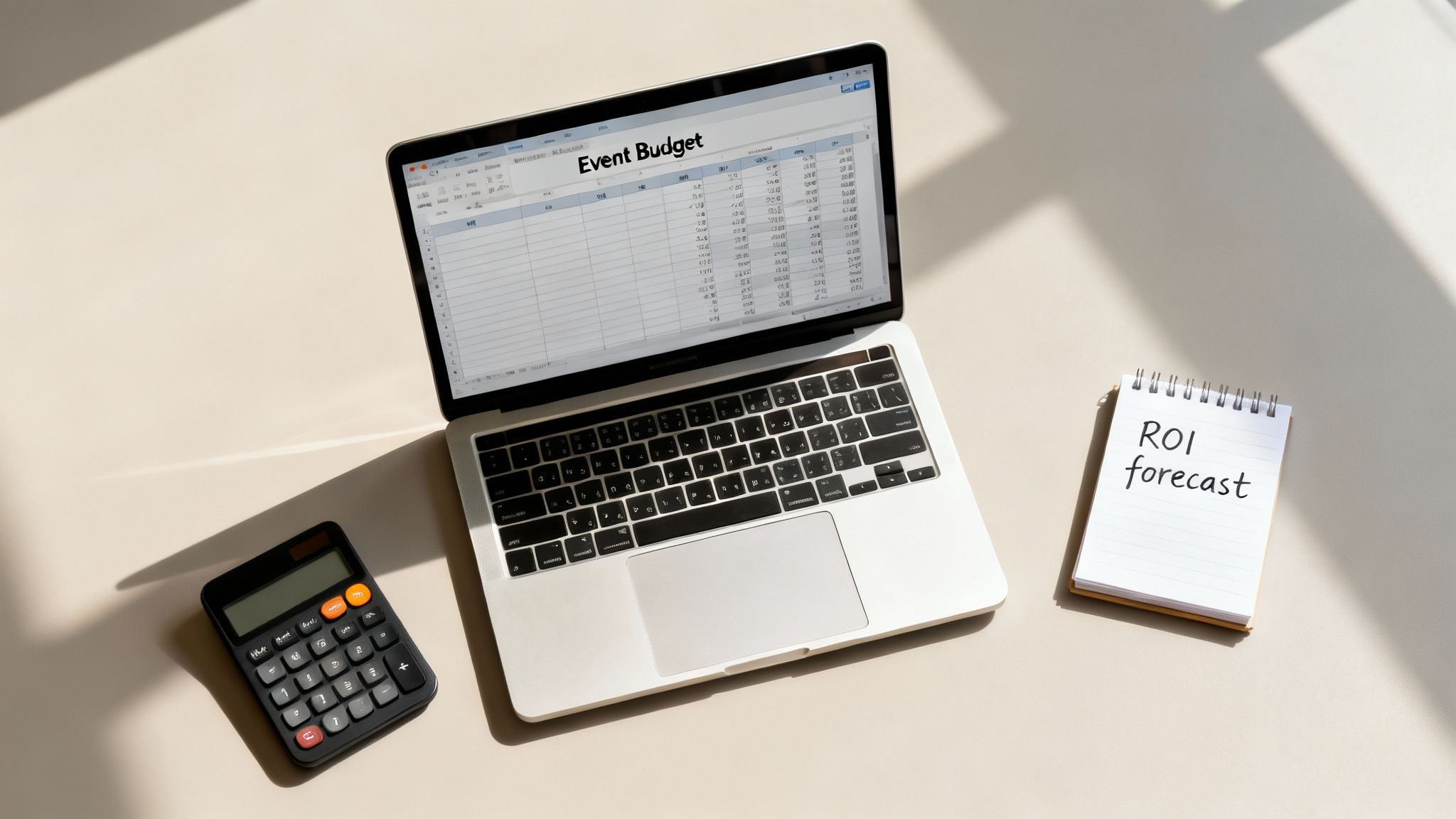
Let’s talk about the budget. For a B2B SaaS event, your budget is much more than a list of expenses—it’s the financial backbone of your entire strategy. A thoughtfully built budget is what ensures every dollar you spend pushes you closer to the goals we talked about earlier. It’s not about being cheap; it’s about being smart.
This means you build your budget from your goals, not the other way around. Instead of getting a number and trying to cram your event into it, you start with what you want to achieve. Need to generate a certain amount of pipeline or book 50 demos? Figure out what it will take to get there, and that becomes your budget.
Identifying Your Major Cost Centers
For any modern SaaS event, the costs are way more complex than just a venue and some coffee. To get a real grip on your spending, you need to think in terms of major cost centers, or “buckets,” that you’ll need to fill.
Here are the primary drivers for most B2B events you’ll run:
- Technology Platforms: This is a big one. It’s your event management software, registration systems, any virtual event platforms, and the mobile app you’ll need.
- Venue and Logistics: For any in-person or hybrid component, this covers the physical space, AV equipment, Wi-Fi, and the on-site crew who make it all run smoothly.
- Content Production: This bucket holds everything from speaker fees and session content creation to video production and design work for presentations.
- Marketing and Promotion: You have to get people in the door (or on the stream). This covers your digital ads, email campaigns, social media promotion, and all the content you create to build buzz.
- Attendee Experience: This is everything that makes the event memorable—the catering, networking activities, branded swag, and even your post-event follow-up materials.
Breaking it down like this helps you see exactly where the money is going, which makes it a whole lot easier to justify the investment to your leadership team.
A rookie mistake is to skimp on the “softer” costs like marketing and content. These are the very things that attract your ideal audience and deliver the value they’re looking for. They’re just as critical as the big-ticket logistical items.
Strategies for Smart Budget Allocation
Once you know where your money needs to go, it’s time to allocate it wisely. This is where you can get creative and make every dollar pull its weight.
Recent 2023 industry data shows that while many planners are optimistic, over 60% expect their budgets to remain the same or decrease, even as costs for venues and travel continue to rise. This pressure makes smart allocation absolutely essential. A good starting point is to assign a percentage of your total budget to each category based on your main goal. If you’re aiming for broad lead generation, you’ll probably pour more into marketing. If you’re nurturing key accounts, the attendee experience and content might get a bigger slice of the pie.
Here are a few practical tips for stretching your funds:
- Secure Multiple Vendor Quotes: Never, ever go with the first price you get. Sourcing at least three quotes for big-ticket items like your event platform or AV services gives you serious negotiating power.
- Look for Bundle Deals: Many vendors will cut you a deal if you bundle services. For instance, your event management platform might offer a mobile app or marketing automation tools as a package for a lower rate.
- Build in a Contingency Fund: Something always goes sideways. A solid rule of thumb is to set aside 10-15% of your total budget as a cushion for those inevitable surprise costs.
At the end of the day, a realistic budget is a living document. Using an organized framework from the start makes it simple to track your spending and show the value you’re creating. To see how these principles look in practice, check out an event planning budget template. It’ll help you tell a clear financial story and forecast your event’s potential ROI with confidence.
How to Choose Your Event Technology Stack
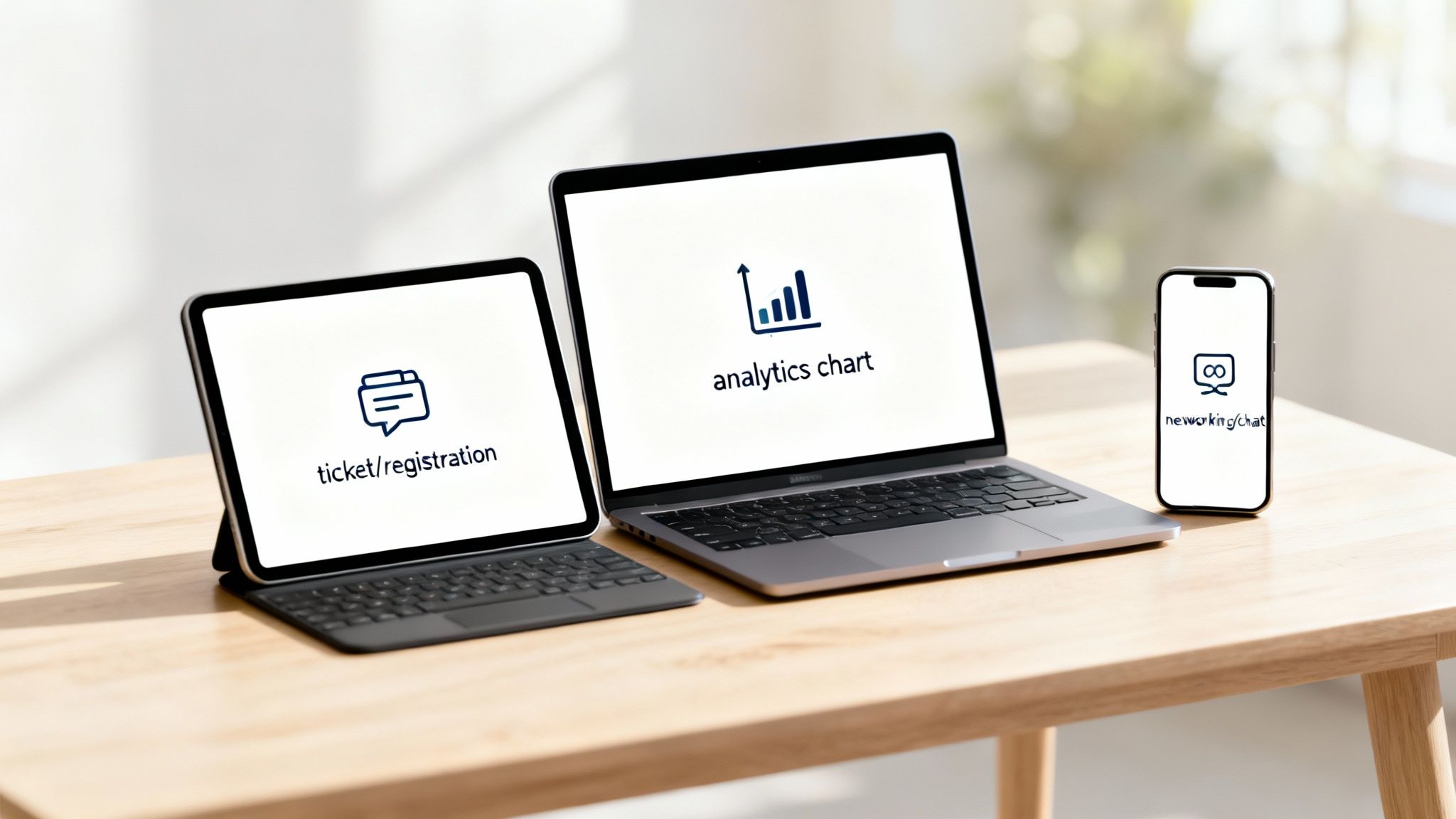
For a SaaS company, your tech stack is more than just a bunch of tools—it’s part of the show. It’s a direct reflection of your brand and a huge piece of the attendee experience. Get it right, and you simplify life for your team while creating the seamless, engaging journey people expect.
On the flip side, a clunky registration page or a buggy mobile app can damage your reputation before the keynote even starts. It signals that you don’t care about the details, which is the last thing a tech company wants to communicate.
The real goal is to build a cohesive system that works across the entire event lifecycle, from the first promotional email to the post-event analytics report. Think of your tech stack as the central nervous system of your event, connecting all the moving parts into a single, intelligent whole. This system shouldn’t just do things; it should be gathering valuable data at every single touchpoint.
Categorizing Your Essential Event Tools
Building an event tech stack can feel like a mammoth task, but it gets a lot easier when you break the tools down into functional categories. Each category solves a specific problem at a specific stage of the event, ensuring you have the right solution for every challenge.
Most SaaS event stacks are built around these core components:
- Event Management Platforms: This is your mission control. Platforms like Cvent or Bizzabo often handle registration, ticketing, website creation, and attendee communication from one central hub.
- Virtual & Hybrid Event Venues: If your event has a digital element, this is the software that hosts your live streams, breakout rooms, and virtual networking. It’s literally the digital version of a physical venue, and its performance is absolutely critical.
- Mobile Event Apps: The mobile app is your attendee’s pocket concierge. It gives them instant access to schedules, speaker bios, session materials, and networking tools. Everything they need is right there in their hand.
- Engagement & Networking Tools: These are the tools that stop people from zoning out. Features like live polling, Q&A sessions, gamification, and AI-powered matchmaking help turn passive viewers into active participants.
By picking the right tools from each category, you ensure you’ve covered all your bases, from back-end logistics to the front-end attendee experience.
Key Takeaway: A well-integrated tech stack does more than just solve logistical headaches. It becomes a powerful data collection engine, capturing insights on session popularity, attendee engagement, and networking patterns that are crucial for proving ROI.
Asking the Right Questions Before You Buy
Once you have a shortlist of vendors, it’s time to dig in. It’s easy to get distracted by flashy features, so keep your focus on the fundamentals that will directly impact your business goals. The right tech needs to plug directly into your existing marketing and sales operations.
Before you sign any contracts, make sure you get crystal-clear answers to these questions:
- How deep are your CRM and MAP integrations? A surface-level integration that just passes over a name and email isn’t good enough. Ask for specifics on how the platform syncs with your systems like Salesforce or HubSpot. Does it create new leads, update existing contacts, and automatically log key engagement data?
- What do your data analytics and reporting look like? Don’t settle for vague promises of “powerful analytics.” Ask for a demo of their reporting dashboard. Can you easily track registration trends, session attendance, and engagement metrics to measure against your KPIs, or will you have to export three different spreadsheets to get a simple answer?
- Can the platform scale with us? Your event might have 200 attendees this year, but what about 2,000 next year? Make sure the technology can handle a significant increase in attendees, sessions, and data without slowing down or crashing.
Choosing your event tech is a major strategic decision. A great stack empowers your team to be more efficient, gives attendees a frictionless experience, and most importantly, delivers the rich data you need to prove the undeniable business impact of your event.
Measuring Event ROI and Business Impact
Let’s be honest: if you can’t measure your event’s success, you can’t prove its value. This is the moment where event planning stops being about logistics and starts becoming a data-backed growth engine for your company. Getting past vanity metrics like simple attendance numbers is the only way to show the real business impact of all your hard work.
The story of your event’s success isn’t just a good feeling; it’s told through numbers that connect straight to the bottom line. It’s all about showing leadership how this specific event didn’t just happen, but how it influenced revenue, sped up sales cycles, and actually contributed to company growth. This data-first mindset shifts your event from being just another expense to a strategic business investment.
Defining Your Key Performance Indicators
Before you can measure a single thing, you have to know what you’re looking for. While every event has its own specific goals, there are a few core metrics that are pretty much non-negotiable for any SaaS company serious about growth.
The most convincing metrics are always the ones tied directly to sales and revenue.
- Event-Sourced Pipeline: This is the big one. It’s the total dollar value of all sales opportunities that came directly from leads you generated at the event. It’s the clearest, cleanest way to show how your event filled the top of the sales funnel.
- Pipeline Influence: Not everyone you meet is brand new. Many attendees are already somewhere in your sales pipeline. This metric is about tracking how your event sped up their journey, moving them from one stage to the next much faster than they would have otherwise.
- Customer Acquisition Cost (CAC) per Event: This is simple but powerful. Just take your total event cost and divide it by the number of new customers you signed from event leads. It instantly tells you how efficient your event is as a customer acquisition channel.
To track these numbers effectively, you absolutely need a tight connection between your event platform and your CRM. Without proper campaign attribution, you’ll never be able to trace a lead from the moment they registered all the way to a closed-won deal.
Tracking Softer Metrics and Brand Impact
While cold, hard revenue numbers are king, they don’t paint the full picture. The “softer” benefits of an event—like building genuine brand loyalty or gathering priceless customer feedback—are just as crucial for long-term health. Measuring these just requires a different, more qualitative touch.
Post-event surveys are your secret weapon here. Don’t just ask, “Did you have a good time?” Ask smart, targeted questions to figure out if you actually changed minds and hearts.
A well-designed survey can help you measure brand lift, asking attendees how their perception of your company changed after the event. You can also measure product interest by asking which sessions or demos were most compelling, giving your sales and product teams a goldmine of data.
These qualitative insights help round out the story and provide context to the numbers. If you want to zoom out and see how this fits into the bigger picture, you can check out our guide on how to measure marketing ROI for more foundational strategies.
Ultimately, when you combine hard financial metrics with this kind of qualitative feedback, you can build an incredibly powerful narrative. You can show not only how many deals the event sourced, but also how it strengthened customer relationships and cemented your company’s reputation as a leader in your space. This comprehensive approach is what truly proves the immense value of strategic event planning.
Common Questions About SaaS Event Planning
Even with the best strategy in hand, you’re going to hit some tricky questions along the way. Honestly, how you navigate these bumps in the road is what separates a decent event from a truly memorable one.
Think of this section as your personal FAQ, built from years of experience in the trenches. We’ll tackle some of the biggest hurdles SaaS marketers face, giving you clear, straightforward advice to keep things moving.
How Far in Advance Should I Plan a Major B2B Event?
The honest answer? It completely depends on the scale of what you’re trying to pull off.
If you’re planning a big-ticket event like your annual user conference, you need to give yourself a long runway. Start the process 9-12 months out. That might sound like a lot, but you’ll need every bit of that time to lock in the best speakers, secure a great venue before it gets booked, and run a marketing campaign that actually builds buzz.
On the other hand, not everything needs a year-long plan. For something smaller and more focused, like a regional roadshow or a major webinar, a 3-4 month lead time is often perfect. It gives you enough time to get organized without losing the agility to react to what’s happening in the market.
What Is the Single Most Important Event Metric to Track?
If I had to pick just one, it would be “Pipeline Generated.” Hands down.
Why? Because it’s the metric that speaks directly to the bottom line. When you can show your leadership team exactly how much potential revenue an event created, you’re speaking their language. It proves the event wasn’t just a line item on the marketing budget; it was an investment.
Getting this number right, however, is all about your tech stack. Your event platform and CRM have to talk to each other seamlessly. This is non-negotiable. Without that integration, you can’t tag leads properly or track their journey from the moment they registered to the day they sign a contract. You’d just be guessing at your impact.
The ability to draw a straight line from an event attendee to a signed contract is the ultimate proof of a successful event strategy. It transforms your event from a cost center into a documented revenue driver.
How Do I Choose Between Virtual, Hybrid, or In-Person Events?
This decision really boils down to three things: your audience, your budget, and what you’re ultimately trying to achieve. Each format has its own strengths.
- In-Person Events: Nothing beats face-to-face interaction for building real relationships. These are your go-to for accelerating late-stage deals where a handshake can make all the difference.
- Virtual Events: If you want maximum reach without breaking the bank, virtual is the way to go. They are fantastic for top-of-funnel activities like generating a high volume of new leads.
- Hybrid Models: These offer a taste of both worlds, but don’t be fooled—they are logistically complex and can easily become the most expensive option if you’re not careful.
Before you decide, get crystal clear on your number one goal. Is it about closing a handful of huge enterprise deals? Go in-person. Is it about getting your brand in front of as many new prospects as possible? Virtual is your best bet. Let the objective lead the way.
At Mick-Mar Inc., we specialize in turning B2B SaaS events into powerful growth engines. We help you navigate every phase, from strategic planning to proving ROI, ensuring your events deliver measurable results. Discover how we can elevate your event strategy.