Building brand awareness is all about forging genuine, memorable connections with your audience. Think of it less as a marketing task and more as a relationship. The real work involves getting under the skin of your ideal customer, crafting a message that truly lands, and showing up consistently where they already spend their time. This guide is your friendly roadmap to take your brand from just another name to a recognized industry player.
Your Blueprint for an Unforgettable Brand
Let’s be real – trying to build brand awareness can sometimes feel like shouting into a void. It’s so much more than just plastering your logo everywhere; it’s about earning a permanent spot in your customers’ minds. To get there, every move you make has to be intentional, strategic, and, most importantly, authentic.
This isn’t about chasing vanity metrics or getting a temporary spike in traffic. We’re talking about building something that lasts. True awareness depends on creating a brand that people not only recognize but also genuinely trust and connect with. Without that bond, you’re just another company vying for a sliver of their attention. The end game? To become the first solution they think of when a problem arises.
Building Brand on a Foundation of Trust
At the heart of any strong brand is trust. It’s the currency of modern marketing. In fact, a 2023 report from Edelman revealed that 80% of consumers say that being able to trust a brand to do what is right is a deciding factor in their purchasing decisions. This isn’t just about having a great product; it’s about transparency, consistency, and showing you care.
Think of your brand awareness plan as the foundation for every single marketing decision you make. It’s what ensures every blog post, social media update, and customer email works together to tell one clear, compelling story. This is a non-negotiable part of any effective marketing strategy.
To get a quick overview of what this guide will cover, here are the core pillars we’ll be breaking down. Each one is a critical piece of the puzzle for building a brand that not only gets noticed but gets remembered.
Core Pillars of a Brand Awareness Strategy
| Pillar | Objective | Key Action |
|---|---|---|
| Audience Research | To deeply understand your ideal customer’s needs and behaviors. | Create detailed Ideal Customer Profiles (ICPs) and personas. |
| Messaging & Positioning | To define what your brand stands for and how it solves problems. | Develop a clear value proposition and consistent brand voice. |
| Channel Selection | To meet your audience where they are most active and engaged. | Identify and prioritize the most effective marketing channels. |
| Content & Execution | To create valuable content that builds authority and trust. | Produce and distribute high-quality, relevant content consistently. |
| Measurement & KPIs | To track progress and prove the ROI of your efforts. | Set up analytics to monitor key brand awareness metrics. |
Building a brand is a marathon, not a sprint, and these pillars will keep you on the right track.
A brand is no longer what we tell the consumer it is – it is what consumers tell each other it is. Effective awareness campaigns focus on sparking those positive conversations.
If you’re focused specifically on the B2B world, exploring these essential B2B brand awareness strategies is a great starting point for establishing your company’s presence.
Find Your Audience and Define Your Brand Voice
Before you spend a single dollar on a campaign, you have to nail the answer to one question: who are we actually talking to?
Trying to build brand awareness without a crystal-clear audience is like shouting into the void. You might make some noise, but you’ll have no idea if the right people are even listening. To make a real impact, you need to go far beyond surface-level demographics and truly understand the people behind the job titles.
This means getting into their heads. What are their biggest daily challenges? What does success look like in their role? What frustrates them enough to go searching for a better solution on Google or in a Slack community? When you understand these deeper motivations, you can build a brand that doesn’t just get noticed, but one that feels genuinely helpful. That’s how you build real brand equity.
Uncovering Your Ideal Customer
Defining your ideal customer profile (ICP) isn’t just about listing industries and company sizes. It’s about painting a vivid picture of the exact person you want to help. The goal is to create a persona so real you feel like you know them, which then guides every single marketing decision you make.
The best place to start? Talk to your happiest customers. They’ve already found value in what you do. Get them on a call and ask questions that dig beneath the surface.
- What specific, nagging problem did our software solve for you?
- Where do you hang out online to learn and stay current? (Think specific blogs, podcasts, or newsletters.)
- Which online communities, like on Slack, Reddit, or LinkedIn, are you active in?
The answers you get are pure gold. They give you a treasure map showing exactly where your future customers are spending their time and what kind of information they crave.
Developing an Authentic Brand Voice
Okay, so you know who you’re talking to. Now, how are you going to sound? Your brand voice is your company’s personality, and it needs to show up consistently everywhere—from your website copy and social media posts to your sales emails and even your error messages. A genuine voice builds trust and makes you memorable.
Think about the brands you know. Mailchimp has a friendly, quirky, and encouraging voice, which is perfect for small business owners who might find marketing a bit overwhelming. On the other hand, a cybersecurity SaaS would likely use a voice that’s authoritative and precise to build credibility with seasoned IT professionals.
Your brand voice should be a direct reflection of how your audience communicates and what your company truly values. It’s the human touch that turns a faceless corporation into a trusted guide.
To pin down your voice, try choosing 3-5 descriptive words that capture the personality you’re aiming for (e.g., “Confident, Witty, Insightful”). From there, create a simple style guide with “do” and “don’t” examples for each word. This little bit of work ensures everyone on your team is speaking with one, cohesive voice, which is a non-negotiable for building a strong brand.
Craft a Message and Visual Identity That Connects
Alright, you’ve done the deep-dive on who you’re talking to. Now it’s time for the fun part: building the stuff people will actually see, remember, and associate with your brand. This is where your brand’s personality stops being an internal document and starts living out in the wild.
It all comes down to two things: what you say and how you look.
Your message is your promise. It’s the straight-up, no-fluff answer to the question constantly running through a potential customer’s mind: “Why should I care about this?” We’re not just talking about a clever tagline here. This is your core value proposition—the central idea that will be the DNA of every blog post, ad, and social media update you publish.
This message needs to be simple enough for a distracted user to grasp in five seconds, yet compelling enough to make them pause and want more. It has to hit on the exact pain points you found in your research, making your SaaS feel less like an option and more like the obvious solution they’ve been searching for.
Creating Your Brand’s Look and Feel
Once you’ve nailed your message, you need the visuals to back it up. This is the sensory experience of your brand – the gut-level recognition people have when they see your content. It’s a carefully selected toolkit of design elements that create a polished, unified look wherever your brand shows up.
At a minimum, your visual identity needs these non-negotiable assets:
- Your Logo: This is the face of your brand. It has to be distinct, memorable, and work just as well as a tiny favicon as it does on a massive trade show banner.
- Color Palette: These aren’t just pretty colors. They’re emotional cues that telegraph your brand’s personality—are you bold and energetic, or calm and trustworthy?
- Typography: The fonts you choose for headlines and body copy do a ton of heavy lifting in setting the tone. Are you modern and sleek or classic and dependable?
These aren’t just aesthetic choices – they are strategic assets for building recognition. Think about it. You know you’re looking at a Slack notification before you even read the text, right? That’s the power of a rock-solid visual system at work.
The Power of a Consistent Experience
Here’s the secret sauce: consistency. It’s the glue that holds your messaging and visuals together, making them feel like a single, cohesive brand instead of a jumble of disconnected parts.
When people encounter the same colors, logo, and tone of voice on your website, your LinkedIn page, and in your email newsletters, it builds a powerful sense of familiarity and trust. This isn’t just marketing fluff; it has a real impact on the bottom line.
A consistent brand presentation is a major growth engine. In fact, a 2023 study found that consistent brand presentation across all platforms can increase revenue by up to 23%.
That statistic is huge. It proves that brand awareness isn’t just about getting seen—it’s about being seen consistently. Repetition creates a mental shortcut for your audience, making your brand feel reliable and professional.
Developing these assets is a foundational step in our creative design and branding process, because we’ve seen firsthand how getting this right pays dividends down the road.
Choose the Right Channels to Amplify Your Message

You’ve nailed down your audience and have a message that clicks. So, where do you actually put it? The old “be everywhere” mantra is a one-way ticket to a stretched budget and a burned-out marketing team. Real strategy is about precision, not just presence.
Forget trying to conquer a dozen platforms at once. The real win is finding the handful of places where your ideal customers are already hanging out, talking, and actively looking for answers. It’s like fishing—you don’t just cast a net into any random lake. You go to the specific spot where you know your target fish are biting.
Zero In on High-Impact Platforms
For SaaS, some channels just work. But the perfect mix for you comes down to where your audience lives online. Where do they go to learn something new, connect with peers, or vent about a problem? That’s where you need to show up.
Here’s a look at a few powerhouse channels to start with:
- Content Marketing: This is the foundation of SaaS brand awareness. Creating genuinely helpful content—think blog posts, detailed white papers, and practical webinars—cements your status as a go-to expert. It’s a direct line to solving your audience’s problems, which builds trust and boosts your search engine visibility. For a deeper dive, check out our guide on content marketing and strategic communications.
- LinkedIn: For B2B SaaS, LinkedIn is pretty much non-negotiable. It’s the digital town square for professionals, industry leaders, and the decision-makers you want to reach. Go beyond simply posting company updates. Jump into relevant groups, add value to conversations, and publish articles that showcase what you know.
- Niche Communities: Never underestimate the power of smaller, focused groups. Places like specific subreddits, private Slack channels, or industry forums are often where your most passionate potential users congregate. The key here is to engage authentically. Answer questions and offer real help before you even think about promoting your product.
Let the Data Point the Way
You don’t have to guess. There’s plenty of data out there showing what works. Social media, for example, is still a major player, with 78% of local businesses using it to get their name out there. It’s a powerful combination of massive reach and cost-effective execution.
Another channel gaining serious momentum is influencer marketing. A 2024 report by Influencer Marketing Hub shows that the industry is expected to grow to approximately $24 billion by the end of the year. This works because you’re borrowing the trust an influencer has already built with their audience, giving your brand an instant stamp of approval. You can find more stats and insights like these over at WiserNotify.
The right channel isn’t just where your audience is – it’s where they’re actually open to hearing from you. The goal is to become a welcome part of their conversation, not an annoying interruption.
In the end, picking your channels is a strategic trade-off. It’s about finding the sweet spot between where your audience spends their time and where your team can consistently deliver great content. Start with one or two platforms you can truly own. Once you’ve mastered those, you can think about expanding. This focused approach ensures your message doesn’t just get sent out into the void – it actually gets heard.
Execute and Measure Your Awareness Campaigns
You’ve done the hard work of planning, and now it’s time to launch. But hitting “go” is just the beginning. The real art of building brand awareness lies in measuring what actually moves the needle, so you can show your impact and make smarter bets next quarter.
We’ve all been there, reporting on impressions and likes because they look good on a slide. But those numbers don’t tell the whole story. Real brand growth is visible in how people behave when you’re not looking – how they find you, talk about you, and engage with your content without a paid ad prompting them.
Moving Beyond Vanity Metrics
To get a true feel for your brand’s health, you need to dig into the metrics that signal real interest and recognition. These are the signs that your message is landing and people are starting to look for you by name.
I always tell my team to focus on these core indicators:
- Direct Traffic: This is gold. It means people are typing your URL directly into their browser. It’s a clear sign your brand is becoming memorable and top-of-mind.
- Branded Search Volume: How many people are Googling your company or product name? A steady increase here shows that your brand recall is growing organically.
- Social Media Mentions: This is about tracking untagged mentions of your brand. It’s raw, authentic proof that real conversations are happening around what you do.
This visual breaks down how different awareness metrics can paint a very different picture of your campaign’s success.
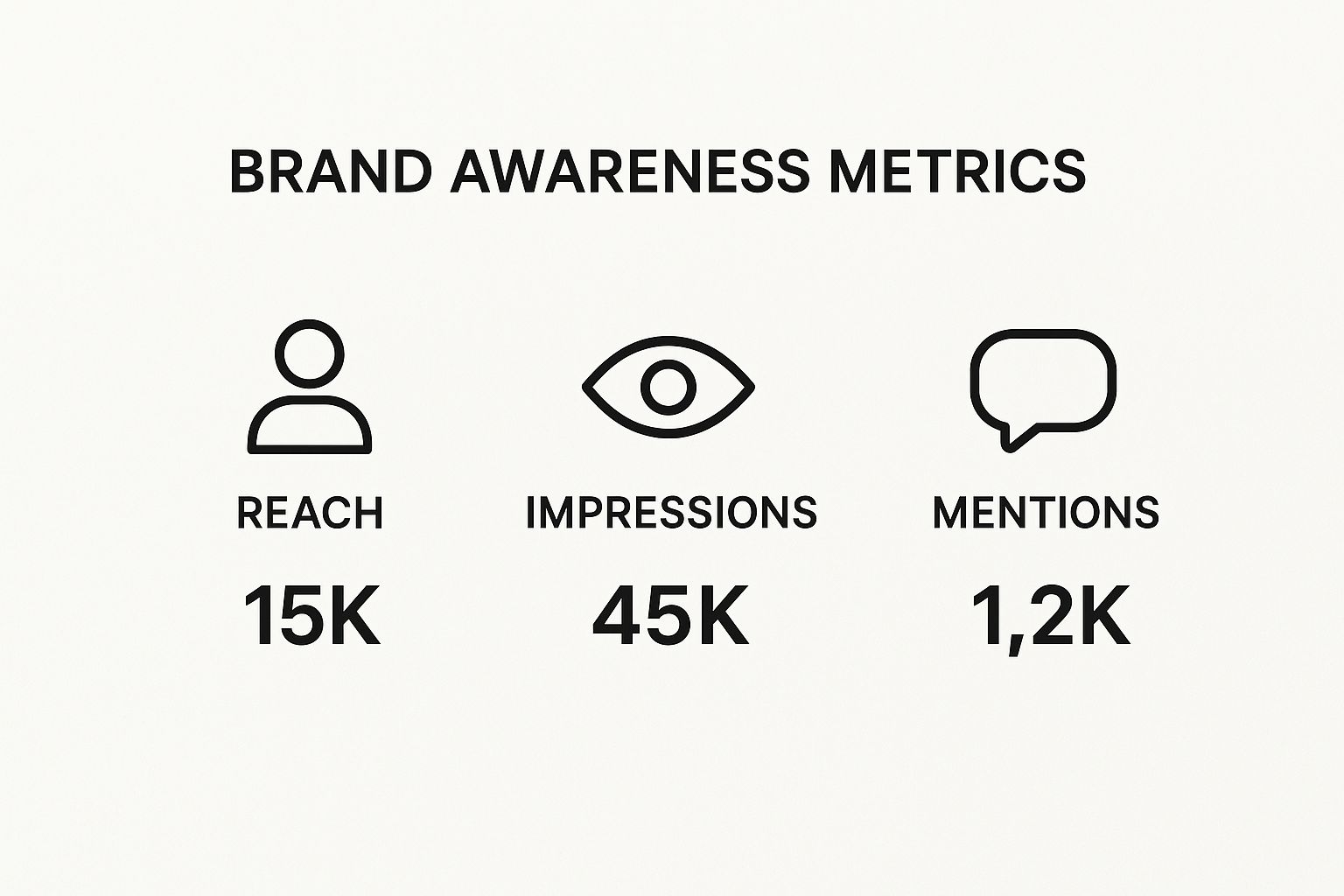
While impressions tell you how many times your content appeared on a screen, metrics like reach and mentions give you a much clearer idea of your actual audience size and genuine engagement.
Key Metrics for Measuring Brand Awareness
To help you get started, here’s a quick breakdown of the metrics that truly matter. These move beyond surface-level data to give you a clearer picture of your campaign’s effectiveness.
| Metric | What It Measures | Why It’s Important |
|---|---|---|
| Direct Traffic | Visitors who type your URL directly into their browser. | Shows strong brand recall and intent; users are seeking you out specifically. |
| Branded Search Volume | The number of searches for your brand or product names. | A direct indicator that more people know who you are and are actively looking for you. |
| Social Mentions (Untagged) | Conversations about your brand on social media that don’t @-mention your official handle. | Provides an unfiltered view of brand sentiment and organic “word-of-mouth” buzz. |
| Share of Voice (SOV) | Your brand’s visibility in a market compared to your competitors. | Helps you understand your market position and track growth against key rivals. |
| Backlink Profile Growth | The number of new, high-quality websites linking to your content. | Signals that other reputable sources see your brand as an authority in the space. |
Tracking these metrics gives you a multi-dimensional view of brand health, helping you connect your efforts to tangible outcomes instead of just chasing empty numbers.
Creating Your Performance Dashboard
You don’t need a fancy, expensive tool to get started. A simple dashboard in Google Analytics 4, Looker Studio, or even a well-organized spreadsheet will do the trick. The goal is a single source of truth where you can monitor your key metrics week over week.
True measurement isn’t about collecting data; it’s about connecting your brand-building activities to tangible business outcomes. It’s how you turn “brand awareness” from a fuzzy concept into a measurable driver of growth.
To really nail this down, it’s crucial to learn about measuring content performance effectively and tying it back to business goals.
Before you launch anything, set a baseline for each of your chosen metrics. Once the campaign is live, track these numbers consistently. Are you seeing a lift in direct traffic after that podcast series? Did your branded search volume jump after a particular article went viral? These are the connections that prove your strategy is working.
By focusing on these more meaningful metrics, you can confidently report on your success and make data-backed adjustments. This iterative process—launch, measure, learn, repeat—is what drives sustainable brand growth for the long haul.
Turn Brand Awareness into Lasting Loyalty

Getting noticed is a huge first step, but the real magic happens when that initial spark of recognition turns into a solid, long-term customer relationship. Brand awareness campaigns get people in the door. It’s the experience they have once they’re inside that convinces them to stick around.
Think of it as a journey. You’re moving people from being a one-time user to a lifelong fan. This whole process is built on a foundation of trust, consistency, and a real connection.
This means you have to deliberately shift your focus from just acquiring new users to retaining them and turning them into advocates. It’s all about delivering on the promises you made during your awareness campaign. Every single interaction—from the first moment of onboarding to a late-night customer support ticket—is a chance to prove you were the right choice. A slick, easy-to-use product and proactive support don’t just keep churn down; they’re what build loyalty.
Fostering a Community of Advocates
One of the best ways I’ve seen to build that lasting loyalty is by creating a space where customers feel heard and connected. Not just to your brand, but to each other. That’s the power of community building.
It could be a dedicated Slack channel, an active user forum, or even a series of exclusive webinars. These initiatives can transform a collection of individual users into a tight-knit group of people who champion your brand.
When customers feel like they’re part of something, their relationship with your brand goes way deeper. They start helping each other out, offering up priceless feedback, and creating user-generated content (UGC) that acts as incredible social proof for anyone considering your product. When you encourage and show off this content, you’re reinforcing your brand’s value from the most credible source there is: happy customers.
The ultimate goal of building brand awareness isn’t just to be known; it’s to be loved and recommended. Lasting loyalty is built when your brand becomes an integral, positive part of your customer’s professional life.
The Connection Between Awareness and Repeat Business
At the end of the day, loyalty and that emotional connection are directly linked back to your initial awareness efforts. The data backs this up: a 2023 study by Khoros found that 82% of consumers feel more positive about a brand after engaging with their online community.
What’s more, other research from 2023 shows that 88% of consumers become loyal after buying from a brand at least three times. This really shows how critical those repeat positive experiences are for locking in brand preference.
So, how do you nurture this cycle? Try putting a few strategies in place that reward loyalty and encourage people to spread the word:
- Exclusive Content: Give your best customers early access to new features or invite them into your beta-testing programs. Make them feel like insiders.
- Customer Spotlights: Feature your customers’ success stories. Write a case study, a blog post, or highlight them on social media.
- Referral Programs: Give your biggest fans an easy way to tell their friends about you, and make sure you reward them when they bring in new users.
By carefully nurturing the awareness you’ve worked so hard to build, you create a powerful growth loop. Your happiest customers become your most effective—and most authentic—marketing channel.
Got Questions? We’ve Got Answers
Figuring out how to build brand awareness can feel like you’re trying to solve a puzzle. Let’s break down some of the most common questions SaaS marketers ask.
How Long Does It Really Take to Build Brand Awareness?
This is a marathon, not a sprint. While a viral campaign might give you a temporary boost, building real, lasting brand recognition takes a solid 6 to 12 months of consistent work. The magic is in the sustained effort, not just one-off campaigns.
Think of it like building a friendship. You can’t just show up once and expect to be best buds. It’s about being there consistently, offering value, and becoming a reliable presence in your audience’s world over time.
What’s the Single Most Important Part of a Brand?
If I had to boil it down to one thing, it’s consistency. This isn’t just about your logo and colors; it’s about your tone of voice, your core message, and the overall feeling you project. When your audience gets the same vibe from you everywhere they look, it builds a powerful sense of familiarity and trust.
Don’t underestimate the visual side of things – after all, a 2023 study by Square noted that 73% of consumers trust a brand more if it has consistent branding. But it goes deeper. An authentic social media presence really matters, with 77% of consumers saying they prefer to buy from brands they follow online.
A brand that shows up consistently feels dependable. In the fast-paced SaaS world, that’s not just a nice-to-have; it’s a massive competitive advantage that keeps customers coming back.
Can a Small SaaS Company Realistically Compete with the Big Players?
Yes, and your size is actually your secret weapon. You can’t outspend an industry giant, but you can definitely out-niche them. Find a very specific corner of the market and become the go-to expert for that audience.
Instead of trying to cast a wide net, pour your energy into a few key areas:
- Build a community: Get into those niche Slack channels or forums where you can have real, personal conversations that big brands just can’t manage.
- Specialize your content: Go deep. Create the absolute best, most comprehensive content on a very narrow topic.
- Deliver standout support: Offer a personalized, human touch that makes customers feel seen – something larger companies often struggle with.
When you focus your resources this way, you build a fiercely loyal following that values your expertise far more than a competitor’s big budget.
Ready to stop shouting into the void and start building a brand that people remember? Mick-Mar Inc. builds custom marketing roadmaps that turn B2B companies into recognizable industry leaders. Let’s build your brand together.