Filling your senior living community isn’t just about marketing; it’s about making genuine connections, building trust, and showing undeniable value. Let’s be honest, the journey to choosing a new home is one of the most emotional and complex decisions a family can make. Generic tactics and outdated brochures just don’t cut it anymore. To truly succeed, you need sophisticated senior living marketing strategies that speak to the nuanced needs of both prospective residents and their adult children, blending digital savvy with a high-touch, human approach.
This guide moves beyond the basics, offering a deep dive into eight powerful, actionable strategies designed to build a robust pipeline, nurture leads through a long sales cycle, and ultimately, create a thriving community. We’ll explore how to transform a simple tour into a decision-making experience, dominate local search, become a trusted educational resource, and empower your happiest residents to become your most effective marketers.
To truly embrace a modern approach, communities must integrate cutting-edge tools that enhance the resident experience and streamline operations. Integrating dedicated senior living technology solutions can provide a significant competitive advantage, from managed Wi-Fi to smart-home features that appeal to today’s tech-aware seniors and their families. This article provides the strategic framework to complement such technological advancements, ensuring your marketing efforts are as forward-thinking as the community you’re building. Let’s explore the strategies that are driving real results and setting leading communities apart.
1. Community Tour Experience Optimization
The community tour is often the most critical, high-impact moment in the decision-making journey for prospective residents and their families. Optimizing this experience transforms a simple property walk-through into a powerful conversion tool. This strategy moves beyond showcasing rooms and amenities to creating an immersive, emotionally resonant experience that allows prospects to genuinely envision a vibrant and fulfilling life within your community. It’s about selling a lifestyle, not just a living space.
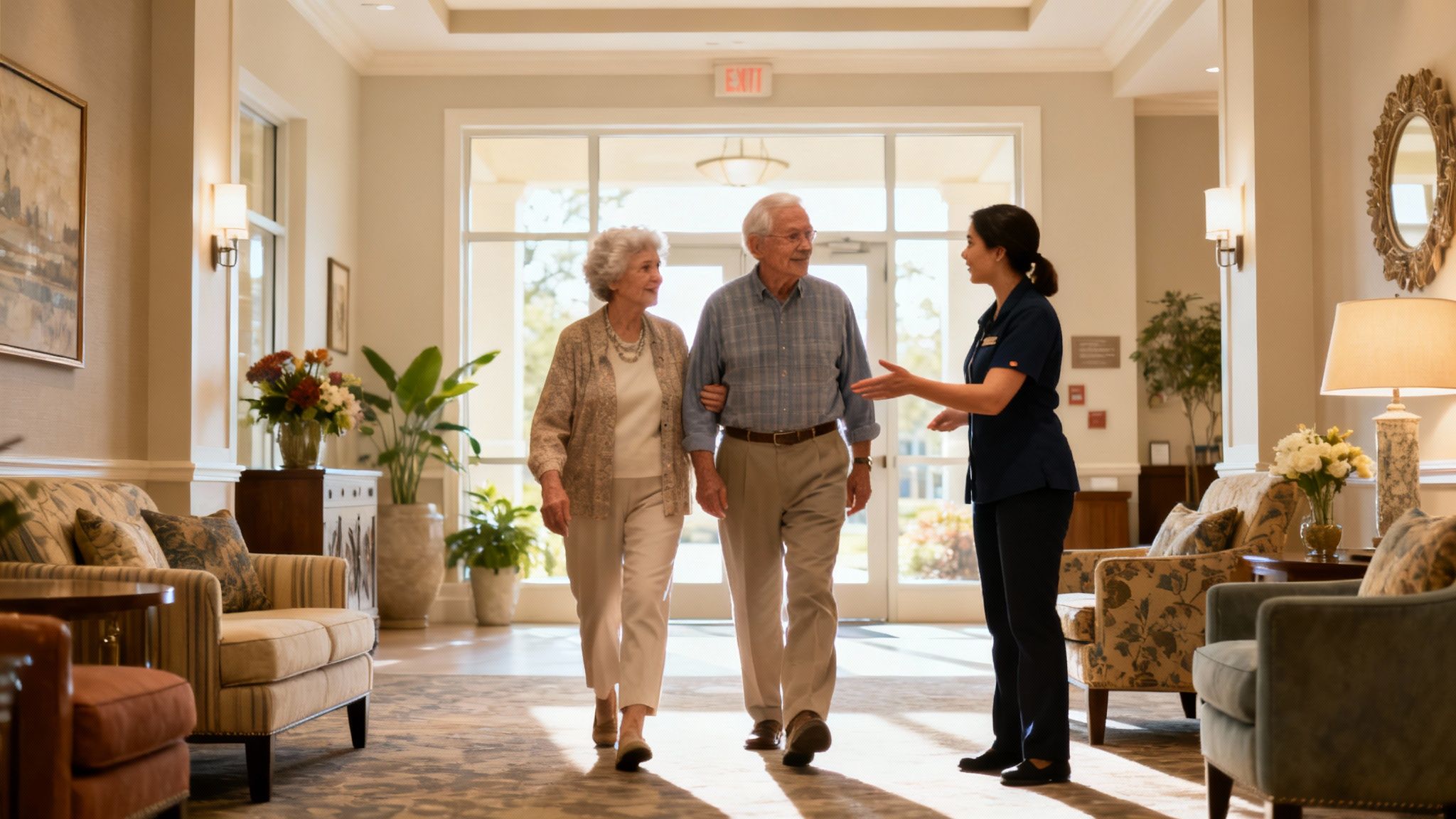
This approach focuses on personalization and connection. Rather than a one-size-fits-all script, the tour is tailored to the individual’s specific interests, care needs, and even anxieties. It’s an essential part of any comprehensive set of senior living marketing strategies because it directly addresses the core concerns of your audience with tangible, firsthand evidence. A well-executed tour builds trust and makes the abstract concept of “community” feel real and welcoming.
How to Implement Community Tour Optimization
Effective implementation involves a strategic, multi-faceted approach. Success hinges on deep personalization and creating genuine human connections during the visit.
- Pre-Tour Personalization: Send a brief questionnaire before the visit to understand the prospect’s hobbies, health concerns, social preferences, and what they are most anxious or excited about. Use this information to customize every aspect of their tour.
- Experiential Elements: Integrate prospects into the community’s daily life. Arrange for them to join an activity they’re interested in, such as a book club discussion or a light fitness class. Sharing a meal in the dining room with current residents provides a powerful, unscripted glimpse into the social atmosphere.
- Technology Integration: Use tablets to enhance the tour. For example, when showing an apartment, you can instantly display different furniture layouts, pricing tiers, and video testimonials from residents living in that specific floor plan.
Key Insight: The goal isn’t just to show your community – it’s to help prospects feel what it’s like to be part of it. An optimized tour reduces uncertainty and replaces it with a sense of belonging and possibility.
Actionable Tips for a Superior Tour Experience
To elevate your community tours from standard to standout, consider these practical steps:
- Train Resident Ambassadors: Select and train enthusiastic current residents to meet with prospects. Their authentic stories and unscripted endorsements are often more powerful than any marketing message.
- Engage All Senses: Create a welcoming sensory environment. The aroma of freshly baked cookies, pleasant, low-volume music in common areas, and well-lit, vibrant spaces all contribute to a positive subconscious impression.
- Prepare for Objections: Equip your tour guides with empathetic, data-backed responses to common concerns about cost, loss of independence, or healthcare quality.
- Prompt, Personalized Follow-Up: Follow up within 24 hours of the tour. Your message should reference specific conversations and address any questions that came up, reinforcing that you were listening carefully.
2. Hyperlocal Digital Marketing & SEO
Hyperlocal digital marketing is a targeted strategy focused on dominating local search results to connect with families actively seeking senior living options in specific geographic areas. The reality is that most searches are local, with adult children looking for solutions near their parents’ homes or their own. This approach leverages local SEO, geo-targeted advertising, and highly optimized local business listings to capture high-intent searches like “memory care near me” or “assisted living in [city name].”
This tactic is a cornerstone of modern senior living marketing strategies because it directly aligns with how today’s consumers search for care. Instead of casting a wide, expensive net, it concentrates resources on the most qualified, geographically relevant audience. A strong hyperlocal presence ensures your community appears at the exact moment a potential resident or their family is making a crucial decision, building trust and generating high-quality leads.
How to Implement Hyperlocal Digital Marketing in the Senior Care Industry
Effective implementation requires a coordinated effort across local search platforms, content creation, and online reputation management. Success means becoming the definitive local authority in your service area.
- Google Business Profile (GBP) Optimization: Your GBP profile is your digital front door. Claim and fully optimize it with high-quality photos, accurate hours, a detailed description of services (assisted living, memory care, etc.), and Q&A sections. Consistent updates signal to Google that your listing is active and relevant.
- Locally-Focused Content: Develop blog posts, articles, and landing pages that are specific to your location. For example, a community could create a neighborhood-specific blog strategy, writing about local attractions and events. This not only attracts local search traffic but also positions the community as an integrated part of the local fabric.
- Geo-Targeted Advertising: Use platforms like Google Ads and Facebook to run campaigns with precise radius targeting around each community. This tactic helps you focus your ad spend only on users within a specific mileage of your locations, leading to a much more efficient cost per lead.
Key Insight: The decision for senior care is deeply personal and inherently local. Your digital marketing must reflect this by being hyper-relevant to the user’s specific location, needs, and search intent.
Actionable Tips for Dominating Local Search
To elevate your hyperlocal strategy and ensure you’re visible to local families, implement these practical steps:
- Solicit and Manage Reviews: Actively encourage reviews from happy residents and their families. Respond to all reviews, both positive and negative, within 24-48 hours to show you are engaged and value feedback.
- Build Local Backlinks: To effectively reach families in your target area and drive community engagement, consider implementing local SEO best practices. This includes partnering with local hospitals, senior centers, and community organizations to earn valuable local backlinks.
- Use Long-Tail Keywords: Optimize for specific, long-tail search terms like “pet-friendly assisted living in [city]” or “respite care with on-site nursing in [neighborhood].” These capture highly qualified searchers.
- Ensure Mobile Optimization: A significant portion of local searches happen on mobile devices. Ensure your website loads quickly (under 3 seconds) and provides a seamless user experience on all screen sizes.
3. Educational Content Marketing & Thought Leadership in Senior Living
Instead of directly selling a room or a service, this strategy focuses on becoming a trusted resource for seniors and their adult children long before they are ready to make a move. By creating valuable, educational content that addresses their key questions and anxieties, your community establishes authority and builds a relationship based on trust. This approach positions you as an expert advisor on aging, care options, and financial planning.
This method is a cornerstone of modern senior living marketing strategies because it intercepts prospects early in their research journey, often 6-18 months before a decision is made. Providing guides, webinars, and insightful blog posts helps you capture leads who aren’t yet ready for a tour but are actively seeking information. It’s about being helpful first, which naturally leads to being the first choice later.
How to Implement Educational Content Marketing
Successful implementation requires a commitment to understanding and addressing your audience’s most pressing concerns, not just promoting your community’s features.
- Audience-Centric Content Calendar: Develop a content plan based on the distinct stages of the buyer’s journey. Create top-of-funnel content for those just beginning to research (“Signs It’s Time for Assisted Living”) and bottom-of-funnel content for those comparing options (“A Checklist for Comparing Senior Living Costs”).
- Gated Premium Resources: Offer in-depth resources like a “Senior Living Decision Guide” or a “Downsizing Checklist” in exchange for an email address. This tactic turns anonymous website visitors into qualified leads you can nurture over time.
- Webinars and Virtual Workshops: Host online events on topics like retirement financial planning, understanding Medicare, or navigating family conversations about senior care. These events establish your expertise and create a direct line of communication with a highly engaged audience.
Key Insight: Content marketing shifts the dynamic from “selling to” your audience to “solving for” them. When you consistently provide answers and guidance, you build brand equity and become the go-to resource in your market.
Actionable Tips for Effective Content
To create content that resonates and converts, focus on authenticity, value, and strategic distribution:
- Address the “Unspoken” Concerns: Create content that directly tackles common fears like loss of independence, affordability, and the emotional difficulty of the transition.
- Leverage Resident Stories: Feature current residents in blog posts, videos, and testimonials. Their authentic experiences are far more persuasive and relatable than any marketing copy.
- Optimize for Search (SEO): Use keyword research to discover the exact phrases your audience is searching for on Google (e.g., “memory care near me,” “how to pay for senior living”) and incorporate them naturally into your content.
- Repurpose Content: Turn a single piece of content into multiple formats. A webinar can become a blog post, a series of social media graphics, and a short video clip, maximizing your reach with minimal extra effort. Explore how content marketing and strategic communications can amplify your message.
4. Referral Partnership Programs
A referral partnership program is a systematic strategy for cultivating relationships with professional sources who frequently advise seniors and their families on life-changing decisions. This approach moves beyond passive networking to create a structured, mutually beneficial pipeline of qualified leads. It involves identifying and building trust with healthcare providers, hospital discharge planners, financial advisors, and elder law attorneys who can confidently recommend your community.
This strategy is a cornerstone of any robust set of senior living marketing strategies because it taps into existing circles of trust. When a respected professional like a physician or geriatric care manager makes a recommendation, it carries significant weight and can dramatically shorten the sales cycle. According to recent industry reports from 2023, professional referrals remain one of the highest-converting lead sources, often accounting for 25-40% of all move-ins for top-performing communities.
How to Implement Referral Partnership Programs
Successful implementation requires a proactive, value-driven approach rather than simply asking for business. The goal is to become an indispensable resource for your professional partners, making you their first and only call.
- Strategic Partner Identification: Don’t cast a wide net. Identify the top 20-30 potential referral sources in your primary market area. Create detailed profiles for each, outlining their specific needs and how your community can serve their clients.
- Value-First Outreach: Your initial interactions should offer value, not ask for it. Provide partners with educational materials for their clients, offer to host a seminar on “Navigating Senior Living Options” at their office, or provide complimentary consultations.
- Systematic Relationship Management: Use a CRM to track every interaction, note key details about each partner, and set reminders for follow-ups. This ensures consistent communication and prevents valuable relationships from going cold. Creating a structured recognition program for your most consistent partners can also boost referrals significantly.
Key Insight: The most effective referral partnerships are built on a foundation of mutual benefit and trust. Position your community not as a vendor, but as an expert partner dedicated to helping them achieve the best outcomes for their clients.
Actionable Tips for a Superior Referral Program
To transform your outreach into a high-performing referral engine, implement these practical steps:
- Develop a Professional Toolkit: Create a polished, ready-to-go kit for partners containing brochures, quick reference guides on your services and pricing, business cards, and a direct contact sheet for your admissions team.
- Establish a Rapid Response Protocol: Guarantee a response to all professional inquiries within a set timeframe, such as two hours. This reliability is critical, especially for hospital discharge planners working on tight deadlines.
- Close the Feedback Loop: Always follow up with the referring professional to update them on the outcome. Let them know how their client is doing, reinforcing that you value their partnership and the well-being of the individual they referred.
- Host Partner Advisory Boards: Invite a select group of key referral sources to quarterly meetings. This provides them with a forum to give feedback and makes them feel like valued insiders, strengthening their loyalty to your community.
5. Reputation Management & Online Review Strategy
In today’s digital-first world, your online reputation is your community’s front door. A proactive reputation management strategy is essential, as families increasingly rely on the experiences of others to make high-stakes decisions. This approach involves systematically building, monitoring, and leveraging your online reviews to establish trust and credibility long before a prospect ever contacts you.
This strategy recognizes that reviews on platforms like Google, Caring.com, and A Place for Mom are powerful social proof. A 2023 consumer report found that nearly 85% of families consider online reviews as trustworthy as a personal recommendation when evaluating senior care. As part of a holistic set of senior living marketing strategies, reputation management transforms passive feedback into an active asset, showcasing your commitment to resident satisfaction and operational excellence for all to see.
How to Implement a Reputation Management & Online Review Strategy
A successful strategy is built on a proactive, consistent process for generating and responding to feedback, turning both positive and negative comments into opportunities.
- Systematic Review Generation: Actively solicit feedback at key moments of resident and family satisfaction. For example, showcasing powerful video testimonials on your community pages has been shown to increase tour bookings significantly by providing authentic social proof.
- Centralized Monitoring: Use reputation management software (like Podium or BrightLocal) to monitor all major review sites from a single dashboard. This ensures no comment is missed and enables prompt responses across all platforms.
- Responsive Engagement Protocol: Develop clear guidelines for responding to all reviews. The goal is to acknowledge every piece of feedback, thank positive reviewers, and de-escalate negative situations by taking the conversation offline, demonstrating your commitment to resolution.
Key Insight: Your online reputation is a direct reflection of your operational reality. A successful review strategy not only builds trust with prospects but also provides invaluable, real-time feedback to improve resident care and community life.
Actionable Tips for a Superior Review Strategy
To build and maintain a five-star reputation, integrate these practical steps into your operations:
- Ask at Moments of Delight: Train staff to identify happy moments, like after a successful family meeting or a popular community event, and equip them to ask for a review at that peak of satisfaction.
- Make It Effortless: Simplify the review process by sending a direct link to your preferred platform via email or text. The fewer clicks required, the higher the completion rate.
- Respond to Everyone, Promptly: Aim to respond to all new reviews within 24-48 hours. This shows prospective families that you are attentive and value feedback from your community.
- Leverage Positive Reviews: Showcase your best reviews and testimonials on your website’s homepage, in your email newsletters, and on your social media channels to amplify their impact.
6. Family-Focused Multi-Channel Nurture Campaigns
The decision to move into senior living is rarely made quickly or by one person alone. It’s a long, emotional journey often involving multiple family members over an average of 12 to 18 months. A family-focused, multi-channel nurture campaign is a strategy designed specifically for this reality. It uses coordinated messaging across email, direct mail, social media, and retargeting ads to provide value, build trust, and stay top-of-mind with the entire decision-making unit.
This approach recognizes that the adult child and the prospective senior have different questions and concerns. By segmenting audiences and personalizing content, you can address specific needs at each stage of their journey. This is one of the most effective senior living marketing strategies because it aligns with the customer’s timeline, not the sales team’s, transforming a hard sell into a supportive, educational partnership that guides families toward a confident decision.
How to Implement Family-Focused Nurture Campaigns
Successful implementation relies on marketing automation technology and a deep understanding of the family decision-making dynamic. It’s about delivering the right message on the right channel at the right time.
- Audience Segmentation: Divide your leads into distinct groups. Segments can be based on care level (independent living vs. memory care), timeline (researching vs. urgent need), or their role in the process (prospective resident vs. adult child).
- Coordinated Channel Strategy: Plan touchpoints across multiple channels. For example, a lead who downloads a “Cost of Care” guide could receive a follow-up email series on financing options, see Facebook retargeting ads with resident testimonials, and get a high-quality printed brochure via direct mail.
- Behavior-Based Triggers: Use automation to react to user behavior. If someone visits your memory care page multiple times, trigger a campaign with content specifically addressing dementia care, staff expertise, and memory-focused activities. This targeted approach has been shown to double email conversion rates for some communities.
Key Insight: A multi-channel nurture campaign isn’t about sending more messages; it’s about making every message count. It moves prospects from being passive researchers to engaged, tour-ready leads by consistently providing relevant, valuable information.
The following infographic illustrates the streamlined process of guiding a prospect from initial segmentation to the ultimate goal of a community tour.
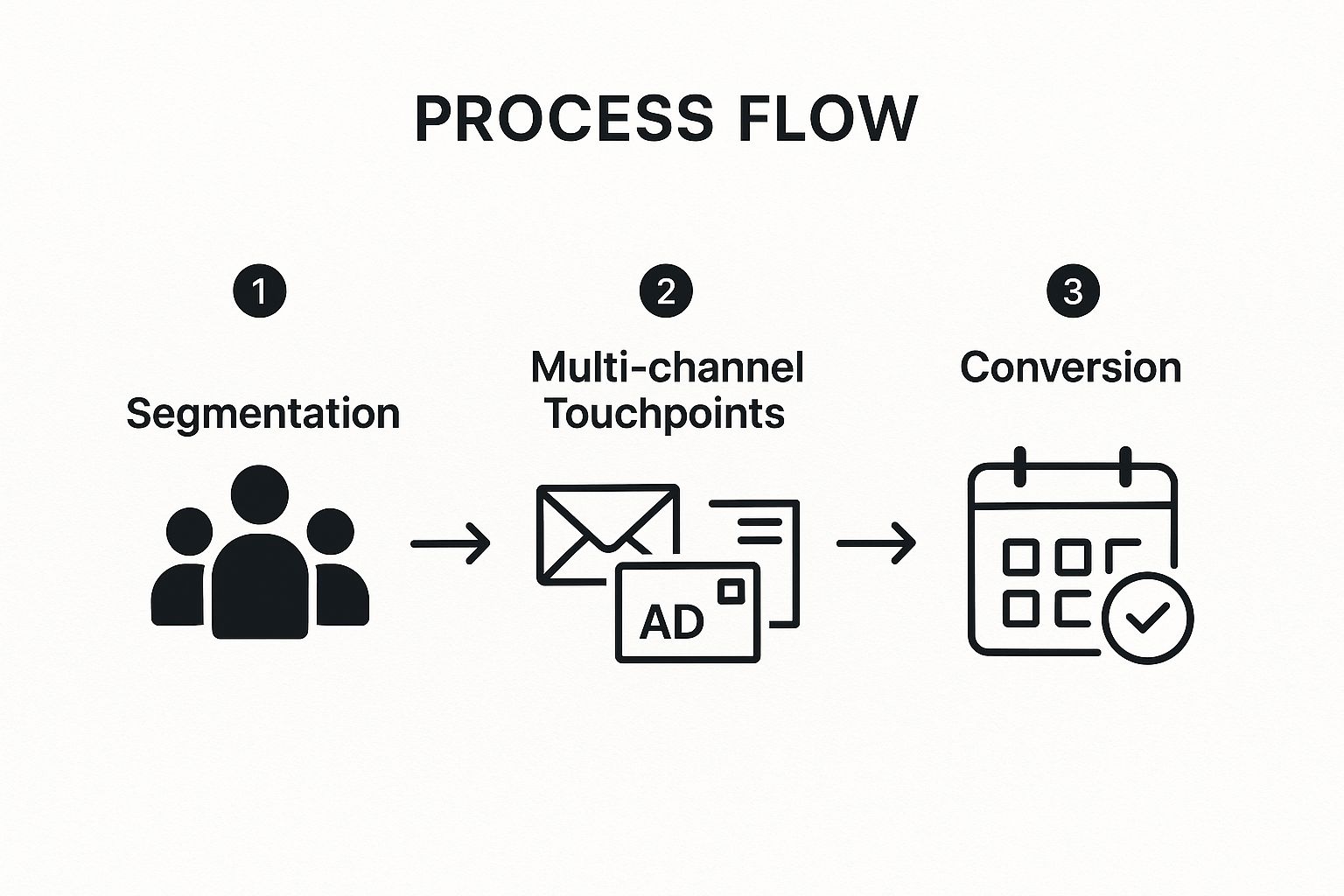
This flow demonstrates how a strategic combination of audience segmentation and targeted multi-channel outreach work together to effectively drive conversions.
Actionable Tips for a Superior Nurture Campaign
To elevate your campaigns and drive meaningful results, focus on personalization and value:
- Provide Value, Not Just Promotion: Every communication should offer helpful information, such as financial planning guides, checklists for touring communities, or articles on downsizing.
- Involve the Whole Family: When possible, ask for contact information for multiple family members and tailor communications to their likely perspective.
- Use Lead Scoring: Implement a system to track engagement (e.g., email opens, guide downloads, page visits). Once a lead reaches a certain score, it signals they are ready for a personal call from your sales team.
- Leverage Video Content: Embed short video testimonials or virtual tour clips in your emails. This can dramatically increase engagement and help build an emotional connection.
7. Event Marketing & Community Engagement
Event marketing transforms your community from a place to be seen into a place to be experienced. This strategy centers on hosting events that bring prospects, residents, their families, and the broader local community together. By providing a specific, low-pressure reason to visit beyond a formal tour, you create a welcoming environment that showcases your culture, amenities, and vibrant lifestyle firsthand. It’s about building relationships and positive associations before a sales conversation even begins.
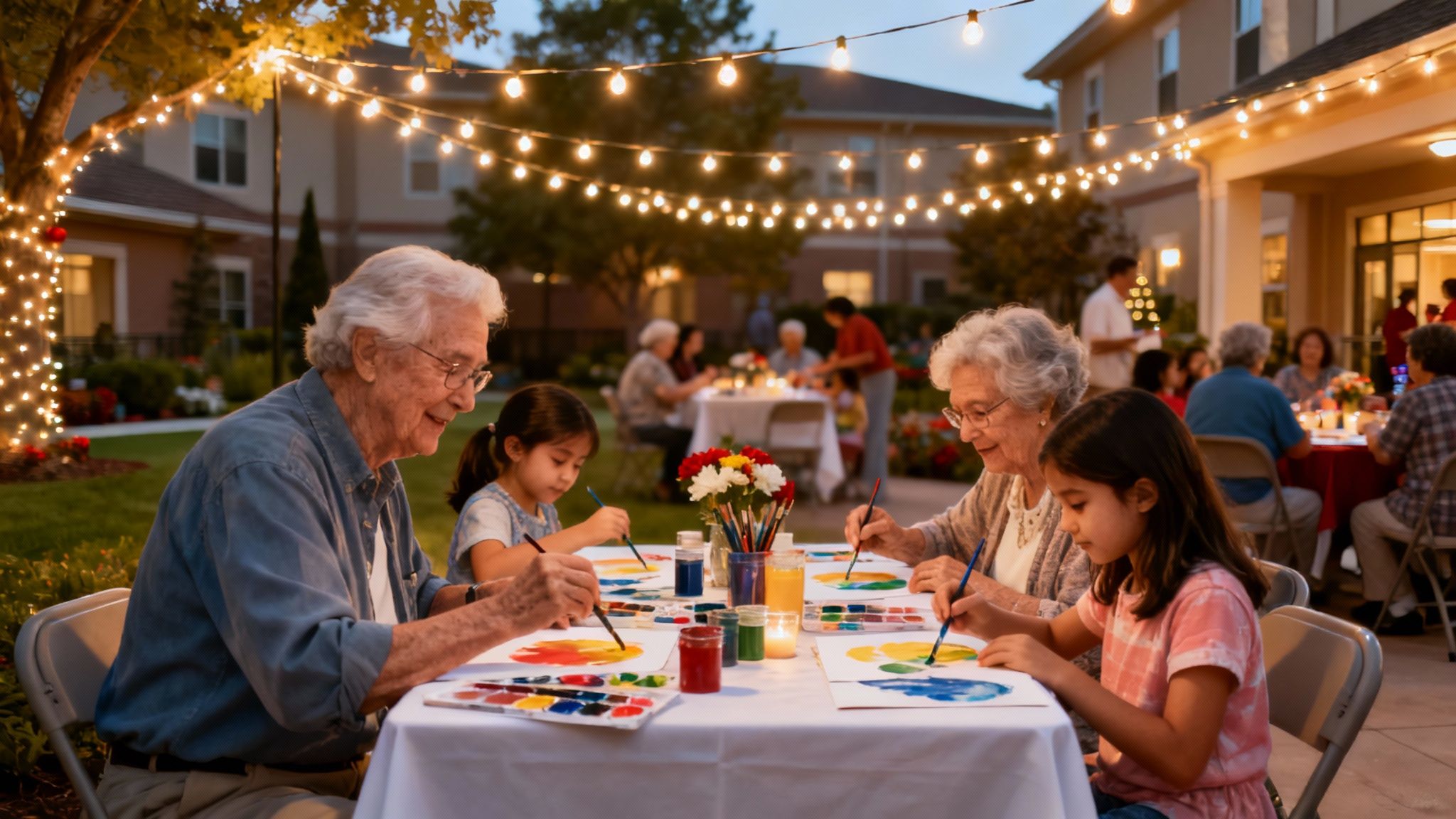
This approach is one of the most effective senior living marketing strategies for generating qualified, engaged leads. Events like educational seminars, wellness workshops, or holiday celebrations lower the barrier to entry and allow multiple family members to experience the community’s atmosphere together. A successful event not only creates a pipeline of prospects but also builds local brand awareness and generates powerful word-of-mouth referrals. For instance, some communities report that special events can result in 40% of attendees requesting follow-up tours.
How to Implement Event Marketing & Community Engagement in Senior Care
A successful event strategy is built on providing genuine value and creating memorable experiences. It requires careful planning, promotion, and follow-up to convert attendees into leads.
- Strategic Event Planning: Develop an event calendar with themes that resonate with your target audience. Host a lecture series with local experts on topics like financial planning for seniors, or partner with a nearby hospital for a wellness fair. This provides value that extends beyond your community’s walls.
- Multi-Channel Promotion: Promote your event 4-6 weeks in advance across various channels. Use a mix of email marketing to your existing database, targeted social media ads, direct mail, and outreach to local media and community calendars to maximize attendance.
- Lead Capture & Nurturing: Use a simple online registration system to capture attendee contact information. During the event, train staff to engage with guests naturally without being overly salesy. The focus should be on building rapport and making guests feel welcome.
Key Insight: The purpose of event marketing is to create a positive, no-pressure experience that builds trust. When prospects feel educated, entertained, and welcomed, they become far more receptive to learning about residency options.
Actionable Tips for Standout Senior Care Community Events
To ensure your events generate both goodwill and high-quality leads, focus on flawless execution and strategic follow-up:
- Partner for Credibility: Collaborate with respected local organizations like universities, non-profits, or healthcare providers. This co-branding lends credibility to your event and expands your promotional reach.
- Offer Value First: Design events that provide attendees with information or experiences they can’t easily get elsewhere. A hands-on cooking class with your executive chef is more memorable than a simple open house.
- Turn Events into Content: Use events as an opportunity to generate marketing assets. Capture high-quality photos, video clips, and testimonials from attendees and residents to use in future promotions.
- Timely, Relevant Follow-Up: Contact every attendee within 48 hours. Personalize your message by referencing a conversation you had, and offer a next step, such as a private tour or a one-on-one consultation.
8. Ambassador & Resident Advocacy Programs
An Ambassador & Resident Advocacy Program is a strategic initiative that transforms your most satisfied residents and their families into a powerful volunteer marketing force. This approach leverages the unparalleled authenticity of word-of-mouth by empowering those who know your community best to share their positive experiences. It recognizes that a genuine story from a current resident is often more persuasive than any polished marketing campaign.

This strategy formalizes the process of capturing and amplifying organic praise. It involves identifying enthusiastic residents, providing them with simple tools to share their stories, and creating a structured referral program. As one of the most effective senior living marketing strategies, it directly builds trust and social proof, addressing the core desire of prospects to hear from peers who have already made the transition successfully. Communities with strong ambassador programs have seen them contribute to as much as 35% of all move-ins.
How to Implement an Ambassador & Resident Advocacy Program
Effective implementation requires a structured yet heartfelt approach that encourages authentic sharing rather than scripted sales pitches. The key is to make participation easy, rewarding, and genuinely enjoyable for your advocates.
- Formalize the Program: Create a clear structure with a name (e.g., “Community Connectors,” “Resident Ambassadors”). Define the role, expectations, and the process for residents or family members to join.
- Develop a Referral System: Implement a simple, trackable referral process. This could involve personalized referral cards for ambassadors, a dedicated landing page with an online form, or a direct contact person for referrals. Rewarding programs have been shown to generate dozens of moves per year at a single community.
- Create Advocate-Specific Content: Equip your ambassadors with a toolkit. This might include community brochures, links to video testimonials, and key facts, empowering them to share accurate information confidently with their networks.
Key Insight: The most powerful marketing doesn’t come from your team; it comes from the happy, thriving residents who call your community home. Your job is to find those voices and give them a microphone.
Actionable Tips for a Thriving Advocacy Program
To build a program that generates consistent, high-quality leads, focus on nurturing genuine enthusiasm and making participation seamless:
- Identify Natural Advocates: Look for residents who are already active, engaged, and openly positive about their experience. Invite them personally to join the program.
- Provide Simple Referral Tools: Give ambassadors business cards with their name and a unique referral code. Create an easy-to-use online form they can share via email or social media.
- Recognize and Reward: Acknowledge contributions publicly through community newsletters or recognition events. Offer meaningful incentives like dining credits, gift cards, or a donation to a charity of their choice.
- Capture Stories Authentically: Use moments of delight to ask for testimonials. A happy comment after an event is the perfect time to ask, “Would you be willing to share that on video?”
- Maintain Alumni Relationships: Keep in touch with the families of former residents. A friendly “alumni network” can be a surprising and powerful source of long-term referrals.
Senior Living Marketing Strategies Comparison
| Strategy | Implementation Complexity 🔄 | Resource Requirements ⚡ | Expected Outcomes 📊 | Ideal Use Cases 💡 | Key Advantages ⭐ |
|---|---|---|---|---|---|
| Community Tour Experience Optimization | High – requires staff training and coordination | High – staff time, resident involvement | Strong emotional connections, higher tour-to-move-in conversion | Personalized prospect engagement, showcasing lifestyle | Builds trust authentic interactions, differentiates community |
| Hyperlocal Digital Marketing & SEO | Medium – ongoing optimization and technical SEO | Medium – marketing spend $2K-$10K/month | Improved local search rankings, increased qualified leads | Capturing high-intent local searches, competitive markets | Cost-effective, measurable ROI, market authority |
| Educational Content Marketing & Thought Leadership | High – time-intensive content creation | Medium – content development expertise | Early lead capture, long-term trust and brand authority | Long sales cycles, educating prospects early | Positions as expert advisor, educational lead nurturing |
| Referral Partnership Programs | High – relationship building and management | Medium – dedicated staff, events | High-quality pre-qualified leads, sustainable referral sources | Leveraging professional networks, healthcare partnerships | Lower acquisition costs, built-in trust, competitive moat |
| Reputation Management & Online Review Strategy | Medium – ongoing monitoring and response | Low-Medium – staff time for management | Boosted trust, improved SEO, increased conversion rates | Managing online presence, leveraging social proof | High impact, low cost, direct influence on decisions |
| Family-Focused Multi-Channel Nurture Campaigns | High – requires sophisticated automation setup | High – marketing technology and content | Maintains long-term engagement, increased conversion rates | Complex decision journeys, multi-stakeholder involvement | Personalized, measurable, improves lead-to-tour conversion |
| Event Marketing & Community Engagement | Medium-High – event planning and coordination | Medium-High – budget $500-$5,000 per event | Positive community associations, lead generation | Community culture showcase, low-pressure prospect interactions | Builds goodwill, resident engagement, shareable experiences |
| Ambassador & Resident Advocacy Programs | Medium – ongoing management and program structure | Low-Medium – program coordination | Authentic referrals, enhanced resident satisfaction | Leverages resident networks and authentic storytelling | Most trusted marketing form, low cost, sustainable lead source |
Integrating Your Senior Living Marketing Strategies for Sustainable Growth
The journey through these eight foundational senior living marketing strategies reveals a clear and powerful truth: success isn’t born from a single tactic but from a cohesive, integrated ecosystem. The most effective marketing plan doesn’t treat Community Tour Experience Optimization, Hyperlocal SEO, and Referral Partnership Programs as separate items on a checklist. Instead, it weaves them together into a seamless experience for prospective residents and their families.
Imagine this journey: A daughter, concerned for her father, uses a search engine to look for “assisted living with memory care near me.” Your community appears at the top of the local results thanks to your hyperlocal SEO efforts. On your website, she finds an insightful blog post about transitioning a parent to senior living, establishing your team as a compassionate authority through content marketing. This prompts her to download a helpful guide, entering her into a family-focused nurture campaign that provides value without pressure.
As she learns more, she sees glowing online reviews from current families, a direct result of a proactive reputation management strategy. A trusted geriatric care manager, part of your referral network, also recommends your community. When she finally books a tour, the experience is personalized, warm, and addresses her specific concerns, solidifying her trust. The final reassurance comes from speaking with a resident ambassador who shares their genuine, positive experiences. Each strategy amplified the next, creating a powerful, trust-building momentum that isolated efforts could never achieve.
From Silos to Symphony: Your Actionable Next Steps
Moving from a fragmented approach to a fully integrated one can feel daunting. The key is to start with a strategic assessment and build incrementally. Don’t try to overhaul everything at once. Instead, focus on creating connections between the marketing pillars you’ve just explored.
1. Conduct a Marketing Ecosystem Audit:
- Map out your current prospect journey from first awareness to move-in. Where are the gaps?
- Evaluate each of the eight strategies discussed. Where are you strong? Where are the immediate opportunities for improvement? A simple 1-5 rating for each can help prioritize.
- Identify the “low-hanging fruit.” For instance, could you immediately start asking for reviews to boost your reputation management? Can you formalize one or two key professional relationships into a referral program?
2. Prioritize Integration Points:
- Connect Digital to Physical: Ensure your online messaging (from your website and ads) perfectly aligns with the in-person tour experience. Your tour should be the physical manifestation of the brand promise you make online.
- Leverage Content Across Channels: Repurpose your educational blog posts into email nurture sequences, social media updates, and printed handouts for your referral partners.
- Amplify Your Best Assets: Use the powerful testimonials from your resident ambassador program in your digital ads, on your website, and in your social media content to build social proof.
3. Set Measurable, Phased Goals:
- Instead of a vague goal to “get more leads,” set a specific objective like, “Increase website leads from organic search by 15% in the next quarter by implementing three new hyperlocal SEO tactics.”
- Another goal could be, “Launch a formal resident ambassador program with five members in the next 60 days to improve tour-to-deposit conversion rates.”
The true power of these senior living marketing strategies is unlocked when they work in concert. A commitment to this modern, multi-channel, and deeply human approach is no longer a competitive advantage; it is the fundamental requirement for sustainable growth and building a vibrant, thriving community. By focusing on creating authentic connections and delivering undeniable value at every single touchpoint, you will build more than a marketing engine. You will build a legacy as the most trusted, sought-after, and respected senior living provider in your market.
Ready to transform your marketing from a collection of tactics into a powerful, integrated growth engine? The team at Mick-Mar Inc. specializes in developing comprehensive, data-driven senior living marketing strategies that deliver measurable results. Visit Mick-Mar Inc. to schedule a consultation and discover how we can build a customized roadmap for your community’s success.