A cybersecurity marketing agency isn’t your typical marketing firm. Think of them as a specialized partner who speaks the unique language of the security industry and truly gets the deep-seated skepticism of its buyers.
Unlike a generalist agency, they know how to craft a message that actually connects with a CISO or a security engineer. It’s less about flashy campaigns and more about building trust, demonstrating credibility, and proving tangible business value—something every security leader cares about.
Why Generic Marketing Fails in Cybersecurity
Marketing to the cybersecurity crowd plays by a completely different set of rules. Your audience members aren’t just consumers; they’re professional skeptics, trained to find flaws and question every claim. In this world, trust is everything, and the standard marketing playbook is often worse than useless – it’s a liability.
Most B2B marketing focuses on casting a wide net to generate a high volume of leads. But in cybersecurity, that approach can actively harm your brand. CISOs and their teams are buried under an avalanche of marketing noise, and they have zero patience for fluff. Vague promises get ignored, and content that lacks real technical depth is dismissed instantly.
The Problem with a One-Size-Fits-All Approach
A general marketing agency might create a killer social media campaign for a new coffee brand, but ask them to articulate the real-world value of your new endpoint detection and response (EDR) platform? That’s where things fall apart. The nuances are just too specific.
This disconnect creates a cascade of problems:
- Wasted Budget: Money is spent on campaigns that target the wrong people or use messaging that doesn’t land, leading to terrible leads and an even worse ROI.
- Damaged Credibility: One wrong term or an oversimplified explanation can make your brand look amateurish, destroying your reputation with the experts you’re trying to reach.
- Frustrated Sales Teams: Marketing hands over “leads” who don’t understand the problem you solve, creating friction and wasting the sales team’s precious time.
The stakes are only getting higher. According to a 2023 report from ISACA, 48% of organizations had more cyberattacks than the previous year, highlighting the intense pressure on security teams. In this environment, buyers are extra cautious, often consuming an average of 13 pieces of content before even considering a purchase. A specialist agency is your best bet for creating the authoritative, in-depth content that builds that critical trust.
To get a better sense of the difference, here’s a quick comparison.
Generalist Agency vs Cybersecurity Specialist Agency
| Attribute | Generalist Marketing Agency | Cybersecurity Marketing Agency |
|---|---|---|
| Audience Understanding | Targets broad business personas (e.g., “IT Manager”). | Focuses on niche security roles (e.g., SOC Analyst, CISO). |
| Content Approach | Creates high-level, benefit-focused content. | Develops technically deep, evidence-based content. |
| Core Skillset | Expertise in broad marketing channels and tactics. | Deep knowledge of cybersecurity concepts and buyer pain points. |
| Metric for Success | Volume of leads (MQLs). | Quality of leads and contribution to the sales pipeline. |
| Credibility Factor | Relies on creative campaigns to build brand awareness. | Builds credibility through technical accuracy and thought leadership. |
The takeaway is clear: while a generalist can get your name out there, a specialist ensures it’s for the right reasons.
The Specialist as a Translator
Think of a cybersecurity marketing agency as your expert translator. They take your product’s complex technical features and translate them into compelling business outcomes that security leaders actually care about – like risk reduction, compliance assurance, and operational efficiency.
They know the difference between a vulnerability and an exploit, and they build a marketing strategy that reflects that deep understanding.
A generalist marketer sells a product; a cybersecurity specialist builds trust around a solution. That single distinction is the foundation of successful marketing in this space.
Ultimately, choosing a marketing partner is like picking a doctor. You’d see your family physician for a check-up, no problem. But for open-heart surgery, you’d demand a cardiac specialist who has dedicated their entire career to that specific, high-stakes field. Your brand’s health in the cybersecurity market deserves that same level of specialized expertise.
The Services That Drive Growth in Security
So, what does a top-tier cybersecurity marketing agency actually do all day? It’s a whole lot more than just running a few ads or scheduling social media posts. Their work is a unique blend of deep technical understanding and sharp marketing execution, all designed to build trust and create demand in a market that’s, frankly, built on skepticism.
Threat-Led SEO and Content Strategy
Standard SEO is all about chasing broad, high-volume keywords. For a cybersecurity company, that’s usually a complete waste of time and money. A specialized agency, on the other hand, practices Threat-Led SEO—a much more precise and effective approach.
This strategy is all about targeting the keywords and topics that keep security professionals up at night. Instead of trying to rank for something generic like “best antivirus,” they go after hyper-specific terms tied to emerging threats, new compliance rules, and complex vulnerabilities.
This means building content around things like:
- Specific Attack Vectors: Think terms like “log4j vulnerability mitigation” or “MFA fatigue attack prevention.”
- Compliance Mandates: Content that speaks directly to the headaches of meeting standards like PCI DSS, HIPAA, or SOC 2.
- Technical Explanations: Deep dives into concepts like Zero Trust Architecture or the key differences between EDR and XDR.
The content itself has to be just as specialized. A good cybersecurity marketing agency builds its strategies around high-value assets that prove your expertise. We’re talking technical whitepapers, original research reports, and in-depth webinars that your audience will genuinely find useful—not just another surface-level listicle.
Account-Based Marketing for High-Value Targets
In cybersecurity, a small number of enterprise clients can make up a huge chunk of your annual revenue. Account-Based Marketing (ABM) is a strategy built for exactly this reality. It completely flips the traditional marketing funnel on its head.
Instead of casting a wide net and hoping for the best, ABM focuses all your marketing and sales energy on a carefully chosen set of high-value target accounts. It’s like using a sniper rifle instead of a shotgun. The goal is to craft highly personalized campaigns that speak directly to the specific challenges and needs of each target organization’s security team.
An effective ABM campaign feels less like marketing and more like a personalized consultation. It shows you understand a prospect’s unique security posture and business challenges before you even get on a call with them.
This targeted approach makes sure that every single marketing dollar is spent on accounts with the potential to become your best customers, which helps shorten those notoriously long sales cycles and increase your average deal size.
Strategic PR and Event Dominance
In the security world, credibility isn’t something you can buy; you have to earn it. One of the most important services a specialized agency provides is strategic public relations focused on getting you featured in trusted, editorially independent industry publications. A single mention in Dark Reading or having your research cited by a Gartner analyst is worth more than a hundred paid ads.
This is how you build “brand gravity”—an authoritative presence that naturally pulls high-quality prospects into your orbit.
Beyond that, a skilled agency knows how to orchestrate a powerful presence at key industry events like Black Hat, RSA, and DEF CON. This goes way beyond just booking a booth. It means:
- Securing speaking slots for your executives to share their expertise.
- Arranging pre-booked meetings with influential analysts and journalists.
- Creating memorable on-site experiences that actually cut through the noise.
These high-impact marketing services all work together to create a powerful, cohesive growth engine. By combining threat-led content, precision targeting with ABM, and credibility-building PR, a cybersecurity marketing agency helps you not just reach your audience, but truly earn their trust and win their business.
What Niche Agency Expertise Actually Means for Your Bottom Line
Hiring a specialized agency isn’t just another line item on your marketing budget. Think of it as a strategic investment in real, sustainable growth. The true value of a cybersecurity marketing agency comes from their ability to turn deep industry know-how into measurable business results. We’re talking about something much bigger than a simple list of leads—this is about building a rock-solid brand that earns respect and pulls in the right kind of customers.
It’s about creating what we like to call “brand gravity.” Any generic agency can stir up some temporary noise, but a specialist builds a powerful, long-term pull. When your brand becomes the go-to source for expertise and consistently delivers content that solves actual problems for security pros, the entire game changes. You stop chasing prospects; they start seeking you out.
This kind of magnetic pull is rooted in authenticity. A niche agency speaks the language of security practitioners without a translator. This fluency helps you break into the market faster and drastically shortens those notoriously long, complicated sales cycles. They get the subtle differences between a minor annoyance and a five-alarm fire, and their marketing reflects that critical understanding.
Moving from Cybersecurity Lead Generation to Customer Attraction
One of the first things you’ll notice is a massive jump in the quality of your leads. A generalist agency might pop the champagne after hitting a target of 1,000 MQLs, but your sales team knows the painful truth: 950 of them were a complete waste of time. A specialist, on the other hand, obsesses over the metrics that actually move the needle, attracting prospects who already get the problem you solve and are far closer to signing a deal.
This pinpoint focus delivers a few huge wins:
- Higher Conversion Rates: When marketing hands over well-informed, problem-aware leads, your sales team can have far more productive conversations. That means better close rates.
- Lower Customer Acquisition Costs (CAC): You finally stop throwing money at channels and campaigns that are hitting the wrong people. Every dollar you spend on marketing starts working a whole lot harder.
- Shorter Sales Cycles: A prospect who has already consumed your expert content doesn’t need the basic pitch. They come into the conversation with a foundation of trust already in place.
The real objective isn’t just to pour leads into the top of your funnel. It’s to build a pipeline filled with the exact companies you want as customers. A specialist agency gets that in the security space, quality trumps quantity every single time.
This strategic mindset is becoming non-negotiable. With the cost of a data breach reaching an all-time high of $4.45 million in 2023, the demand for effective security solutions has never been greater. As that demand unleashes a flood of competition, the old lead-gen playbook is being tossed out in favor of brand-led strategies built on thought leadership and customer trust. To get a better feel for this shift, it’s worth reading up on the latest cybersecurity marketing trends and how agencies are keeping pace.
Justifying Premium Prices and Keeping Cybersecurity Customers for Life
A powerful brand built on genuine expertise does more than just win new business—it gives you the power to charge what your solutions are actually worth. When your company is seen as a leader and a trusted advisor, you escape the race to the bottom on pricing. Customers will gladly pay a premium for a solution from a brand they respect and believe in.
And that value doesn’t disappear once the contract is signed. A good cybersecurity marketing agency helps you keep customers by creating educational content that fosters loyalty. By consistently delivering value with technical guides, threat intelligence briefings, and best-practice webinars, you turn one-time buyers into lifelong advocates.
At the end of the day, a niche agency helps you evolve from being just another vendor in a sea of lookalikes to becoming an authoritative brand that leads the industry. They don’t just run campaigns; they lay the strategic groundwork for long-term influence and profitability. That transformation is the single most important business value they can possibly deliver.
Choosing the Right Cybersecurity Marketing Agency Partner
Picking the right marketing agency is one of the most important calls you’ll make for your cybersecurity company’s future. This isn’t just about hiring another vendor; it’s about finding a strategic partner that acts like an extension of your own team. Get it right, and you’ll build trust, pull in high-quality leads, and carve out a strong position in a very noisy market.
The key is to look past the slick PowerPoint and really grill them on their expertise. You need a partner who doesn’t just know marketing but lives and breathes the cybersecurity world. Can they talk intelligently about the latest CVE? Can they explain the difference between EDR and XDR without fumbling? That level of technical fluency isn’t a “nice-to-have”—it’s a requirement.
Assessing Technical Depth and Niche Experience
First things first, you have to dig into their experience in your specific corner of the cybersecurity universe. The industry is huge. Marketing a cloud security platform is a completely different ballgame from marketing an OT security solution or an identity management tool.
Don’t be afraid to get specific. Here’s what you should be asking:
- Niche Familiarity: Ask for campaigns they’ve run for companies just like yours. Have they successfully marketed to the same security analysts, CISOs, or DevSecOps engineers you’re trying to reach?
- Technical Fluency: Put them on the spot. Ask them to explain a complex security concept that’s central to your product. If they can break it down clearly and accurately, that’s a fantastic sign.
- Past Results: You need to see case studies that show real business impact, not just fluffy vanity metrics. An increase in website traffic is nice, but proof of pipeline growth or a shorter sales cycle is what really matters. You can check out case studies from experienced B2B tech agencies to get a sense of what solid results look like.
If an agency gives you vague answers or a portfolio full of clients from unrelated industries, that’s a major red flag. It probably means they’ll be learning the ropes on your budget.
A great agency won’t just ask what your product does. They’ll ask about the specific problems your product solves for a CISO or a security architect. Their questions should show they get your buyer’s world.
The whole point is to find an agency that doesn’t just bring you more leads, but better ones—the kind that turn into ideal customers.
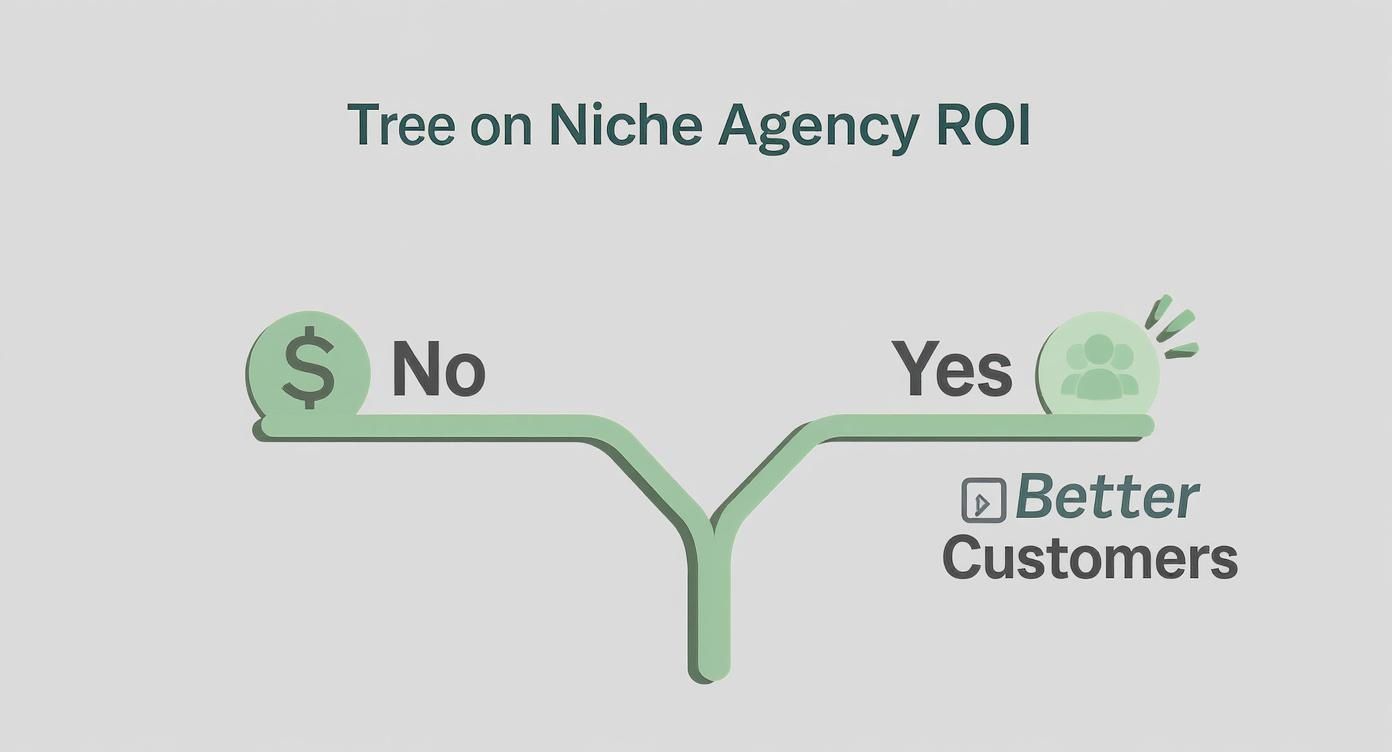
As you can see, the goal isn’t just a bigger funnel. It’s about attracting the right-fit customers who will stick around.
Evaluating Their Process and Communication Style
Even the smartest agency can be a nightmare to work with if your processes and communication styles clash. A great partnership is built on transparency, a clear roadmap, and being on the same page about what “success” actually means.
Before you sign anything, you need a crystal-clear picture of their day-to-day operations. It’s crucial to understand what to expect when working with a marketing partner to make sure your expectations are aligned from the get-go.
Key Evaluation Criteria for Your Next Agency
To help you stay organized and make a smart choice, use this table to compare your options. It’s a simple way to vet potential agencies and spot the contenders from the pretenders.
| Criteria | What to Look For | Red Flags to Avoid |
|---|---|---|
| Niche Expertise | A portfolio with cybersecurity companies in your specific vertical (cloud, IoT, identity, etc.). | A generic “B2B tech” portfolio with no relevant examples. |
| Technical Acumen | The team can confidently discuss industry threats, acronyms, and buyer pain points. | They rely on buzzwords or can’t explain technical concepts simply. |
| Proven Results | Case studies showing measurable business outcomes like MQLs, SQLs, and pipeline growth. | A focus on vanity metrics like impressions, clicks, or traffic without context. |
| Clear Process | A structured, transparent process for onboarding, strategy, and reporting. | Vague descriptions of their process or an “we’ll figure it out” attitude. |
| Communication & Fit | Proactive communication, a designated point of contact, and a style that matches your team’s culture. | Slow response times, chaotic communication, or a feeling that they just don’t “get” you. |
By using a structured approach like this, you can cut through the noise and find a true growth partner. You’ll find a cybersecurity marketing agency that can help you build a brand that people respect and hit your biggest business goals.
Modern Cybersecurity Marketing Strategies That Work
The cybersecurity world moves at lightning speed, and your marketing has to do the same. The old-school, fear-based tactics just don’t work anymore. Why? Because today’s security professionals are savvier than ever, and they can see a sales pitch disguised as a warning from a mile away.
The most successful marketing today isn’t about shouting about the latest scary threat. It’s about empowerment, education, and building a real community. It’s a shift from talking at your audience to talking with them, helping them become more proactive, strategic, and resilient.
From Fear to Empowerment
Remember FUD—Fear, Uncertainty, and Doubt? That was the go-to strategy for years. But modern marketing has flipped the script. Instead of selling fear, the best agencies build confidence by turning your brand into a genuinely helpful advisor.
Here’s what that looks like in practice:
- Truly Educational Content: Think practical guides, frameworks, and step-by-step articles that help a security analyst solve a real problem they’re facing right now—whether they buy from you or not.
- Resilience as the Narrative: Position your solution as a tool that builds a stronger, more adaptable security posture over the long haul, not just a panic button for emergencies.
- Let Your Customers Do the Talking: Share real stories of how your clients have navigated tough challenges and strengthened their operations using your platform.
Using AI-Powered Threat Intel to Create Smarter Content
Artificial intelligence isn’t just a buzzword here; it’s a game-changer for content creation. Top agencies are now using AI to sift through emerging threat intelligence in real-time. This allows them to create content that speaks directly to the latest vulnerabilities and attack trends as they unfold.
Think about it. A new zero-day vulnerability is discovered. An AI-assisted content engine can analyze the threat data and help your team spin up a technical brief, a social media alert, and a webinar outline in a matter of hours. That’s how you become the go-to source for timely information.
In an industry where trust is the ultimate currency, the power of peer validation cannot be overstated. Authentic customer stories and detailed reviews often carry more weight than any polished marketing campaign.
Of course, even specialized cybersecurity marketing has roots in broader B2B SaaS marketing strategies. The key is blending those proven B2B fundamentals with the unique, trust-centric demands of the security audience.
Building Authentic Communities (Where Your Audience Actually Hangs Out)
Let’s be honest: security pros are not scrolling LinkedIn for sales pitches. They’re in niche online communities, having highly technical, candid conversations. A smart agency knows this and focuses on engaging with them authentically where they already are.
This means becoming a valued member of the community by:
- Participating in Niche Subreddits: Adding real value to discussions on platforms like r/cybersecurity or r/netsec, without ever being promotional.
- Joining Private Slack and Discord Groups: Being a helpful voice in the closed communities where professionals share knowledge and ask for advice.
- Contributing to Open-Source Projects: Supporting the open-source tools the community already uses and respects, either through code contributions or sponsorship.
This community-first mindset is how you build genuine brand affinity from the ground up. It’s not a shortcut, but it’s what earns the respect of a tough, discerning audience and creates a brand presence that truly lasts.
Common Questions About Cybersecurity Marketing
Deciding to bring in a specialized cybersecurity marketing agency is a big move, and it’s natural to have questions. It’s a major investment, so you need straight answers before you sign on the dotted line. Let’s dig into some of the most common things business leaders ask when they’re thinking about getting help.
These are the real-world, “how does this actually work” questions about everything from the budget and timeline to how an agency works with your existing team.
What’s the Typical Price Tag for an Agency?
There’s no one-size-fits-all answer here. It really comes down to what you want to accomplish. For a company just getting started, a foundational program built around core content and SEO might begin with a monthly retainer of around $5,000. On the other hand, a full-blown strategy with strategic PR, account-based marketing (ABM), and a serious paid media push can easily run north of $25,000 a month.
The trick is to stop thinking of it as a cost and start seeing it as an investment. A good agency won’t just throw a number at you. They’ll give you a detailed proposal that connects every dollar to specific deliverables and the business results you can expect, shifting the conversation from “what does it cost?” to “what’s the potential return?”
How Long Until We Actually See Results?
Let’s be real: building a brand that security professionals trust is a marathon, not a sprint. While you can get some quick wins—a targeted ad campaign can stir up activity right away—building real, sustainable momentum takes patience.
You should start seeing early signs of life, like better organic search rankings and more website visitors, within the first 3 to 6 months. But if you’re looking for a predictable pipeline of high-quality leads and genuine brand authority in the market, you need to be prepared for a consistent, strategic push over 9 to 12 months.
Can’t Our In-House Marketing Team Just Do This?
Your in-house team is fantastic for keeping the brand’s voice consistent and handling daily tasks. But where things often get tricky is the deep, niche knowledge needed to speak credibly to a security audience. A brilliant generalist marketer will have a tough time writing a whitepaper that a CISO will actually respect.
The best-case scenario is usually a hybrid approach. Your internal team owns the brand and day-to-day execution, while the agency brings the senior-level strategy, deep technical content creation, and industry connections that are nearly impossible to hire for in-house.
What Metrics Actually Matter?
It’s easy to get lost in vanity metrics like social media likes or impressions. Don’t. You need to focus on the numbers that tie directly back to business growth. These are the metrics you and your agency should live and breathe:
- Marketing Qualified Leads (MQLs): Prospects who not only fit your ideal customer profile but have also shown they’re genuinely interested.
- Pipeline Value: The total dollar amount of sales opportunities that came directly from your marketing efforts.
- Customer Acquisition Cost (CAC): A clear-eyed look at what it costs, in both marketing and sales spend, to land a new customer.
- Share of Voice: A measure of how visible your brand is in the market compared to the competition.
By keeping a close eye on these core numbers, you ensure that every marketing dollar is working hard to grow your bottom line.
At Mick-Mar Inc., we specialize in creating marketing roadmaps that turn complex cybersecurity tech into compelling business value. If you’re ready to build a brand that earns trust and drives growth, we’re here to make it happen. Discover how our specialized marketing services can elevate your business.