Before you even think about sending that first sponsorship email, you need to lay the groundwork. Securing the right event sponsors isn't just a numbers game—it's about building a rock-solid foundation first. This means getting crystal clear on what you’re actually offering, identifying partners who genuinely need to meet your audience, and setting goals that make sense for everyone.
Building Your Sponsorship Foundation
Forget for a moment that you need to raise money. The most successful sponsorships are true partnerships, not just transactions. It's about shifting your mindset from, "We need cash," to, "We offer incredible value." The prep work you do right now is what separates the high-value, long-term partners from the one-off advertisers who never return.
This early stage is all about strategy. It ensures every ounce of effort you put into outreach is smart, targeted, and relevant.
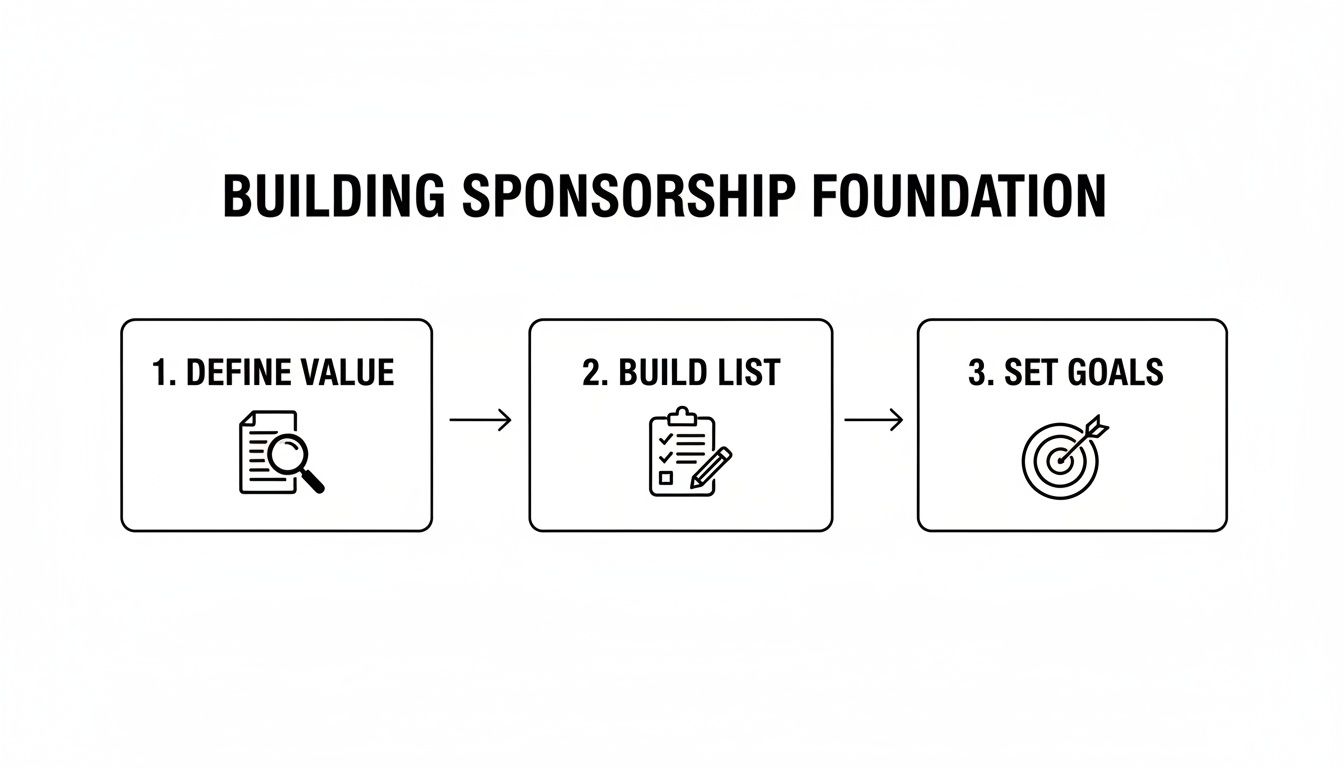
This simple flow is your playbook. Start with a powerful value proposition, which then allows you to build a laser-focused prospect list and set goals that will actually resonate with the right companies.
This approach stops you from wasting countless hours chasing sponsors who are a bad fit. Instead, it positions your event as a can't-miss marketing opportunity. For a deeper dive into the entire process, this guide on how to find event sponsors and secure funding is a fantastic resource.
Define Your Unique Value Proposition
Sponsors care about one thing above all else: ROI. Your first job is to paint a crystal-clear picture of what that return will look like for them. This goes way beyond just sharing your expected attendee count. You need to tell a compelling story about your audience and the unique access you're providing.
To really nail this, you have to dig deeper than basic demographics and build out a detailed audience persona. Think like a marketer for a moment.
- Purchasing Power: What's the average income or budget of your attendees? For B2B events, what percentage of your audience are decision-makers with the authority to sign checks? This is gold for SaaS and tech sponsors.
- Industry Influence: Are your attendees the people others look to for advice? Think thought leaders, early adopters, or influential bloggers. A sponsor would gladly pay more to get their brand in front of 50 industry bloggers than 500 generic attendees.
- Engagement Levels: Is your event a sit-and-listen affair, or is it highly interactive? Think workshops, lively networking sessions, and active Q&As. High engagement means sponsors get meaningful face-time, not just a passing glance.
The heart of a killer value proposition isn't just about who shows up. It's about the quality of access sponsors get to those people. They aren't buying a logo on a banner; they're buying a direct line to a captive, highly-relevant community.
Once you have these details, you can reframe your pitch. Instead of saying, "We expect 1,000 attendees," you can confidently state, "We provide direct access to over 300 VPs of Marketing from the cybersecurity sector." That's the kind of specificity that makes a potential sponsor sit up and listen.
Set Clear Sponsorship Goals
Your financial goals can't be pulled out of thin air. They need to be concrete and directly tied to your event budget. It's about strategically mapping every dollar of sponsorship revenue to a specific line item. This doesn't just help you justify your prices; it shows sponsors you’re running a professional, well-oiled machine.
Break down your budget into tangible buckets that sponsorship can cover:
- Venue and Logistics: The cost of the roof over everyone's head, the A/V gear, and the staff that makes it all run smoothly.
- Speaker Fees: The investment required to bring in top-tier talent that attracts a higher-quality audience.
- The Attendee Experience: Funding the good stuff, like excellent catering, a dedicated networking app, or awesome swag.
- Marketing and Promotion: Using sponsor money to broaden your event's reach—which creates more exposure for them. It’s a win-win.
When you tie sponsorship packages to these outcomes, your "ask" becomes much more compelling. For example, a "Keynote Sponsor" package could be priced to cover your headliner's fee. Now, that sponsor gets direct credit for bringing incredible content to the audience. This reframes the entire conversation from a simple request for cash to a collaborative partnership designed to make the event unforgettable. You can see how these concepts come to life by checking out real-world examples of successful trade show and event planning for more inspiration.
Finding and Researching the Right Sponsors
Finding the perfect sponsors is less like casting a wide net and more like strategic matchmaking. Once you’ve nailed down what makes your event special, the real work begins: building a list of highly qualified prospects. This isn't about spamming a generic proposal to a hundred companies. It's about surgically identifying brands whose goals align perfectly with the audience you're bringing together.
The aim here is precision. You’re looking for companies that are already spending money to reach your audience or have a clear strategic reason to start. This targeted approach is a game-changer because your first conversation will be immediately relevant, showing you’ve done your homework.
Where to Uncover Your Ideal Sponsors
Think like a detective. Your perfect sponsors are leaving clues all over the place—you just have to know where to look. Instead of just defaulting to the biggest, most obvious names in your industry, start by finding companies that have already bought into event marketing.
A fantastic place to start is with competitor events or events in adjacent industries. Go to their websites and find their "past sponsors" or "partners" page. This is a goldmine. You've just found a list of pre-qualified leads who have already allocated a budget and understand the value of event sponsorship.
From there, you can dig deeper with a few practical methods:
- Master LinkedIn Sales Navigator: This tool is an absolute powerhouse for finding sponsors. You can filter companies by industry, size, and location, and even zero in on those showing recent growth. Even better, you can pinpoint the actual decision-makers with titles like "VP of Marketing," "Partnership Manager," or "Head of Demand Generation."
- Scan Industry Publications: Keep a close eye on the trade magazines, blogs, and news sites your audience reads. Who’s advertising? Who’s launching new products? Who’s getting featured in case studies? These are the active brands hungry for visibility.
- Tap into Your Network: Seriously, don't overlook the power of your existing contacts. Your speakers, early-bird ticket holders, and even your vendors all have their own professional networks. A warm introduction from someone they trust will beat a cold email every single time.
The Deep-Dive Research Framework
Once you have a running list of potential sponsors, it's time to qualify them. This is the part that separates a thoughtful partnership proposal from spam. For every company that looks promising, you need to put on your researcher hat and understand their world.
Your goal is to answer one simple question: "Why would sponsoring my event be a smart business move for them?" To figure that out, you need to focus your research on what drives their marketing decisions.
A personalized pitch is built on a foundation of solid research. When you can connect your event directly to a sponsor's recent product launch or a key marketing objective they've publicly stated, you immediately stand out from the competition.
We recommend building a simple spreadsheet to keep all your notes organized. For each prospect, find out:
- Their Marketing Goals: Check out their recent press releases, annual reports, or interviews with their CMO. Are they trying to expand into a new market? Are they pushing a specific product? Are they focused on establishing thought leadership?
- Their Recent Campaigns: What have they been up to for the last six months? Look at their social media, blog content, and ad campaigns. This tells you what messages they’re amplifying and who they're trying to attract.
- The Right Decision-Makers: Identify the specific person to contact. It’s almost never the generic "info@" address. Find the marketing leader whose job it is to reach the audience you're gathering.
This level of prep work makes your outreach feel anything but cold. For an even more detailed playbook on finding and engaging potential sponsors, check out these sales prospecting best practices to sharpen your approach.
The good news? The corporate sponsorship market is booming. A 2023 report from IEG found that 70% of brands consider sponsorship a more effective marketing tool now than ever before. This growing confidence means companies see events as a core part of their strategy, creating a huge opportunity for event organizers who can demonstrate clear value.
How to Build Sponsorship Packages That Actually Sell
Let's be honest: your sponsorship packages are your sales pitch. If you just throw a generic list of benefits on a page, you’re going to get ignored. In today's market, you have to think like you're selling a high-value product, not just space on a banner.
The single biggest mistake organizers make is basing their prices on their own event costs. That’s thinking backwards. Your pricing needs to be anchored in the value you’re delivering to the sponsor—which is direct, focused access to a room full of their ideal customers. It's about putting together a deal that delivers real ROI, not just slapping a logo somewhere.
Don't Just Name Tiers, Build Value Ladders
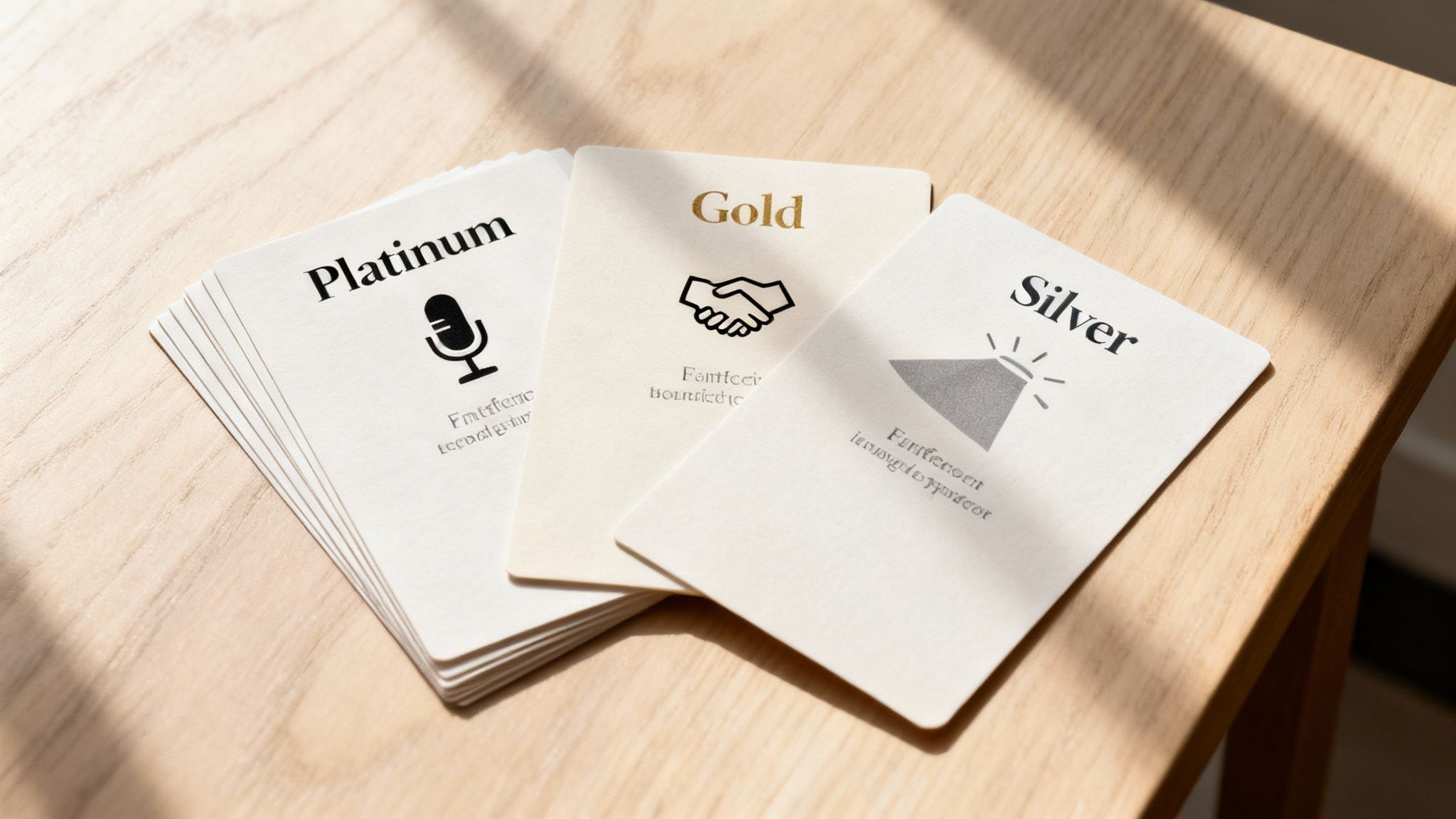
Everyone knows the classic Platinum, Gold, and Silver structure. It's familiar, which is fine. But the real strategy isn't in the names; it's in what you put inside each tier. You want to structure them so that upgrading to the next level feels like a no-brainer.
Each tier shouldn’t just offer more stuff, it should offer better stuff. You’re selling an investment in a live experience, and sponsors expect a return.
- Bronze Tier (The "Get in the Door"): Think of this as the entry point. It's for companies that want to show their support and get some basic brand visibility. Stick to awareness-focused benefits: logo on the event website, a mention in a "thank you" email, and maybe a social media shout-out. Simple.
- Silver Tier (The "Let's Get Leads"): Now we're talking about direct engagement. This tier should include everything from Bronze, but add tangible assets like an exhibitor booth, a handful of event passes, and maybe access to a pre-event attendee list (always with consent, of course).
- Gold Tier (The "Own the Conversation"): This is for sponsors who want to establish themselves as industry experts. On top of the Silver benefits, offer them a speaking slot, a sponsored workshop, or the chance to moderate a panel discussion. This puts their brand front and center as a thought leader.
- Platinum Tier (The "We're True Partners"): This is your top-tier, exclusive offering. It's all about deep integration into the event fabric. Think big: naming rights for the networking lounge, a private VIP dinner with your keynote speakers, or a co-branded report sent to all attendees after the event.
Price on Their ROI, Not Your Costs
The secret to confident pricing is understanding the value of your audience. You aren't just covering venue fees; you're selling direct access to a highly curated community. What would it cost a sponsor to reach these exact same people through Google Ads or LinkedIn campaigns? Your event gives them something those channels can't: face-to-face connection.
This is where a polished sponsorship prospectus is critical. It's your sales brochure, not just a price list. It needs to tell a story about the value you offer. If design isn't your strong suit, investing in professional creative design and branding services can completely change how potential sponsors see your event and its value.
Stop being afraid to ask for what you're worth. You are offering a direct pipeline to a captive audience—the very people your sponsors spend thousands trying to reach. Frame your pricing around their potential return on investment, not your budget spreadsheet.
For event marketers, sponsorship isn't just a revenue stream; it's often the lifeblood of the entire event. Data shows that a staggering 88.4% of marketers see sponsorships as their most effective source of revenue. Yet, securing those partners is also the single biggest challenge they face. According to these event sponsor trends and what brands want, a well-crafted package is non-negotiable.
Sample Tiered Sponsorship Package Structure
To give you a clearer picture, here's a sample breakdown showing how benefits and value can build from one tier to the next. Use this as a template to get your own ideas flowing.
| Benefit / Activation | Bronze Tier | Silver Tier | Gold Tier | Platinum Tier |
|---|---|---|---|---|
| Pre-Event Branding | ||||
| Logo on Website | ✓ | ✓ | ✓ | ✓ (Premium Placement) |
| Social Media Mention | 1x Mention | 2x Mentions | 4x Mentions | Dedicated Post |
| Email Newsletter Feature | Small Logo | Medium Logo | Banner Ad | Exclusive Spotlight |
| On-Site Presence | ||||
| Exhibitor Booth | N/A | Standard Booth | Premium Booth | Double Booth (Prime Location) |
| Event Tickets | 2 Tickets | 4 Tickets | 8 Tickets | 12 Tickets + VIP Access |
| Logo on Main Stage Screen | ✓ (Rotating) | ✓ (Static) | ✓ (Premium) | Exclusive Welcome Screen |
| Engagement & ROI | ||||
| Lead Scanning Access | N/A | ✓ | ✓ | ✓ |
| Speaking Opportunity | N/A | N/A | 30-Min Workshop | Keynote Introduction |
| Post-Event Attendee List | N/A | ✓ | ✓ | ✓ (With Analytics) |
| Exclusive Activations | ||||
| Sponsored Networking Break | N/A | N/A | ✓ | N/A |
| Naming Rights (e.g., Wi-Fi) | N/A | N/A | N/A | ✓ (Exclusive) |
Remember, this is just a starting point. The best packages are tailored to your specific event, audience, and the unique goals of your potential sponsors.
Executing Your Outreach and Pitch Strategy
You've built a killer sponsorship package. Now, the real work begins: getting it in front of the right people. Even the most perfectly crafted proposal is worthless if it lands in a spam folder or, worse, gets ignored entirely. A thoughtful, persistent outreach strategy is what turns all that research and planning into actual conversations and signed contracts.
This isn't about blasting a generic email to a massive prospect list. It's about starting a genuine conversation. From that very first touchpoint, you need to show a potential sponsor that you've done your homework and truly believe a partnership would be a smart move for their business.
Crafting the Perfect Initial Email
Think of your first email as your digital handshake. Its only job is to get a response—that's it. You're not trying to sell the entire sponsorship in one go. Keep it short, personal, and focused completely on them.
Forget long, rambling intros about your event's history. Lead with something about them. Start with a specific tidbit you found during your research that proves you're paying attention. For example, "I saw your team's recent launch of the new analytics platform—congratulations, it looks fantastic," immediately signals this isn't a copy-paste job.
After that personalized opener, make the bridge to your event. Something simple like, "Given your focus on reaching data scientists, I thought our upcoming SaaS Growth Summit might be a great way to connect you with over 500 of them under one roof," is direct and screams value. Wrap it up with a clear, low-friction call to action, like, "Would you be open to a quick 15-minute call next week to explore if there's a fit?"
Developing a Multi-Touch Outreach Sequence
Relying on a single email is a rookie mistake. Decision-makers are buried in emails, and yours can easily get lost. A multi-touch sequence that uses a few different platforms is way more effective at building familiarity and cutting through the noise.
Here’s a simple but powerful sequence that actually works:
- Day 1 (Initial Email): Send that short, personalized email.
- Day 3 (LinkedIn Connection): Pop over to LinkedIn and send a connection request with a brief note. Something casual like, "Hi [Name], I sent you a quick email about our SaaS Growth Summit. Would love to connect here as well." This puts a face to the name.
- Day 5 (Follow-Up Email): Reply directly to your original email, but add a new piece of value. Maybe you just confirmed a big-name speaker or have a great testimonial from a past sponsor. Share it.
- Day 8 (LinkedIn Engagement): Interact with their content. A thoughtful comment on a post they shared shows you're actually engaged with their world, not just their wallet.
This approach builds a bit of a relationship before you ever make a hard sell. It makes your eventual pitch feel more like a collaborative idea than just another cold ask. If you want to dive deeper into crafting compelling narratives, exploring content marketing and strategic communications can give you some powerful frameworks for business storytelling.
Designing a Pitch Deck That Tells a Story
Once a prospect says, "Okay, I'm interested," you need a visually sharp pitch deck ready to send. This isn't just a boring document listing your package tiers; it’s a narrative that sells the opportunity. It should tell a compelling story about your event, your audience, and the tangible ROI a sponsor can expect.
Your pitch deck has one primary job: answer the sponsor’s silent question, "What's in it for me?" Ditch the long list of your event's features and focus relentlessly on the benefits they'll get—be it lead generation, brand elevation, or direct access to their ideal customers.
Structure your deck to walk them through a logical storyline:
- The Problem/Opportunity: Briefly set the stage. What industry challenge or opportunity does your event address?
- The Solution (Your Event): Position your event as the go-to place for people who care about this topic.
- The Audience: This is the hero of your story. Use your audience data to paint a vivid picture of who they'll meet.
- The Value (Sponsorship): Lay out your tiered packages, but frame everything in terms of the ROI for each level.
- The Proof: Show, don't just tell. Include logos of past sponsors, powerful testimonials, and impressive stats to build credibility.
Keep the text minimal and lean on strong visuals. A well-designed, concise deck is always more impactful than a dense, text-heavy document. It respects their time and makes your proposal easy for them to understand and, just as importantly, share with their team.
Securing the Deal and Delivering Value
Getting that verbal "yes" from a sponsor is an amazing feeling. But the work isn't over—it’s just getting started. The time between their commitment and the day of your event is your chance to prove their investment was a smart one. This is where you shift from salesperson to partner, setting the stage for a relationship that can last for years.
The very first step is making it official. A handshake is nice, but a signed contract protects everyone. Your sponsorship agreement doesn't need to be a hundred-page legal document, but it absolutely must be clear, concise, and professional. This piece of paper formalizes expectations and stops misunderstandings before they start.
Formalizing the Partnership with a Clear Contract
Think of your contract as the blueprint for the entire partnership. It needs to spell out every deliverable, every deadline, and every responsibility for both you and your sponsor. Leaving things open to interpretation is just asking for trouble later on.
Make sure your agreement always includes these essentials:
- Payment Terms: Get specific. State the total amount, the payment schedule (e.g., 50% upon signing, 50% 30 days before the event), and how they can pay.
- Deliverables Checklist: Itemize every single benefit the sponsor gets. From logo placements and booth dimensions to speaking slot durations and the number of social media shout-outs.
- Key Deadlines: Include hard dates for when you need their high-res logo, ad creative, or speaker bios. This keeps the pre-event logistics on track.
- Cancellation Clause: Life happens. Outline what happens if either party needs to back out, covering scenarios like event postponement or a sponsor failing to pay on time.
Creating a Flawless Sponsor Activation Plan
Once the ink is dry on the contract, your focus has to shift completely to execution. This is where you deliver on the value you promised. The best way to manage this is to create a dedicated sponsor success plan and assign a single point of contact for each partner. This person is their champion, their go-to, ensuring their experience is absolutely seamless.
Your first move? A kickoff call. This is a critical meeting to get everyone on the same page. You'll walk through the contract again, reconfirm their goals, and introduce them to their dedicated contact. It’s your opportunity to show them right from the start that you're organized and genuinely invested in their success.
A sponsor's experience is shaped by how you manage the small details. Proactive communication and flawless execution on your promises are what transform a one-time transaction into a long-term, mutually beneficial partnership.
The world of sports sponsorship teaches us a lot here. It has become a dominant marketing channel, projected to reach nearly $60 billion in North America alone by 2024. The most successful partnerships are built on understanding and activating passionate audiences. For example, a recent study found that 67% of football (soccer) fans find sponsors more appealing than the general population—proof of what happens when you align with a deeply engaged community. And with interest in women's sports now at 50% globally, sponsors are actively looking for these kinds of dedicated fanbases. You can dive deeper into these insights in the full PwC sports outlook.
This all points to one simple truth: sponsors are investing in the connection you have with your audience. Your job during the activation phase is to be the bridge for that connection. That means checking in regularly, sending progress updates, and making sure they have everything they need to shine. This is how you find event sponsors who don't just show up once, but come back year after year.
Answering Your Biggest Sponsorship Questions
Even with the best playbook, the road to securing sponsors is full of twists and turns. As you get into the thick of it, you'll inevitably run into the same questions that trip up even seasoned event organizers. Let's tackle some of the most common hurdles you'll face so you can navigate them like a pro.

How Far in Advance Should I Start Looking for Sponsors?
The golden rule? Start your outreach 9 to 12 months before your event date. I know it sounds like a lot of time, but it’s absolutely critical.
Big companies, the ones with the deepest pockets, lock in their marketing budgets annually. If you approach them too late, the money is already allocated. This longer timeline gives you the breathing room you need for proper research, crafting personalized pitches, back-and-forth negotiations, and getting contracts signed without a last-minute scramble.
If you're running a smaller event or aiming for local sponsors, you might get away with a 6-month window. But trust me, giving yourself more time is always the less stressful, more strategic path.
What's the Single Biggest Mistake to Avoid in a Pitch?
Easy: sending a generic, copy-and-paste proposal. Sponsors can spot a template from a mile away, and it’s the fastest way to get your email deleted.
Your pitch can't be about your event's need for cash. It has to be laser-focused on the sponsor's ROI. Show them you've done your homework. Talk about their marketing goals, their target audience, and how partnering with your event will help them achieve tangible results, whether that's generating qualified leads, boosting brand visibility, or positioning their execs as industry leaders.
A pitch that says, "I saw your recent focus on expanding into the Midwest," is infinitely more powerful than one that begins, "We are seeking sponsors for our annual conference." Personalization proves you see them as a partner, not just a piggy bank.
How Do I Figure Out How to Price My Sponsorship Packages?
Pricing is part art, part science. You need to balance what it costs you, what the market will bear, and the unique value you offer. Don't just price your packages to cover your expenses.
Here’s a simple framework to follow:
- Calculate Your Costs: Start by adding up the hard costs of delivering on each sponsorship benefit. This is your absolute floor—the minimum you need to charge to not lose money.
- Research Market Value: Do some competitive analysis. What are similar events in your industry charging? This gives you a realistic benchmark and ensures your pricing isn't completely out of line.
- Assess Audience Value: This is where the real money is. The more valuable your audience, the more you can charge. A room full of C-suite execs from a specific SaaS vertical is worth far more to a sponsor than a general audience. Quantify this value and use it to justify your prices with confidence.
What Should I Do If a Potential Sponsor Says No?
First, don't take it personally. A "no" rarely means "never." More often than not, it means "not right now." How you handle the rejection can make all the difference for future opportunities.
Always reply with a professional and gracious thank-you note. Let them know you appreciate their time and consideration.
If you've built some rapport, it's perfectly fine to politely ask for feedback. Was it an issue of timing? Budget constraints? Or was the value proposition not quite right? Their answers are pure gold for refining your strategy. Then, add them to a low-key nurture list. Send them a post-event report highlighting your wins. This simple gesture keeps the door wide open and can turn this year's "no" into next year's "yes."
At Mick-Mar Inc., we transform event concepts into powerful marketing platforms. If you need a strategic partner to help you find event sponsors and maximize your ROI, we're here to build a customized roadmap for your success. Learn more about our B2B event planning services today!